From Research to Reform
Youth-Led Policy Pathways in Jordan

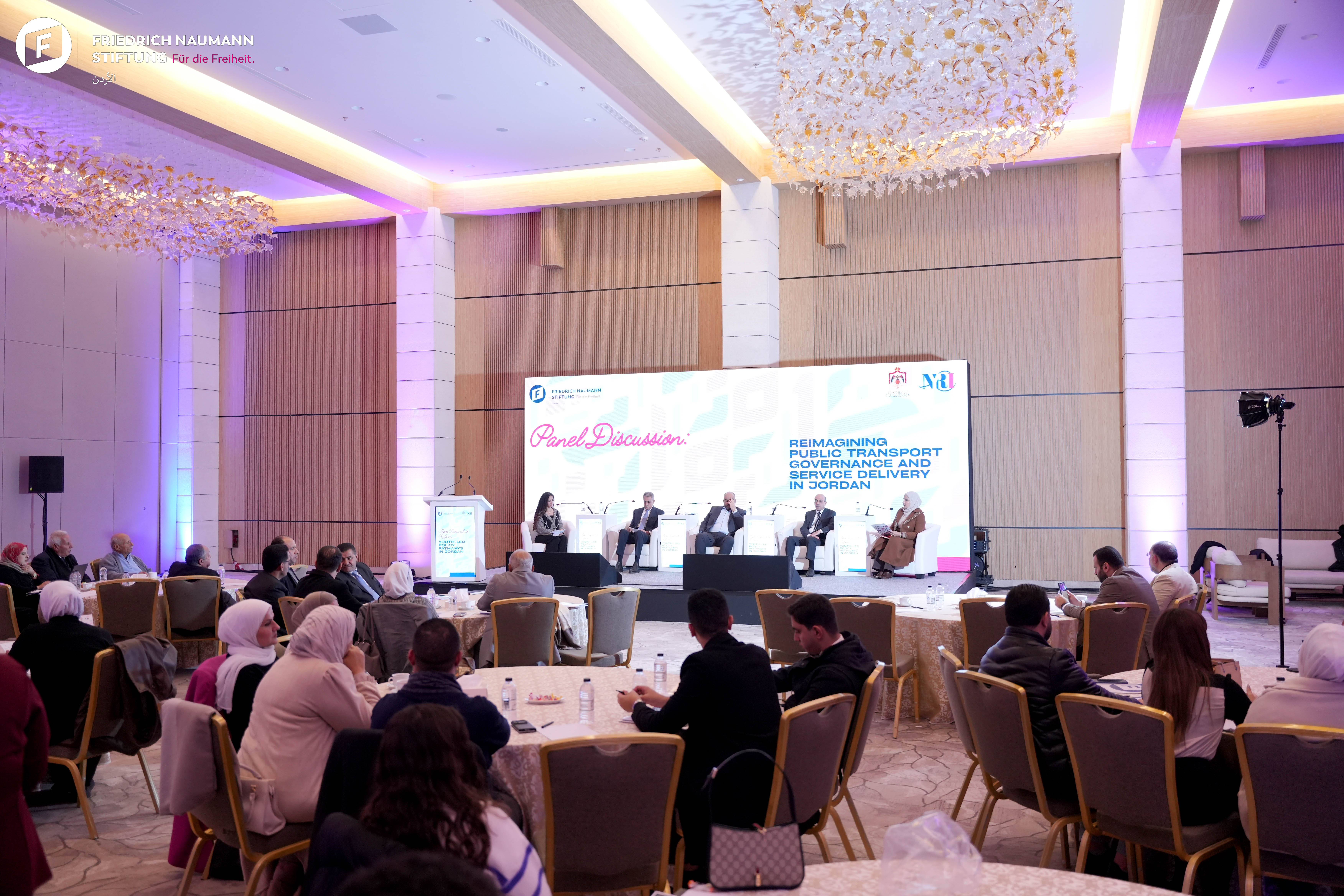
On Monday, 15 December, the conference From Research to Reform: Youth-Led Policy Pathways in Jordan convened young researchers, policymakers, academics, and practitioners to examine the role of youth-led research in shaping policy discussions and reform processes in Jordan. The conference served as a platform for presenting evidence-based studies and facilitating structured dialogue on how research generated by young people can contribute to public policy development.
Youth-Led Research as a Policy Resource
At the core of the conference was the recognition of youth-led research as a substantive contribution to policy debates rather than a purely academic exercise. The discussions emphasised that youth research offers grounded perspectives drawn from lived realities and close engagement with communities.
As one participant noted, “Youth-led research brings forward issues that are often overlooked, while offering practical insights rooted in everyday experience.”
The conference highlighted how research conducted by young scholars can inform governance discussions, support reform-oriented thinking, and contribute meaningfully within institutional and legislative contexts.

Public Transport Reform and Governance Frameworks
The first research presentation focused on public transport reform and restructuring in Jordan, presenting a roadmap that addressed governance challenges, service delivery gaps, and institutional coordination. The subsequent panel discussion expanded on these findings by examining regulatory frameworks, the roles of public institutions, and opportunities for improving efficiency and accessibility within the sector.
Reflecting on the session, one of the panelists stressed that “effective reform requires moving beyond diagnosis toward coordination between institutions, supported by evidence and long-term planning.”
The exchange connected analytical research with policy considerations and implementation realities, reinforcing the role of research as a tool for informed decision-making.

Student Councils and Civic and Political Participation
The second research presentation examined the effectiveness of school student councils as mechanisms for strengthening civic and political participation. The study explored legislative and institutional dimensions shaping student councils, emphasizing their potential role in fostering early civic engagement and political awareness.
Panel discussions that followed addressed pathways for reform, highlighting how strengthened student councils can serve as early platforms for participation. As one speaker remarked, “Student councils are often the first space where young people learn representation, responsibility, and dialogue — strengthening them means investing in future civic culture.”

Linking Evidence, Policy, and Practice
Across all sessions, the conference emphasized the importance of linking research evidence with policy perspectives and practical experience. Presentations and discussions enabled participants to engage critically with the implications of youth-led research and reflect on how findings can move beyond analysis to inform policy dialogue and reform initiatives.
A young researcher participating in the conference reflected that “having policymakers engage directly with our research reinforces that youth voices are not symbolic, but relevant to real policy conversations.”

Collaboration and Acknowledgements
The conference was organized within the framework of the Naumann Youth Research Initiative (NYRI), which led the development of the research agenda and the overall conceptual design of the event. The initiative provided a platform for young researchers to present their work and engage directly with policymakers and practitioners. Appreciation is extended to all speakers and panelists for their valuable contributions, as well as to the participants whose engagement and input contributed to a productive and substantive conference.