A Path to Freedom and Inclusivity
Women’s Leadership and Equal Opportunities in Jordan

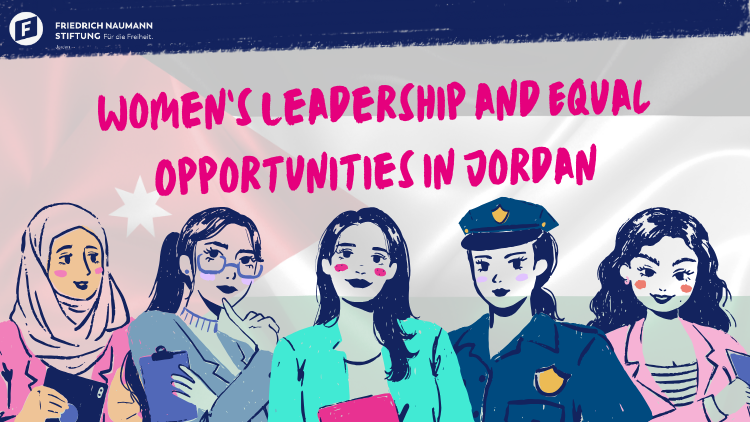
In Jordan, the story of women’s leadership is one of determination, resilience, and gradual transformation. From the halls of parliament to grassroots activism, women are making strides in shaping the future of their society. Their journey reflects core liberal values: equality, freedom of choice, and inclusivity—values that are not only aspirational, but essential for Jordan’s democratic development.
Political Voice and Representation
The past few years have seen important milestones in women’s political participation. Legal reforms and quota systems have helped women gain seats in parliament, with female representation reaching nearly 20% in the 2024 elections (UN Women). This shift has enabled more women to step into public life and challenge the perception that politics is a male-dominated arena.
Still, numbers only tell part of the story. The presence of women in decision-making roles has started to reshape political discourse—bringing issues like social justice, education, and equality to the forefront. Their leadership not only strengthens democracy but also gives young women role models to aspire to.
Economic Empowerment and Barriers
While Jordanian women are highly educated, their participation in the labor market remains among the lowest globally, at around 14% (World Bank). Studies point to structural challenges—such as unequal pay, legal barriers, and social expectations—that limit women’s access to opportunities. Closing this gap is not just a matter of fairness; it is an economic necessity. The World Bank estimates that equal participation of women could significantly boost Jordan’s GDP growth.
Recent reforms easing business registration and addressing gender-based restrictions mark important steps forward. When women gain equal opportunities in entrepreneurship and employment, they exercise their right to economic freedom and contribute to the prosperity of society as a whole.
Civil Society and Social Change
Beyond politics and business, women in Jordan play a vital role in civil society. They lead initiatives advocating for human rights, provide community support, and mobilize for legal reforms on issues such as domestic violence and equal protection under the law. Research on feminist organizing in Jordan shows that women’s groups remain powerful drivers of change even in a shrinking civic space (Kvinna till Kvinna Foundation).
These efforts echo a broader truth: inclusivity is not achieved solely through legislation, but through societal transformation. When women are empowered to organize, speak freely, and shape the public agenda, they strengthen Jordan’s democratic fabric.
Conclusion
Jordan stands at a defining moment. The progress of recent years has proven that women’s participation enriches political debate, strengthens the economy, and energizes civic life. Yet challenges remain: cultural barriers, unequal access to opportunities, and underrepresentation in leadership roles.
The path forward requires a commitment to the values of equality and freedom—not only in law, but in practice. By embracing women’s leadership fully, Jordan can move closer to a society where inclusivity is not an aspiration but a lived reality.