Jordan
Where Dialogue Builds Freedom in a Divided Region

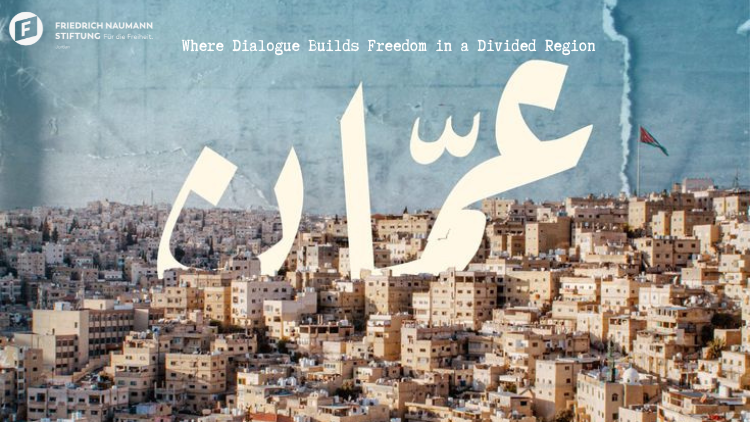
In a region marked by conflicts, fragmentation, and polarizing rhetoric, Jordan continues to stand out as a place where dialogue, openness, and inclusive diplomacy are not just ideals, but practiced tools for stability and freedom. From hosting peace talks to coordinating regional action, the Kingdom is using its strategic position and diplomatic tradition to advance liberal values in the Middle East.
Hosting Refugees with Dignity: From Crisis to Partnership
Jordan remains one of the world’s largest hosts of refugees per capita. As of mid-2025, over 586,600 refugees are registered with UNHCR in Jordan. (EU Civil Protection) The vast majority are Syrians, while many others come from Iraq, Yemen, Sudan, and Somalia. (UNHCR) About 81% live in urban or non-camp settings. (UNHCR)
Rather than simply treating displacement as an emergency, Jordan has taken steps towards integration, participation, and long-term resilience. The UNHCR Jordan Strategy (2023-2025) emphasises the inclusion of refugees in national services (health, education), increasing self-reliance, expanding documentation access, and integrating refugee needs into development planning. (UNHCR)
These policies reflect core liberal values: individual dignity, equal access, and building democratic societies where those displaced are not voiceless, but part of the conversation.
A Platform for Regional Dialogue and Mediation
Beyond its internal refugee policy, Jordan has been active as a neutral space for regional diplomacy and civil society dialogue. A few recent examples:
- Syria Transition Summit: In early 2025, Jordan hosted a summit involving foreign ministers, defence and intelligence chiefs from Jordan, Turkey, Syria, Iraq, and Lebanon. The meeting addressed Syria’s recovery, regional security, counterterrorism, and stabilisation of borders. (Jordan Times)
- Yemen International Forum III (Amman, February 2025): A civil society-led peace conference where Yemeni actors and international stakeholders gathered to discuss political solutions, humanitarian concerns, and the need for multi-stakeholder participation in Yemen’s peace process. (Sana'a Center For Strategic Studies)
- “Insider Mediation” Network: Jordan is the base for the recently launched Regional Network for Sustaining Peace Through Insider Mediation in Arab States, an initiative by UNDP and key partners aimed at strengthening local mediation capacities. (UNDP)
These efforts position Jordan not just as a passive host, but an active convener: of governments, civil society, displaced communities, and regional neighbours. This strengthens the space for pluralism, dialogue, and negotiation as opposed to unilateral action or conflict.
Liberal Values in Practice
These roles Jordan is playing align tightly with values at the heart of FNF’s mission:
- Freedom of Expression & Inclusion: In hosting forums where multiple voices (governments, civil society, refugees, etc.) are heard, Jordan is supporting being inclusive rather than exclusive. Dialogue forums like YIF and insider mediation networks provide spaces for those often marginalised to contribute.
- Pluralism & Openness: By bringing together diverse actors — countries with different interests, NGOs, displaced populations — Jordan shows that stability comes not by silencing disagreement, but by managing it constructively.
- Responsibility & Solidarity: Liberalism prizes responsibility to others; Jordan has shown significant compassion in the refugee crisis, and tries to combine humanitarian actions with structural, policy-level changes to share burdens.
- Peace through Dialogue: Instead of simply responding to crises with force or isolationism, Jordan continues to invest in diplomacy, mediation, and conflict prevention. It’s a long game, and one where dialogue itself is a tool of freedom.
Challenges & What Comes Next
Certainly, being a regional hub for dialogue isn’t without difficulty.
- Resource pressures: Hosting large refugee populations strains infrastructure, public services, and finances. There is always risk that economic hardship undermines social cohesion. (EU Civil Protection)
- Political tensions: The plurality of voices can bring tensions—between local communities and refugees, between states with divergent policies, and over competing narratives of justice, memory, and sovereignty.
- Risk of superficial dialogue: Not all forums guarantee real change. Dialogue without concrete follow-through or power sharing can be symbolic rather than transformative.
- International backlash or donor fatigue: As Jordan has repeatedly noted, the burden of refugee hosting is increasingly recognised, but international support is uneven. Sustained external support is essential. (Reuters)
Dialogue as the Foundation of Freedom
In an era where many societies in the Middle East are challenged by polarisation, authoritarianism, and crisis, Jordan’s ongoing commitment to being a meeting ground matters deeply. It shows how liberal values — inclusion, open dialogue, respect for difference, cooperation — can be more than abstract ideals. They can be strategic, transformative, and stabilising.
For FNF Jordan, these developments offer fertile ground:
- Promoting youth, refugee, and civil society participation in regional dialogues.
- Advocating for institutional reforms that convert dialogue into real power sharing.
- Supporting local initiatives that build bridges — interfaith harmony, cross-border educational or cultural exchange, media literacy to resist polarisation.
Jordan’s role as a diplomatic hub is not only about hosting talks—it’s about modelling a path toward freedom in a divided region. And that is a promising story worth both telling and deepening.