Building Stronger Institutions
TOT Program on Employment and Vocational Policies

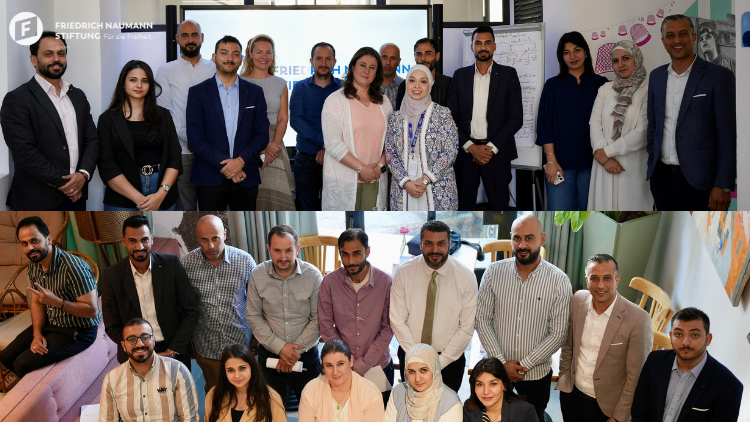
The Friedrich Naumann Foundation for Freedom in Jordan hosted a two-day Training of Trainers (TOT) program at its Amman office, bringing together key representatives from the Ministry of Labour, the Chamber of Industry, and the Vocational Training Corporation. The initiative aimed to strengthen institutional capacity in employment and vocational training policies—two areas crucial for Jordan’s economic development and social stability.
Knowledge Exchange and Expert Facilitation
The program was facilitated by Khalil Abu-Nijmeh, FNF Jordan's Project Coordinator, and featured national experts with deep knowledge of Jordan’s labour market.
On the first day, Dr. Rana Al Ansari led sessions on employment policies and labour market linkages, introducing participants to the concepts, dimensions, and challenges shaping Jordan’s employment strategies. Through presentations and interactive discussions, participants explored unemployment trends, skills mismatches, and the analytical tools needed to better connect industrial sectors with workforce planning, supported by case studies from Jordan and the wider region.

On the second day, Dr. Omar Al Araysheh turned the spotlight toward vocational training and skills development. The sessions examined the current structure of Jordan’s vocational training system, identifying both its strengths and systemic challenges. Participants engaged in group discussions to design industry-oriented training models, ensuring closer alignment with private sector demands. The day concluded with the formulation of recommendations and proposals for institutional initiatives that aim to modernise and professionalise vocational training in Jordan.
Key Insights and Outcomes
The training produced several significant outcomes that reflect the pressing needs of Jordan’s labour market:
-
Centralized Data Systems: Participants strongly emphasized the need for an integrated, centralized data platform to improve coordination between ministries and institutions. Such a system would enable evidence-based planning and more informed decision-making across the employment and training sectors.
-
Integrating Artificial Intelligence: A notable outcome was the recognition of artificial intelligence as a necessary tool for modern labour market governance. Participants highlighted the potential of AI not only in forecasting labour market needs but also in shaping national employment strategies and enhancing efficiency across the system.
-
Professional Vocational Training: Stakeholders agreed on the importance of building a more organized and credible vocational training system, anchored by standardized certifications. Such a framework would increase the recognition of vocational training programs, improve the employability of graduates, and strengthen the link between skills development and industry demand.

Reflections from Participants
Throughout the program, participants stressed the value of having a dedicated space for dialogue between policymakers, trainers, and industry representatives. Several noted that while Jordan has invested heavily in education and training, the fragmentation between institutions continues to slow progress. Others underlined the importance of engaging the private sector more actively to ensure that training programs remain relevant to real market needs.

Toward a Sustainable Future
By bringing together policy actors, industry leaders, and training specialists, the program reinforced the importance of dialogue, cooperation, and innovation in addressing Jordan’s employment challenges. The insights shared not only provide a roadmap for improving coordination and governance but also open the door for adopting new technologies and strengthening vocational training systems.
Moving forward, participants expressed a commitment to continue this dialogue and to translate the outcomes into practical steps—whether through data-sharing initiatives, pilot programs incorporating AI-driven labour analysis, or the development of recognised certification standards for vocational training.
The Training of Trainers program stands as an important step toward building a more efficient, credible, and future-ready labour market in Jordan—one that empowers individuals, supports industries, and advances the values of freedom and opportunity.