The Naumann School of Politics 2025
Three Weeks of Political Learning and Growth

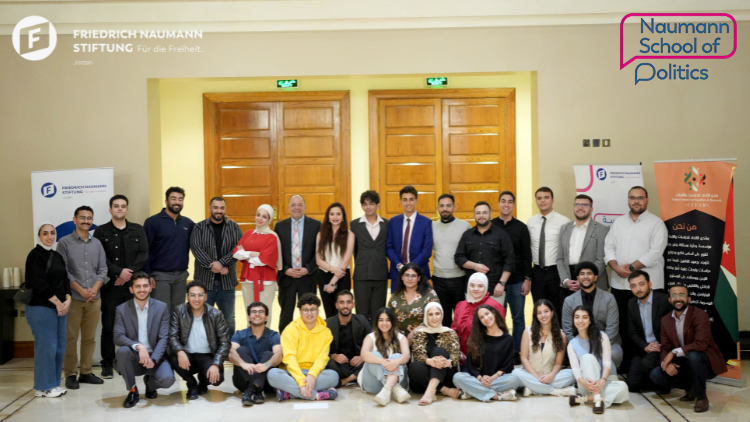
When the Naumann School of Politics (NSOP) opened its doors to a new group of participants this year, no one arrived simply to “attend a program.” They arrived with curiosity — the kind that comes from wanting to understand their country, their world, and their place in it. Over the next three weekends, that curiosity grew into something sharper: confidence, clarity, and a deeper sense of responsibility toward public life.
NSOP became a living space for ideas — not as slogans, but as tools for thinking. And in that space, participants learned to challenge assumptions, articulate opinions, and see politics not as noise, but as a system that affects how people live, decide, and lead.
Weekend 1 — Understanding Ideas Before Arguing About Them
The first weekend wasn’t about memorising theories or repeating definitions. Instead, participants were asked a simple but powerful question:
What do freedom, responsibility, and the rule of law actually mean when you strip them of political rhetoric?
Conversations moved from the historical roots of liberalism to the realities of the Arab world today. Participants debated what limited government looks like in practice, how civil society gives meaning to citizenship, and why liberal principles developed so differently across regions.
One of the most intense moments was a debate on whether liberalism has a place in Arab political culture — a discussion that revealed how much diversity exists inside one room, and how much people can learn when disagreement is welcomed, not avoided.
By the end of the first weekend, participants weren’t thinking in textbook categories anymore. They were thinking as citizens — aware that rights and responsibilities only matter when people understand them.

Weekend 2 — Media, Messaging, and the Reality of Being Heard
If the first weekend explored political ideas, the second explored the world that shapes them: the media.
Participants learned how stories are structured, why some narratives stick, and how political messages gain (or lose) credibility. Instead of talking about journalism from a distance, they were asked to break down actual news stories, examine language choices, and understand how information becomes influence.
Then came the practical side:
How do you speak when someone else controls the questions?
Press interview simulations pushed participants beyond comfort zones. They confronted difficult topics, learned to stay calm under pressure, and discovered how much preparation, clarity, and honesty matter when communicating with the public.
This weekend showed them that political expression isn’t just about talking — it’s about responsibility. Words shape perceptions. Perceptions shape decisions. And decisions shape lives.

Weekend 3 — Seeing Politics From the Inside
By the third weekend, participants were ready to look at politics where it actually happens: inside institutions.
They explored how Jordan’s National Assembly operates, how legislation moves from an idea to a binding law, and why politics requires negotiation more than confrontation. Coalition-building exercises revealed the uncomfortable truth of politics: you rarely get everything you want, and you must learn to work with people who disagree with you.
The turning point was a full simulation of government–parliament interaction. Participants negotiated amendments, defended proposals, and experienced how complex decision-making becomes when competing interests collide. It was exhausting — and eye-opening.
The weekend ended with youth-led advocacy campaigns that participants developed themselves. Their presentations showed how far they had come: clearer reasoning, stronger arguments, sharper communication, and a belief that young voices matter in shaping public priorities.

What Changed After Three Weeks
NSOP wasn’t about producing politicians. It was about forming people who understand politics — not as spectators, but as participants.
By the end of the program, the group walked away with:
-
a clear understanding of liberal values and their relevance today,
-
the ability to analyse political events with depth rather than reaction,
-
the confidence to speak publicly with accuracy and intention,
-
practical insight into how institutions function and why they matter,
-
and a sense of ownership over their role in public life.
The most important change wasn’t in their notes — it was in their thinking. They became more curious, more critical, more articulate, and more aware of the responsibilities that come with being part of a political community.
NSOP didn’t give them final answers.
It gave them the tools to search for better ones.