Shaping Digital Futures
Refugee Youth Graduate from AI & WordPress Workshop

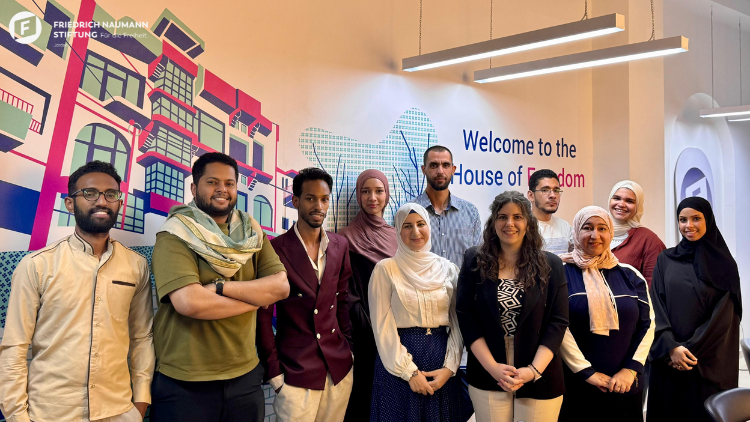
Closing a Chapter, Opening a Future
The fifth and final session of MiniSTEPNAU 2025 marked the conclusion of a month-long program designed to empower refugee and local youth with digital skills that matter. Held at the Friedrich Naumann Foundation for Freedom’s MENA office in Amman, the session blended creativity, innovation, and practical training—showing participants how to turn technology into tangible opportunities for growth and income generation.
Led by Yemeni entrepreneur and STEPNAU Hackathon winner Maher Al Tiari, the final day brought the program’s vision full circle. What began weeks ago as a series of introductions to WordPress, branding, and online tools ended as a showcase of how those skills could translate into real-world projects—and, for many, a clearer sense of direction.
From Inspiration to Execution
The session opened with a creative challenge: building a brand from scratch. Participants used Pinterest to gather visual references for their personal or business concepts, drawing inspiration from colors, logos, and layouts. Those ideas were then transformed into AI-generated prompts via imageprompt.org and developed into high-quality visuals using Google ImageFX.
Once the visuals took shape, participants moved to Canva to refine their designs, layering text and layouts to create logos, banners, and marketing materials. ChatGPT was used to draft captions, taglines, and descriptions—bridging the gap between imagery and messaging.
“This was the first time I created something that looked like a real brand. I feel ready to launch,” said Nemah, holding up her newly designed concept with pride.
“It felt like building a future, not just content,” added Ammar, summing up the energy in the room.

Learning to Work Smarter
The day wasn’t just about creativity—it was also about efficiency. Through n8n, a no-code automation platform, participants learned how to connect different online services and streamline repetitive tasks. They then experimented with Mokenua, a chatbot builder, to create automated customer interactions.
These tools introduced the group to a key lesson: you don’t need large budgets or coding expertise to automate processes, answer inquiries, and scale up small businesses.
For many participants, this was a shift in mindset. Technology wasn’t just something they consumed—it was now something they could shape to work for them.
More Than Just Certificates
By the end of the session, each participant walked away with a certificate of completion, but more importantly, they left with something practical: a working prototype. Some created websites, others built online stores or interactive platforms—proof that what they learned could immediately translate into action.
“I’m launching my own brand. This course didn’t just teach me skills—it gave me direction,” said Mohammed, proudly showing his online perfume shop.
These weren’t just class exercises. They were the first real steps toward independence for young people who are determined to create opportunities despite challenging circumstances.

Why MiniSTEPNAU Matters
What made MiniSTEPNAU unique wasn’t just the software or platforms introduced—it was the sense of ownership it instilled. Refugee and local youth didn’t just learn how to design, automate, or publish; they discovered how to use those skills to tell their stories, support their communities, and earn a livelihood.
The workshop series proved that even a short-term program can spark long-term change when it combines practical skills, mentorship, and access to the right tools.
Looking Ahead
MiniSTEPNAU 2025 may have ended, but the momentum doesn’t stop here. The participants now carry with them the ability to design brands, launch businesses, and automate their work—skills that can grow with them long after the certificates have been framed.
For the Friedrich Naumann Foundation for Freedom, this program reflects a broader commitment: equipping refugee and local youth with the tools they need not only to participate in the digital economy but to lead in it.
In the words of one participant, “We didn’t just learn how to use technology—we learned how to use it to shape our future.”