From Frameworks to Functioning Institutions
The Naumann Parliamentary Simulation in Practice

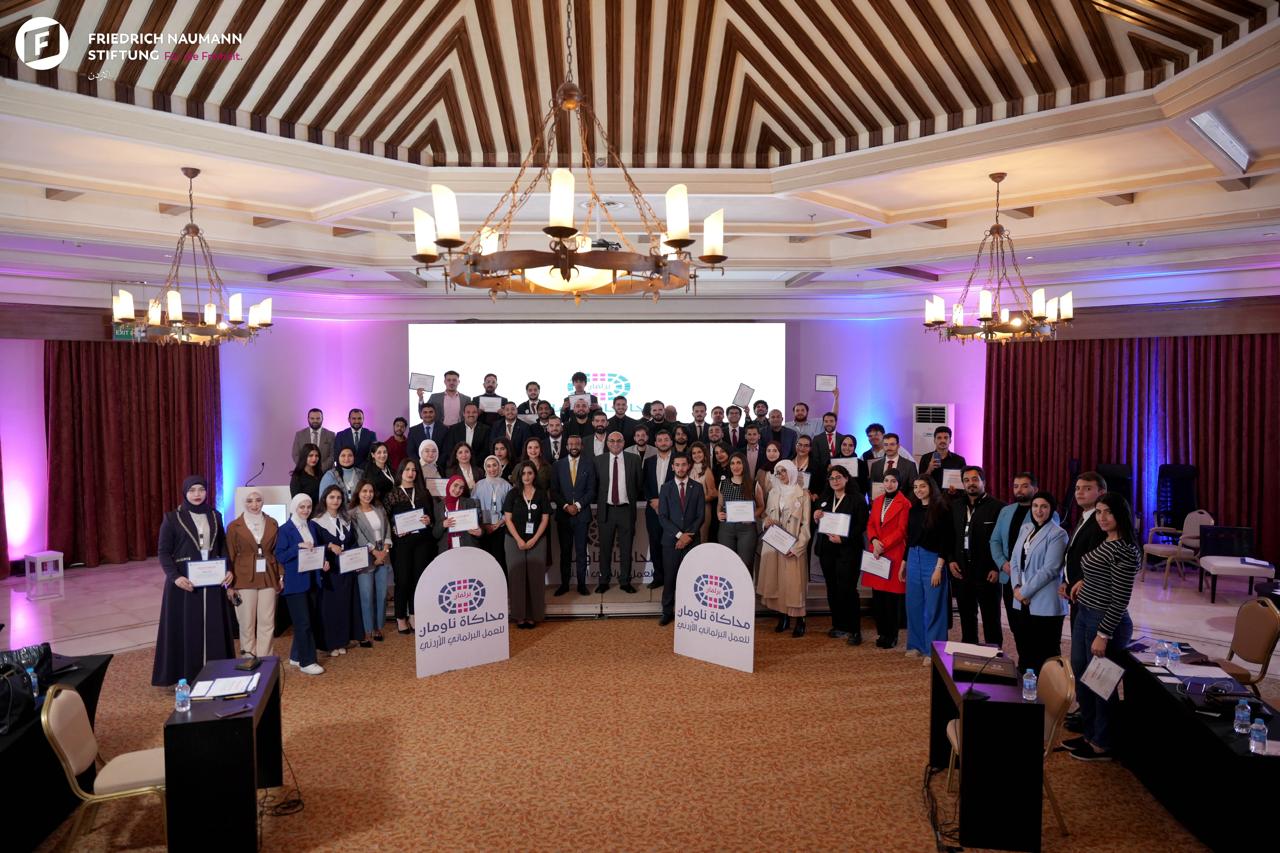
The Naumann Parliamentary Simulation (NauSim) concluded after five intensive days of structured political engagement, offering participants a comprehensive, practice-based introduction to parliamentary work. Designed to replicate legislative and procedural realities, the simulation moved systematically from legal foundations to full plenary deliberation, allowing participants to experience parliamentary processes in their institutional, political, and procedural dimensions.
Rather than approaching democratic governance as an abstract concept, NauSim placed participants inside its mechanisms—laws, committees, negotiations, and decision-making—highlighting the responsibilities and constraints that define parliamentary life.
Day One: Establishing the Legal and Political Framework
The first day of the simulation focused on grounding participants in the legal and institutional context that underpins parliamentary systems. Sessions addressed the electoral law, the political parties law, and core principles of liberal democracy, establishing a shared conceptual foundation before the simulation formally began.
This initial phase emphasized clarity and common understanding. Participants engaged in guided discussions that connected legal provisions with political practice, ensuring that subsequent stages of the program would be informed by a solid grasp of institutional rules.
As one participant noted:
“Understanding the legal framework from the beginning changed how we approached every discussion that followed.”
Facilitators stressed that this preparatory phase was essential to meaningful participation:
“Parliamentary practice only makes sense when participants understand the legal boundaries within which political action takes place,” one facilitator explained.

Day Two: Bridging Theory and Political Practice
On the second day, the focus shifted toward political systems, democratic governance, and ideological frameworks. Sessions explored how democratic principles translate into political behavior, party positioning, and parliamentary interaction.
Participants engaged in structured exercises designed to prepare them for the simulation without yet assigning formal roles. This approach allowed space for reflection and discussion, reducing the gap between conceptual understanding and applied political engagement.
A participant reflected on this transition:
“Day two helped connect ideas to practice. It clarified how political positions are formed before they are defended.”
Facilitators described the day as a necessary transition:
“This stage allows participants to think politically before they are asked to act politically,” one facilitator observed.

Day Three: Entering the Parliamentary Simulation
The simulation formally began on the third day. Participants received their parliamentary materials and discovered their party affiliations, initiating their full engagement with the simulated parliamentary environment.
Internal party meetings followed, during which participants discussed priorities, coordinated positions, and organized their internal work. These meetings were followed by internal party selections and parliamentary elections, including the choice of the Speaker and Deputy Speakers.
The day marked a clear shift from learning to institutional responsibility. Participants were required to operate within procedural structures and collective decision-making processes.
One participant described the experience as transformative:
“At that point, participation became responsibility. Every contribution had consequences for the group.”
A facilitator remarked:
“This was the moment participants began to internalize parliamentary discipline and institutional accountability.”

Day Four: Legislative Deliberation and Committee Work
Day four represented the most technically demanding phase of the program. Parliamentary committees convened to review draft laws, engage in detailed legislative discussions, and consult with experts.
Expert meetings provided legal and technical input, supporting participants as they developed amendments and refined proposals. Coordination between committee chairs and bloc leaders reflected the complexity of consensus-building within parliamentary systems.
A participant described the workload as demanding but instructive:
“The committee work showed how much time, negotiation, and precision legislative decisions require.”
Facilitators emphasized the educational value of this phase:
“Legislation is not symbolic. It requires sustained effort, compromise, and careful reasoning—day four made that reality tangible.”
The day concluded with practical preparation for managing the plenary session, ensuring procedural readiness for the final stage of the simulation.

Day Five: Plenary Deliberation and Decision-Making
The final day brought the simulation to its institutional conclusion. Committees presented their work in the plenary session, participants debated proposals, considered amendments, and proceeded to structured voting.
This stage reflected the highest level of parliamentary performance observed throughout the program, combining legal understanding, political negotiation, rhetorical clarity, and procedural discipline.
One participant summarized the experience:
“By the final day, the process felt institutional rather than instructional.”

An Experiential Approach to Parliamentary Education
Across five consecutive days, NauSim offered participants a rare opportunity to experience the full cycle of parliamentary work—from legal foundations and political positioning to legislative deliberation and collective decision-making.
The program demanded sustained engagement, long working hours, and continuous cooperation. Participants demonstrated a high level of commitment throughout, engaging seriously with both the technical and political dimensions of the simulation.
As one facilitator concluded:
“NauSim does not aim to simplify parliamentary life. It exposes its complexity and expects participants to rise to it.”