The Freedom to Learn
Lutuf’s Story of Inclusive Learning

From Vision to Impact
In a world where education often leaves vulnerable children behind, Lutuf stands out as a story of inclusion, creativity, and purpose.
Developed by Israa Sehiti, a refugee entrepreneur from Irbid, Jordan, Lutuf is a collection of playful learning tools designed for children with special needs and learning difficulties. But it’s more than a product — it’s a bridge between understanding and empowerment.
Inspired by her own personal journey as a mother, Israa’s idea grew out of a deep desire to make learning easier and more joyful for children who need extra support. What began as a way to respond to one child’s challenges evolved into a mission to help many.
Through the STEPNAU programme — one of the successful projects implemented under the Jordan Refugee Desk, Israa received targeted support to turn her vision into a real, community-based service. STEPNAU’s mission is to move beyond short-term aid and instead equip refugee and local youth with the practical skills, mentorship, and space they need to build long-lasting, inclusive businesses.
Building Inclusive Learning
Each Lutuf game is designed with both fun and function in mind — encouraging focus, communication, and motor skills development. Yet, Israa’s real innovation lies in how she brings these tools to life: by training parents and caregivers to use them confidently at home and in classrooms.
Her approach places agency directly in the hands of families, making learning not just accessible, but sustainable. “I wanted to create something that doesn’t just help children,” Israa says, “but empowers parents to become active teachers in their child’s growth.”

From Idea to Implementation
When Israa joined STEPNAU, she participated in a needs-based assessment that identified key challenges: limited space to demonstrate her products, low local awareness, and the need for pilot training sessions. In response, STEPNAU provided rental support for a local training space at Al-Najah Center in Irbid for one month — a small but powerful intervention that made all the difference.
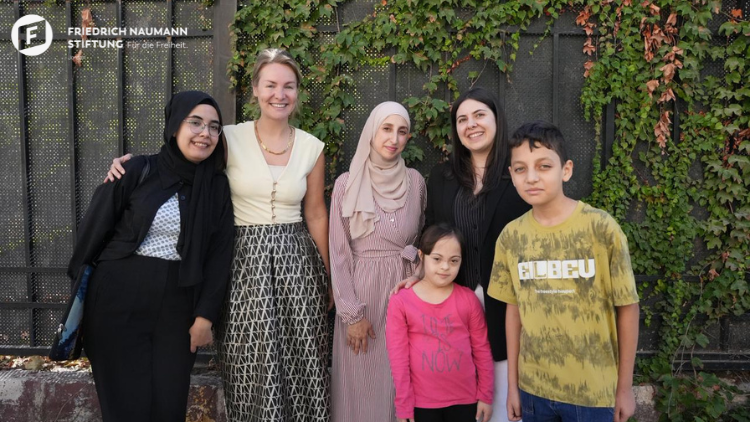
During one of our follow-up visits to the centre together with the STEPNAU team, we witnessed firsthand how Israa transformed the space into an engaging learning environment filled with colour, creativity, and care. Parents, caregivers, and children interacted with her tools in ways that were both joyful and educational — a clear reflection of the real impact her idea has achieved.
This dedicated space allowed Israa to:
- Engage directly with families through hands-on sessions using Lutuf tools.
- Test and refine her materials based on participant feedback.
- Build partnerships with local educators and service providers.
- Prove the concept’s sustainability through real-time data on demand, pricing, and session design.
In just a few weeks, Lutuf evolved from an idea into a functioning model for inclusive learning.

A Ripple Effect in the Community
The activities at Al-Najah Center helped Israa build stronger connections with local organisations and opened doors for collaboration and future referrals. The impact went beyond individual families and turned into a collective effort for inclusion.
Parents attending Israa’s sessions described tangible changes: greater confidence, better home routines, and renewed hope. For many, it was the first time they had access to tailored, step-by-step guidance for their children’s needs.
Small Spaces, Big Change
The Lutuf pilot is a powerful reminder that sustainable impact does not always require massive resources. Sometimes, it begins with something as simple as a room — a safe place to test ideas, engage people, and build trust.
For FNF’s STEPNAU programme, such stories illustrate what freedom in practice looks like: empowering individuals to design their own solutions, adapt them to local realities, and create ripples of change that outlast any single project.

Moving Forward
Today, Lutuf stands as a model for how focused, hands-on support can help refugee entrepreneurs turn empathy into enterprise. Israa continues to refine her tools, expand her partnerships, and advocate for inclusive education — proving that when ideas are given space to grow, they can reshape entire communities.