Three Days of Learning
Enhancing Employment Policy and Training with AI Tools

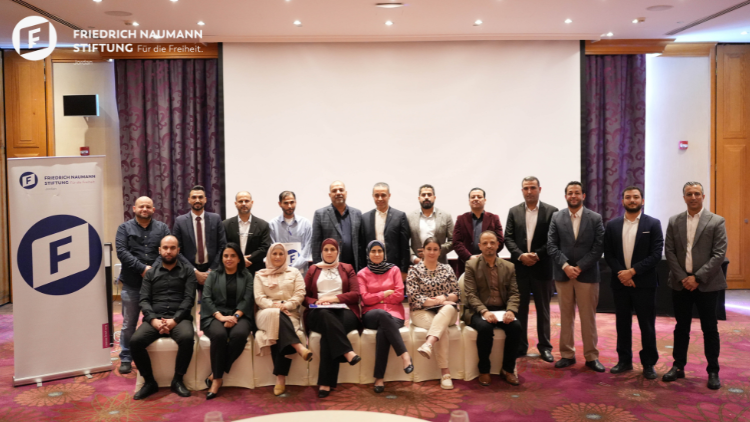
Over three days, Ministry of Labour employees took part in an immersive training course that opened space for learning, discussion, and forward-looking thinking on employment policies, vocational training, and the role of artificial intelligence in shaping labour-market planning. The program created a setting where participants could step away from their daily routines and explore the bigger picture of how policy can support real people, real skills, and real opportunities in Jordan’s evolving economy.
Starting with the Foundations: Understanding Jordan’s Labour Market
The first day established the groundwork for the entire course. After a brief welcome and pre-assessment, participants engaged in early conversations that touched on the complexity of the labour market — the challenges faced by job seekers, the shifts taking place across sectors, and the policies designed to respond to those changes.
One participant reflected during the opening discussion:
“We often work with policies in their final form, but rarely get the chance to break them down and understand the thinking behind them. This was a chance to step back and see the full picture.”
Throughout the afternoon, the group explored how different types of employment policies function, and how tools such as skills-development programs, wage support schemes, and private-sector incentives contribute to better outcomes. These conversations set a strong base for the deeper analysis awaiting them on the following day.

Day Two: From Evidence to Innovation
The second day shifted toward evidence-based learning. The morning began with essential questions:
How can we measure whether a policy is working? What do labour-market indicators reveal about people’s lived experiences?
Participants examined data through a more human lens, recognizing that indicators reflect real stories — unmet needs, emerging opportunities, and patterns worth paying attention to.
As one attendee noted:
“It was eye-opening to see how numbers can guide smarter decisions, not just fill reports.”
Global Practices, Local Relevance
The group then explored best practices from around the world. These examples sparked thoughtful discussions on what could be adapted to Jordan’s context — and what requires a tailored approach. Participants compared models, shared experiences, and considered how certain ideas could realistically fit within Jordan’s institutional and economic landscape.

Institutions, Roles, and Collaboration
The sessions then shifted to examining how national institutions contribute to shaping the labour market. The discussions highlighted the importance of coordination — between ministries, training providers, the private sector, and community organizations — to ensure that policies translate into meaningful, visible outcomes.
AI Forecasting: A Glimpse Into the Future
The afternoon brought a change in perspective as participants explored AI-based forecasting. Rather than treating artificial intelligence as something distant, the training introduced it as a tool that can support better planning, anticipate trends, and improve decision-making.
A participant commented:
“AI always sounded complicated, but today we saw how it can actually help us predict needs and plan with more confidence.”
This session bridged traditional policymaking with modern tools, reinforcing the idea that effective employment policy must combine both strategic thinking and technological awareness.
Day Three: Purpose, Coordination, and the Road Ahead
The final day brought the group into a space of reflection and forward planning. The morning explored the broader role of training — not only as a mechanism for skill-building, but as a strategic tool for shaping labour-market readiness.
Participants analyzed gaps between available skills and actual market demand, discussing how to bridge these gaps and design training that truly responds to real-world needs.
They then moved into discussions on coordination and partnerships, linking these ideas to their own institutional responsibilities. This created a meaningful bridge between what was learned in the course and what can be applied within their daily work.
Before concluding, the group worked together to formulate practical recommendations for improving labour-market responses, strengthening collaboration between institutions, and integrating evidence and digital tools more effectively into planning.
One participant summarized the spirit of the final day:
“This course helped us reconnect the pieces — policy, training, institutions, and technology. It gave us a clearer path forward.”

Closing Reflections
The workshop ended with a warm closing and certificate handover, marking the conclusion of three days rich with dialogue, hands-on learning, and shared insights. Yet the real value of the training lies not in its end, but in how participants take these tools and perspectives back into their work.
The course reminded everyone that employment policies and training programs are not just frameworks or documents — they are systems that influence people’s choices, pathways, and futures. And with stronger coordination, informed analysis, and the thoughtful use of AI tools, these systems can continue to evolve in ways that better serve Jordan’s labour market and the people who depend on it.