Hungary Elections
Hungary at a Crossroads: Power, Disinformation, and the Politics of Alignment

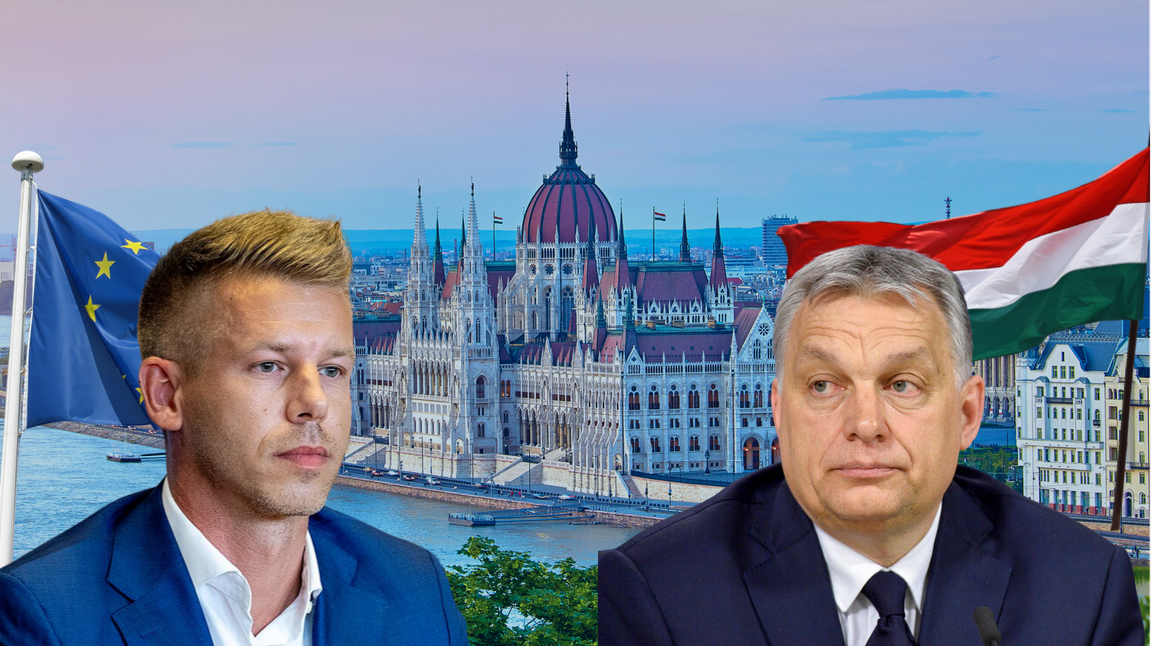
As Hungary approaches a pivotal parliamentary election, the country finds itself at the center of multiple, overlapping crises that extend far beyond its borders. The April 2026 election is emerging as the most consequential since Hungary’s democratic transition, with implications not only for domestic governance but also for the EU’s cohesion and Russia’s influence in Europe. What is unfolding is not merely a contest between an incumbent government and an opposition challenger. Rather, Hungary has become a revealing case of how political power, foreign policy orientation, and disinformation can converge into a coherent system of governance. The implications of this system are increasingly visible not only domestically but also across the European Union.
Viktor Orbán’s political trajectory offers a useful entry point into understanding this transformation. In 1989, he emerged as a liberal reformer, publicly demanding the withdrawal of Soviet troops and calling for free elections. At the time, there was little indication that he would later position himself as one of the most prominent critics of liberal democracy within Europe. Yet this apparent ideological shift becomes more intelligible when viewed through the lens of political strategy rather than conviction. Some former allies and observers have described Orbán as driven less by fixed ideology than by political pragmatism and power consolidation. His repositioning of Fidesz in the 1990s - from a liberal youth movement to a national-conservative party was gradual and strategically positioned within Hungary’s shifting political landscape. It allowed him to occupy a less crowded political space and build a more cohesive and loyal political base.
Institutional Transformation and Entrenched Governance
This strategy has continued to shape Hungary’s political system. Since returning to power in 2010, Orbán has overseen a far-reaching restructuring of state institutions. Constitutional changes, reforms to the judiciary, and the reconfiguration of media and electoral systems have collectively weakened checks and balances. While elections remain formally competitive, the institutional environment in which they take place is no longer neutral. What has emerged is not the abolition of democracy but its transformation into a system in which political competition operates within increasingly constrained parameters.
Crucially, this system is designed to endure beyond electoral cycles. Opposition actors, including the rising Tisza party led by Péter Magyar, acknowledge that even a victory at the ballot box would not necessarily translate into effective governance. Key institutions - from the constitutional court to regulatory bodies and public media - are widely described by analysts as being staffed by individuals aligned with the ruling party. At the same time, networks of influence extend into foundations, state-linked enterprises and informal patronage structures. This includes entities such as the Mathias Corvinus Collegium and state-linked companies like MOL, where political and economic power intersect, creating networks of influence that extend beyond formal state institutions. The result is a form of political entrenchment that is both institutional and systemic, making meaningful change difficult even in the event of electoral turnover.
Foreign Policy Reorientation and Strategic Ambiguity
In parallel with these domestic developments, Hungary’s foreign policy orientation has undergone a gradual but significant shift. While maintaining its formal commitments within NATO and the EU, the government has cultivated increasingly close ties with Russia. This evolution did not occur overnight. Early signs were visible in pragmatic economic cooperation, most notably the 2014 agreement with Moscow to expand the Paks nuclear power plant. Over time, however, this cooperation has taken on a more political dimension.
Hungary has repeatedly positioned itself as an outlier within the EU on issues related to Russia and Ukraine. It has delayed or blocked collective decisions, including financial support packages for Kyiv, and has maintained channels of communication with the Kremlin even as other member states sought to isolate it. Recent reports that Foreign Minister Péter Szijjártó maintained ongoing communication with Russian Foreign Minister Sergey Lavrov during EU meetings have further eroded trust. In practice, this has contributed to a decline in trust, with EU diplomats reportedly limiting the information shared with Hungary and, in some cases, shifting sensitive discussions into smaller formats that exclude Budapest.
At the same time, Hungary’s external positioning is not limited to its relationship with Russia. It also reflects a broader effort to cultivate alternative political alliances beyond the European mainstream. The visit of U.S. Vice President JD Vance to Budapest in the final phase of the campaign underscores this dynamic. Vance’s engagement has been widely interpreted as support for Orbán’s government and its broader political orientation, reinforcing connections between Hungary and the emerging connections with like-minded conservative and right-leaning political actors in the transatlantic space. This alignment provides Orbán not only with symbolic validation but also with an additional external reference point that complements his government’s narrative of sovereignty in opposition to Brussels.
The Role of Disinformation in Domestic Politics
This external positioning is closely linked to Orbán’s domestic political strategy. In the current election campaign, foreign policy narratives are not peripheral but central. The government has framed Hungary as a country under threat, drawing on historical memories of external domination. Ukraine is portrayed as a potential source of instability, the European Union as an overreaching authority, and the domestic opposition as aligned with foreign interests. Campaign messaging has explicitly portrayed opposition leader Péter Magyar as a proxy for Brussels and Ukraine, with billboards and media narratives suggesting alignment between the opposition, EU institutions, and Kyiv. These narratives resonate particularly strongly among older and rural voters, who are more receptive to messages emphasizing security and stability. Younger and urban voters, by contrast, tend to favor a more pro-European orientation, highlighting a growing generational divide within Hungarian society.
Disinformation plays a crucial role in reinforcing this political framework. Domestically, pro-government messaging consistently emphasizes themes of sovereignty, external interference, and existential threat. These narratives are amplified through a media landscape in which pro-government actors hold significant influence. At the same time, Hungary has become a target of external disinformation campaigns linked to pro-Kremlin networks. In the run-up to the election, fabricated videos and false claims, such as allegations of assassination plots or violent uprisings, have circulated. These campaigns are notable not only for their content but for their timing and structure. Unlike earlier disinformation efforts that reacted to events, current operations appear more proactive, seeking to shape the narrative environment in advance. This convergence of domestic political messaging and external influence operations suggests an increasing overlap between domestic political strategy and geopolitical information dynamics.
The election campaign itself reflects a highly polarized contest between Viktor Orbán and opposition leader Péter Magyar, structured around competing narratives of sovereignty and systemic change. Orbán has framed the election as a defensive struggle, warning against external threats from Ukraine, Brussels and “pro-war” actors, with campaign slogans such as “We will not be a Ukrainian colony” reinforcing this positioning. His messaging portrays Magyar as aligned with foreign interests and EU institutions. In contrast, Magyar has centered his campaign on promises of a “true regime change,” focusing on corruption, governance reform, and the restoration of Hungary’s European orientation. Campaign events have underscored this divide, with both sides mobilizing large-scale rallies and invoking historical symbolism, particularly references to the 1956 revolution. However, the contest takes place under asymmetrical conditions: Orbán’s long-standing control over key institutions, media influence, and established party networks continue to provide structural advantages that shape the electoral playing field.
Pressure on Media and the Shrinking Public Space
The domestic information space is further constrained by increasing pressure on independent journalism. Investigative reporters have faced surveillance, legal accusations, and coordinated smear campaigns. In one high-profile case, investigative journalist Szabolcs Panyi, known for reporting on Russian influence, was accused by the government of espionage. He has claimed that Hungarian intelligence services monitored his communications and that the resulting material was used to construct a smear campaign aimed at discrediting his work. Such developments contribute to a media environment in which critical reporting becomes more difficult. Taken together, these dynamics point to a system in which power consolidation, foreign policy alignment, and disinformation are not separate phenomena, but interconnected elements of governance. Institutional control enables the amplification of specific narratives, while those narratives, in turn, legitimize further concentration of power. Foreign policy positioning provides both strategic partnerships and symbolic resources that can be mobilized domestically.
Implications for the European Union
For the European Union, Hungary presents a complex challenge. The issue is no longer limited to disagreements over policy or values. It concerns the integrity of the Union’s internal processes and the degree of trust between member states. When sensitive information is withheld, when common decisions are obstructed, and when external actors exploit internal divisions, the EU’s capacity to act collectively is weakened. This dynamic has already affected decision-making on Ukraine, sanctions policy, and internal trust among member states. At the same time, Hungary’s trajectory raises broader questions about the resilience of democratic systems in Europe. The Hungarian case illustrates that democratic backsliding does not necessarily occur through an abrupt rupture. It can unfold gradually, through a series of strategic adjustments that, over time, reshape institutions, narratives, and alliances.
Conclusion: Elections and Beyond
As the election approaches, the immediate outcome remains uncertain. Opinion polls suggest a competitive race, with the opposition gaining ground, particularly among younger voters. Yet regardless of the result, the underlying structures of power will remain a defining factor in Hungary’s political future. The more fundamental question is therefore not only who wins the election, but whether the system itself can be meaningfully transformed. Hungary today stands as a case study in how political power can be consolidated, maintained, and legitimized in the 21st century. Understanding this model is essential not only for interpreting developments within Hungary but for anticipating how similar dynamics may emerge elsewhere in Europe.