Democracy
Uruguay: 40 Years of Democracy and a New Impulse for Liberal Cooperation

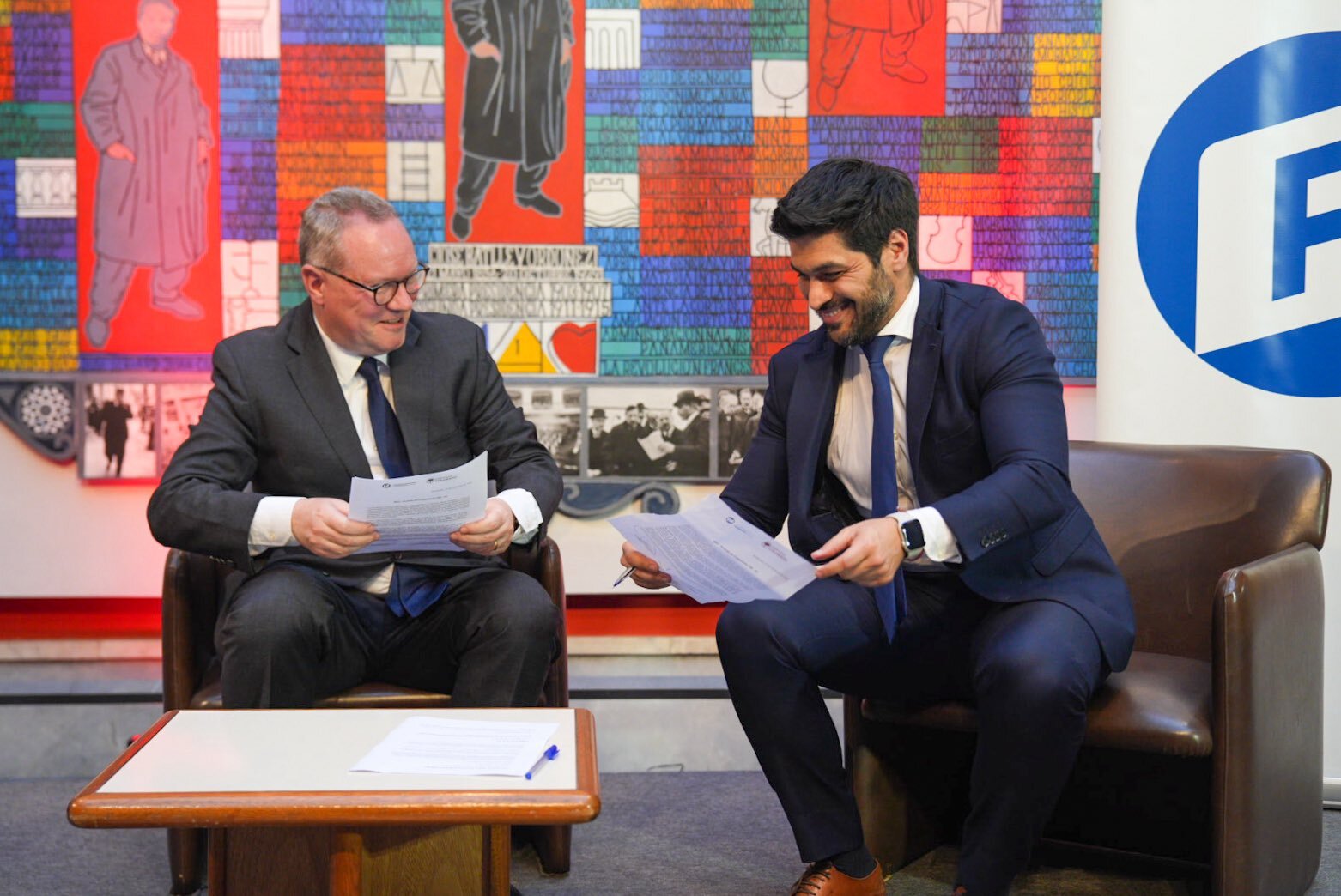
Dr. Hans-Dieter Holtzmann and Andrés Ojeda signed the renewal of the agreement between the Friedrich Naumann Foundation for Freedom and the Partido Colorado of Uruguay.
An Event That Goes Beyond Commemoration
On 27 November 2025, the headquarters of the Colorado Party in Montevideo became a meeting point to celebrate Uruguay’s democratic trajectory and, at the same time, renew its commitment toward the future. The presentation of the book “40 Years of Democracy in Uruguay: An Inspiration for Latin America” brought together political leaders, academics, and representatives of liberalism from across the region.
The event not only marked an anniversary, but also provided a space to reflect on the foundations, challenges, and future outlook of liberalism. It also featured the signing of a new Memorandum of Understanding between the Friedrich Naumann Foundation for Freedom—represented by Dr. Hans-Dieter Holtzmann—and the Colorado Party, represented by Andrés Ojeda, Secretary General of the party and Senator of the Republic. The agreement deepens a long-standing institutional relationship and reaffirms the commitment of both parties to promoting liberal democracy, civic culture, and the rule of law.

Uruguay as a Democratic Beacon in Latin America
The book compiles reflections from former Uruguayan presidents—Julio María Sanguinetti, Alberto Lacalle Herrera, José Mujica, and Luis Lacalle Pou—as well as from the current president, Yamandú Orsi. This diversity of perspectives not only lends legitimacy to the work but also highlights an essential feature of Uruguay’s political system: the ability to build broad consensus around the fundamental principles that uphold democratic life.
The book presentation provided a space for reflection that combined historical, legal, and political perspectives on the Uruguayan democratic process. The participation and remarks of former President Julio María Sanguinetti, Andrés Ojeda, María Eugenia Talerico (founder of PotenciaBA), and Dr. Hans-Dieter Holtzmann allowed for a rich dialogue on the singular nature of the country’s democratization and institutional consolidation. The discussion was moderated by former Deputy Minister of Foreign Affairs of Uruguay Nicolás Albertoni, who contributed an international perspective on the global challenges shaping the future of democratic systems.
During the conversation, participants emphasized that Uruguayan democracy should not only be celebrated as a historical achievement but also understood as a process under constant construction. Uruguay’s institutional stability is the result of sustained civic practices and political decisions that, over forty years, have reinforced the centrality of the rule of law. Former President Sanguinetti highlighted the importance of safeguarding the rules and procedures that have enabled the country to overcome tensions and conflicts without jeopardizing institutional continuity. María Eugenia Talerico, drawing on her comparative experience in legal and institutional matters, offered insights into the distinctiveness of the Uruguayan case within the regional context.

Dr. Hans-Dieter Holtzmann delivered the opening remarks at the event held at the headquarters of the Partido Colorado in Montevideo, Uruguay.
© Juan Francisco MachadoSigning of the Memorandum of Understanding: A Renewed Commitment
Within the framework of the book presentation, a new Memorandum of Understanding was signed between the Friedrich Naumann Foundation for Freedom and the Colorado Party. The agreement, signed by Dr. Hans-Dieter Holtzmann and Andrés Ojeda, reaffirms a long-standing cooperation aimed at strengthening civic education, academic research, and the promotion of liberal values in Uruguay and the region.
Ojeda emphasized that the agreement will give rise to new joint projects, while Holtzmann highlighted the relevance of this partnership in a global context in which democracies must support one another. He also noted that the recent signing of the Mercosur–European Union agreement in Montevideo—now in its final and decisive stage of ratification—demonstrates Uruguay’s active role in promoting openness and cooperation among democracies.

Discussion with Julio María Sanguinetti and María Eugenia Talerico, moderated by Nicolás Albertoni.
Celebrating, Learning, and Advancing Liberalism
The presentation of the book “40 Years of Democracy in Uruguay” and the signing of the Memorandum of Understanding constituted an event that brought together celebration, reflection, and a renewed commitment to the liberal values that underpin the country’s democratic life.
Freedom is not just another ideology, but the essential condition of human dignity and the foundational pillar of Uruguay’s democracy. This conviction guides the work of the Friedrich Naumann Foundation for Freedom in Uruguay and throughout Latin America.
Uruguay’s political culture—capable of combining pluralism, mutual respect, and open dialogue—demonstrates that democratic coexistence is not only possible, but one of the strongest features of the country’s institutional identity. Celebrating Uruguayan democracy means learning from its lessons and projecting liberalism into the future, reaffirming that institutions matter, freedom matters, and that Uruguay’s experience remains an inspiration for the region and the world.