Argentina
Argentina: A Timely Lesson for Milei?

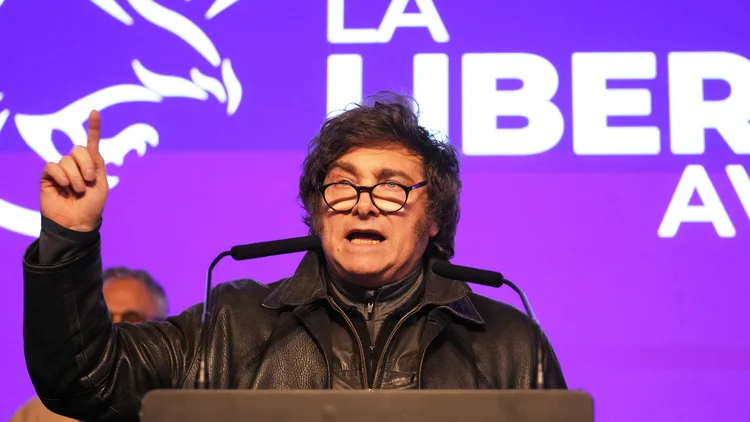
Argentinian President Javier Milei speaks after the polls close in provincial elections in La Plata, Argentina. © Picture Alliance / ASSOCIATED PRESS | Gustavo Garello.
Voters delivered a clear message on Sunday. In the elections in the province of Buenos Aires, Javier Milei's party ‘La Libertad Avanza’ only managed to secure 34% of the vote, while the Peronist ‘Fuerza Patria’ won 47%. Hardly anyone had expected such a clear defeat, least of all Milei himself. Before the election, he had announced his intention to ‘drive the final nail into the coffin of Peronism’, only to find afterwards that the coffin remained empty and that the Peronists, at least in the province of Buenos Aires, their traditional stronghold, were not so easy to kill off.
Celebratory mood among the Peronists, crisis management for Milei
While Milei watched the election results with his closest confidants, but hardly any members, let alone voters, in a posh club in La Plata, the Peronist governor of the province, Axel Kicillof, celebrated on an open stage, perfectly staged by his ‘comrades’ between grandmothers of the Plaza de Mayo, messages of greeting from children and flag-waving trade unionists. From her balcony in Buenos Aires, former president and current Peronist party leader Cristina Kirchner, who has been sentenced to six years of house arrest for corruption, cheered on her supporters with a mischievous grin, wearing a heart-patterned jumper.
There was little time for Milei to feel down on Monday morning. Crisis management was called for after the financial markets reacted negatively to the election defeat, which was unexpected, at least to this extent: the peso moved threateningly towards the upper limit of its range against the dollar as foreign exchange reserves continued to dwindle, the Argentine stock market slumped by double digits, and the country risk rose to over 1,000 points from 700 just a few weeks ago.
Congressional elections in October decisive
The two pieces of good news for Milei: little has happened (yet) in terms of power politics, and he can pull himself out of his current slump.
It is true that the provincial election in Buenos Aires was an important test of the president's popularity. Forty per cent of all Argentinians live in the province, which is more than if state elections were held in North Rhine-Westphalia and Bavaria at the same time. However, the province of Buenos Aires is traditionally Peronist. It was before the election and remains so now.
What is more decisive for Milei are the congressional elections on 26 October, when around half of the seats in both chambers, the National Assembly and the Senate, will be up for re-election. Milei's party currently holds only around 10% of the seats in Congress. Even if he cannot achieve a majority of his own in the elections, a larger parliamentary group would strengthen his position for further reforms.
For a sustainable recovery, Argentina needs above all an efficient and effective tax system, labour market legislation that creates incentives and reduces bureaucracy, a pension system that balances contributions and benefits, and a reform of federalism that strengthens the link between decision-makers, providers, payers and users. For all these necessary structural reforms, he needs a majority in Congress, which he currently lacks.
Impressive economic successes, but corruption allegations weigh heavily
Milei now has it in his own hands. His economic policy successes are undisputed and impressive for a term of less than two years: inflation has fallen from over 200% to below 40%, the budget is balanced, the economy is growing by 5%, and poverty is falling significantly.
On Sunday, Milei was punished not for his economic policy, but for his clumsy handling of corruption allegations against his closest associates regarding alleged bribes in the healthcare sector. At the centre of this is Javier Milei's sister, Karina, his closest advisor, the president's secretary general and party leader of ‘La Libertad Avanza’. Even though the situation is unclear and the presumption of innocence always applies, the president's response to the corruption allegations has so far been too hesitant and vague.
Milei took office in 2023 with the aim of fighting the ‘caste’ and the widespread corruption under the Peronists in the country. Therefore, the current allegations also concern his own credibility. Already during the ‘Libra affair’ in February, when he made some misleading recommendations for a cryptocurrency on X for a few hours and then deleted them afterwards, he did not cut a good figure, nor did his sister, which has triggered ongoing investigations in Argentina and the United States to this day.
Milei announces thorough review
Last Sunday's bitter defeat may have been a timely wake-up call for Milei to resolutely clear up all allegations. In his short but, by his standards, humble speech on election night, he announced that he would learn from the election results and address mistakes.
It is to be hoped that this will now be followed quickly by action, especially in view of the important congressional elections in October. Thanks to Milei, Argentina is on the right track in terms of economic policy, even if the work continues and there is still much to be done.
This requires a president who devotes all his energy and time to continuing the reform course, persuading the population and working constructively with the provinces to successfully attract foreign investment, and who is not distracted by his own crises. A lax approach to corruption allegations greatly undermines his credibility in a key policy area, which is why it is necessary for him to respond transparently and consistently, even against his own circle if necessary. Then the confidence of international capital, which is notoriously skittish, will return as quickly as it has turned away from Argentina in recent weeks.
The Argentinians, who finally have a sense of hope for a better future after decades, deserve it.