Freedom of Opinion and Expression
UN Report on Freedom of Expression in Germany

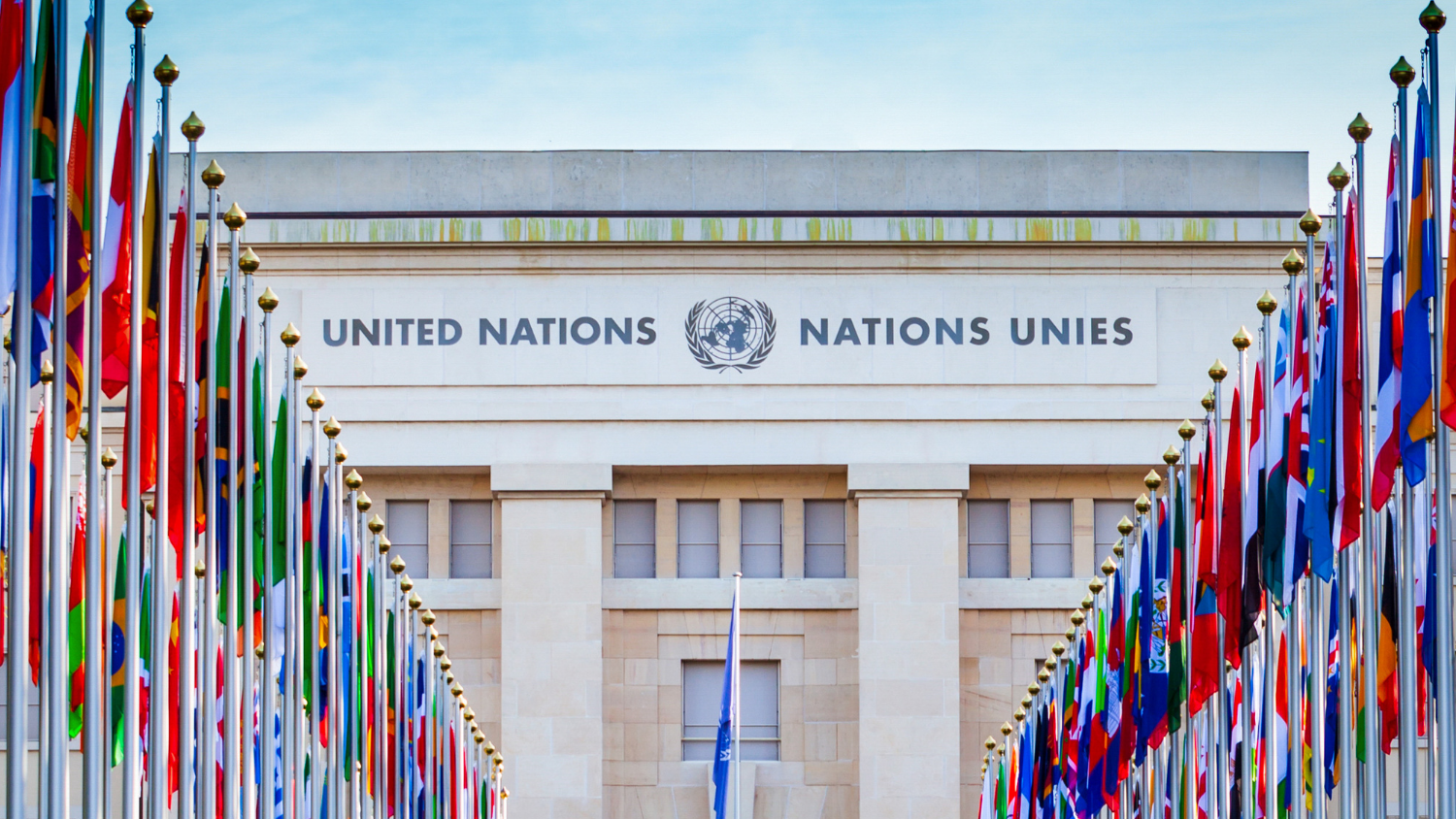
Palais des Nations, United Nations Office Geneva (UNOG)
© AndreyThe debate around freedom of opinion and expression is heating up. A new UN report has analyzed the state of freedom of expression in Germany. The findings and recommendations will be discussed at the UN Human Rights Council.
German society is polarized, and there is a deep divide in the understanding of what freedom of expression entails, according to the assessment by the independent UN Special Rapporteur on Freedom of Expression, Irene Khan. She visited Germany for the first time from January 26 to February 6. The published report documents the findings from written submissions and oral discussions. During her country mission Irene Khan traveled through Germany and met with representatives from the federal government, state governments, and civil society. The report’s sources are balanced and include not only the experiences of journalists and human rights activists, but also those of students and representatives from academia, the arts, the judiciary, law enforcement, and politics.
The Foundation of Democracy
Enacted in the Basic Law and numerous International Conventions, freedom of expression is one of the best-known fundamental and human rights. It is at the core of numerous civil liberties, including freedom of assembly, freedom of religion, and the right to free elections. Freedom of political expression, in particular, serves as a strong counterweight to autocratic tendencies and extremist positions. Protecting it is therefore the responsibility of the state as well as every citizen. This also includes actively practicing tolerance toward other, often uncomfortable, opinions. Discussing and determining the limits of freedom of expression is a normal democratic process of negotiation within a society. For one thing remains true even in a liberal democracy like Germany: Freedom of expression is not limitless. The UN report analyzes the implementation of the right to freedom of opinion and expression (Article 19) of the International Covenant on Civil and Political Rights, which Germany ratified in 1973.
The Limits of Political Expression
But how far can criticism go – and at what point does it become a criminal offense? Where are the red lines on the internet? Recent criminal orders issued for social media insults directed at Chancellor Merz show just how urgently the criminal law around freedom of expression has to be discussed and reevaluated. The UN Special Rapporteur expresses concern about Germany in this regard. She concludes that Germany is at an inflection point. Since the 2025 federal elections, society has become deeply polarized. Many feel uneasy about expressing their views on controversial topics for fear of being targeted. The UN Special Rapporteur calls for the repeal of paragraph 188 of the Criminal Code, which provides for stricter penalties for insults, defamation, and slander against politicians. Her reasoning is that the law, in its current form, is too susceptible to abuse. Elected officials should only have the same right as ordinary citizens to protect their reputation. The increased protection afforded to politicians currently restricts freedom. In the current situation, the judiciary is easily perceived as a political tool.
The UN Special Rapporteur views Germany’s commitment to combating antisemitism positively but calls for further measures to be taken. She takes a critical view of the use of the term itself. Criticism of Israel’s policies should not be equated with antisemitism. The practical consequence of such “Israel-related antisemitism” is the suppression of criticism of the Israeli government, which does not improve the protection of Jews against racist and religious hatred and intolerance.
The UN Special Rapporteur sees room for improvement in this regard. Legal uncertainty surrounding the ban on the slogan “From the river to the sea” is also evident in differing court rulings, sometimes even in the same court. Overall, the UN Special Rapporteur considers the criminalization of the slogan to be disproportionate and inconsistent with international human rights standards.
The Need for Political Action
The German government must act to counter internal and external threats to freedom of opinion and expression, according to the UN Special Rapporteur. Criminal law responses, in particular, undermine freedom of opinion and expression in Germany and require urgent reform.
The findings and recommendations of the UN report may not please everyone, but forming an opinion on them is the core of the human right to freedom of opinion and expression. The legal and political consequences are the responsibility of the German government.