Kenya
Nairobi and Pretoria are seeking a partnership with real economic substance


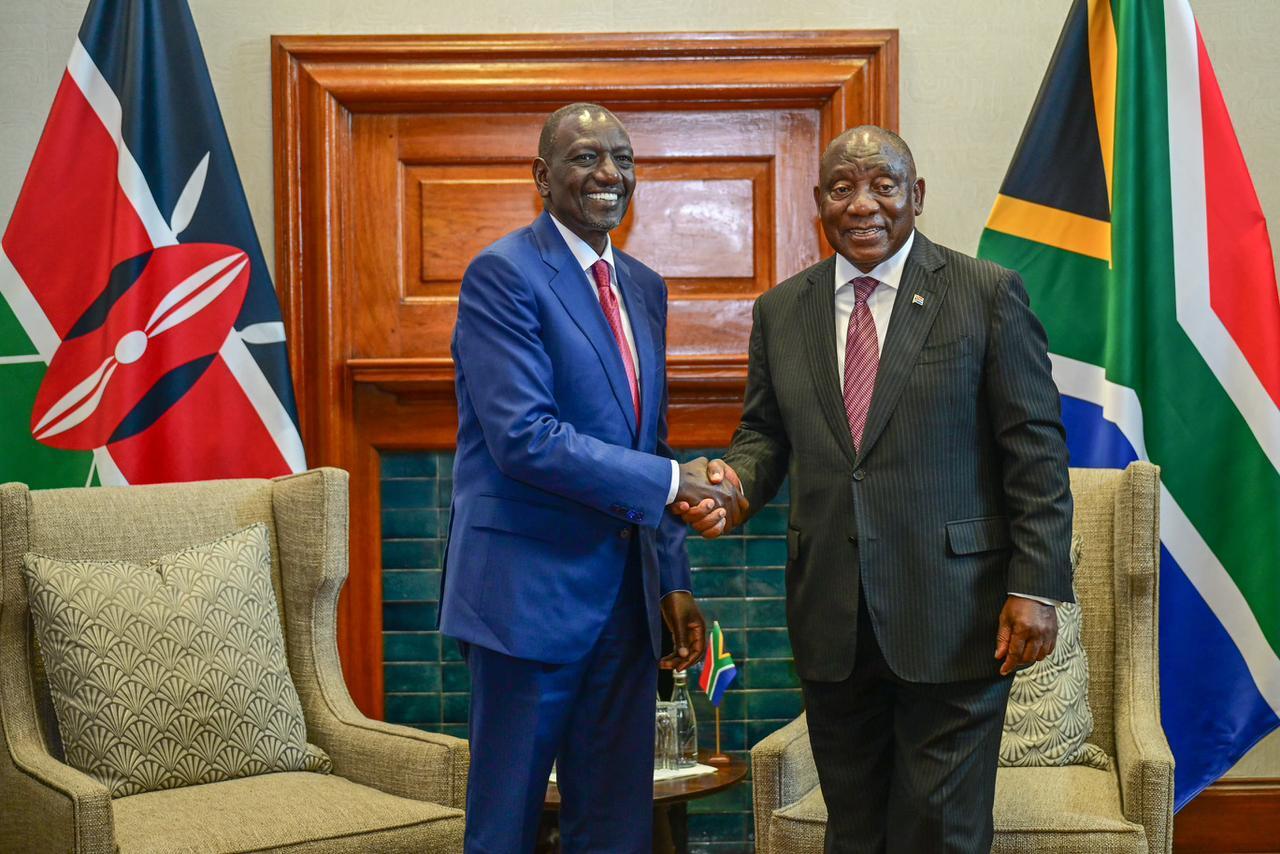
South Africa's President Cyril Ramaphosa welcomes President William Ruto of Kenya at the Union Buildings in Pretoria South Africa during an official state visit on 3-5 June 2026.
© State House KenyaThe State Visit by President William Ruto to South Africa on 3-5 June 2026 brought together two of Africa’s largest economies at a moment of shifting global dynamics and renewed attention to continental integration. In Pretoria, President Ruto was received by President Cyril Ramaphosa for bilateral talks, followed by a joint engagement with business leaders at the Kenya-South Africa Business Forum.
Alongside the formal diplomatic welcome, discussions turned quickly to trade, investment, regional integration and Africa’s position in a changing global order. While both governments underscored the long history of relations between the two countries, the focus was firmly on how to deepen practical cooperation.
Old ties, new priorities
President Ramaphosa described Kenya as a key strategic partner in East Africa, with ties shaped by shared history and cooperation since South Africa’s democratic transition in 1994. He pointed to Kenya’s position as South Africa’s largest trading partner in East Africa and a major destination for South African investment.
South African companies are active across Kenya’s economy, particularly in finance, ICT, manufacturing, retail, infrastructure and pharmaceuticals, with growing involvement in renewable energy and development finance. He also pointed to increasing Kenyan business presence in South Africa, reflecting expanding commercial links between the two regions.
President Ruto framed the visit within broader historical and geopolitical dynamics, pointing to South Africa’s democratic transition as a defining example of constitutional resilience. He described the relationship between the two countries as one rooted in shared liberation histories and long-standing cooperation within African and multilateral institutions.
Nairobi and Pretoria want economic substance
Both leaders placed economic cooperation at the centre of their discussions, with existing frameworks such as the Joint Commission for Cooperation and the Joint Trade Committee highlighted as key mechanisms guiding engagement.
President Ruto indicated that bilateral trade grew from approximately USD 590 million in 2024 to about USD 650 million in 2025. While both sides welcomed the increase, they also acknowledged that significant barriers remain, including tariffs, non-tariff restrictions and regulatory differences that continue to limit the full potential of trade between the two economies.
AfCFTA moves from promise to practice
A major focus of the talks was the African Continental Free Trade Area (AfCFTA). President Ramaphosa cited it as a critical tool for expanding intra-African trade, strengthening regional value chains and supporting industrialisation across the continent. He also referred to the first shipment of South African exports to Kenya under AfCFTA preferences as an early step in implementation.
Both leaders described AfCFTA as more than a policy framework, emphasising its potential to reduce trade costs, open markets and create wider opportunities for entrepreneurs, women and young people across Africa.
Opening doors for people and business
Mobility between the two countries also featured prominently. President Ruto pointed to the visa-free arrangement introduced in 2023, which has already led to increased travel, tourism and business exchanges. Official data presented during the visit showed a rise in Kenyan arrivals in South Africa since the policy took effect.
Africa’s voice in a shifting global order
On global affairs, President Ruto highlighted the shifting nature of the international system and growing uncertainty within multilateral institutions. In this context, he said African coordination is becoming increasingly important in shaping global outcomes.
Both leaders reaffirmed their commitment to strengthening the African Union and supporting reforms to global financial governance structures to better reflect the needs of developing economies. They also reiterated their shared commitment to democratic governance, constitutionalism and the rule of law as guiding principles of domestic and international engagement.
The real test is delivery
President Ruto said the success of bilateral cooperation should ultimately be judged by its impact on citizens and businesses. He pointed to practical outcomes such as improved market access, expanded opportunities for entrepreneurs and greater participation of young people in cross-border economic activity.
President Ramaphosa echoed this focus, stressing the importance of translating political goodwill into expanded trade, deeper investment flows and inclusive growth.
Beyond ceremony
The visit ended with both governments reaffirming cooperation across trade, investment, infrastructure, skills development and regional integration within the AfCFTA framework and existing bilateral mechanisms. The shared message running through the day was clear: the real measure of the partnership lies not in ceremony or statements, but in whether it delivers tangible benefits for citizens in both Kenya and South Africa.