Panel Discussion
War against Ukraine: Implications for Europe and Asia

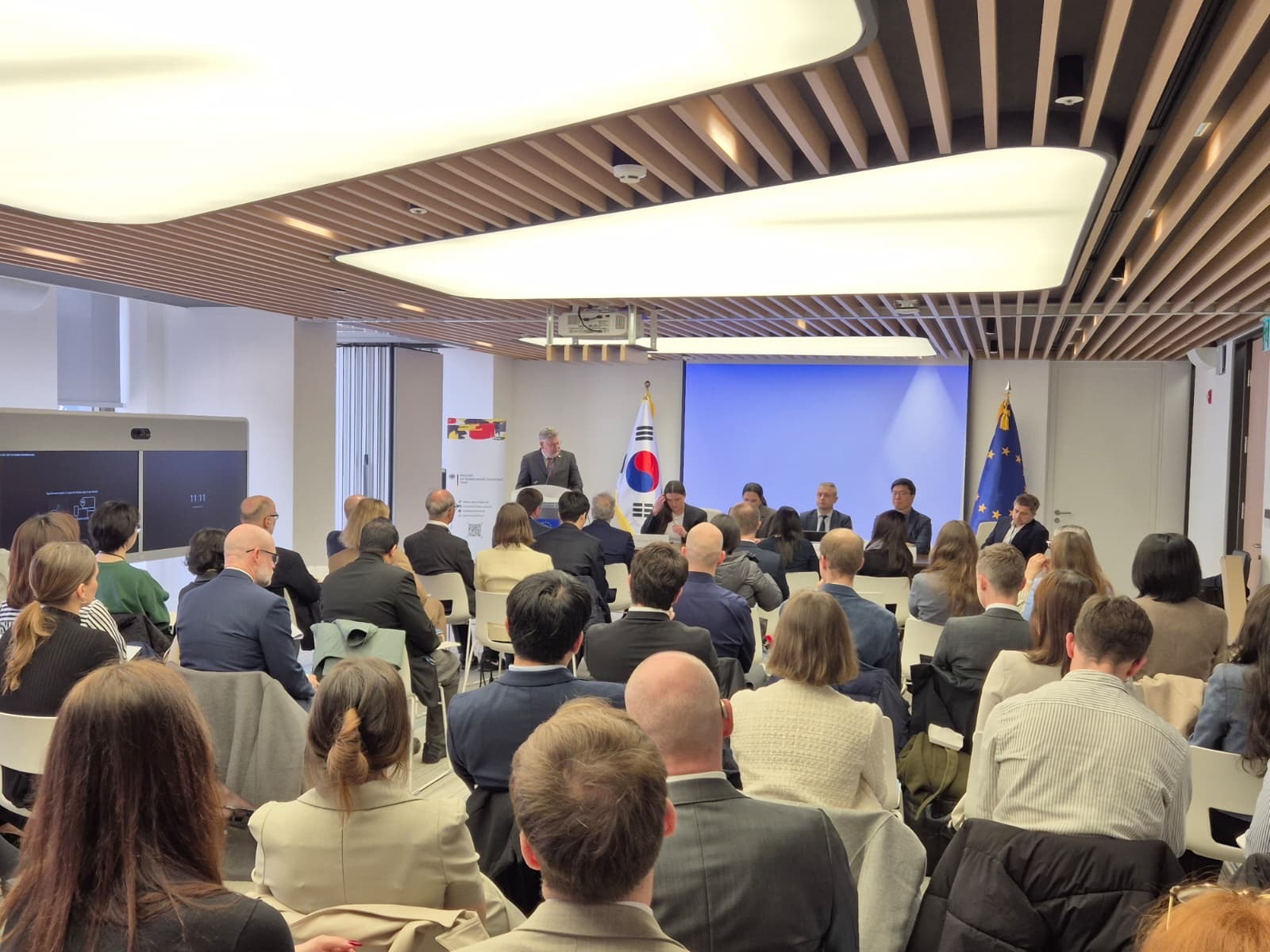
On 24 February 2022, Russia launched its full-scale invasion of Ukraine, expecting a swift military victory. More than four years later, Ukraine continues to defend its sovereignty against ongoing aggression. What was initially framed by Russia as a short operation has evolved into a prolonged war with far-reaching global consequences, affecting security dynamics well beyond Europe.
On 20 March, Friedrich Naumann Foundation co-organised a panel discussion on „Four years of Russia’s war against Ukraine: Global instability and implications on the Korean Peninsula” together with the Ukraine Embassy to the Republic of Korea, the Delegation of the European Union to the Republic of Korea, the Embassy of Germany to the Republic of Korea, and the New Europe Center (Ukraine).
At the event, Nataliya Butyrska (New Europe Center) from Ukraine provided first-hand perspectives on the human impact of the war, underlining the continued challenges faced by civilians and the resilience of Ukrainian society. She also pointed to external military support for Russia as a factor prolonging the conflict. In this context, she stressed the importance of sustained European support and called for closer cooperation with partners in Asia, including South Korea.
Frederic Spohr, Head of Office of FNF Korea, contributed to the discussion by highlighting the role of North Korea in current geopolitical developments and its relevance in the context of Russia’s war. For further insights into the scope and intensity of cooperation between Russia and North Korea, please refer to our full study here. He also emphasised the growing importance of closer cooperation between South Korea and Germany, pointing to developments such as Hanwha’s plans to begin production in Germany as an example of deepening bilateral ties.
The discussion also highlighted the rapidly evolving role of drone warfare. Mykhailo Samus from the New Geopolitical Research Network noted that the large-scale use of drones is exposing significant gaps in existing air defence systems and challenging traditional military doctrines. He further pointed out that both military doctrines and institutional approaches in many countries have yet to fully adjust to the realities observed on the battlefield.
These developments underline the importance of closer cooperation between Ukraine and partners in Asia, including South Korea, as well as the need for continued European support. More broadly, the discussion underscored that security challenges in Europe and Asia are increasingly interconnected and require coordinated international responses.
The Friedrich Naumann Foundation for Freedom extends its sincere thanks to all partners and speakers, particularly those who travelled from Ukraine, for their valuable contributions and insights.