Thailand
Reformist movement suffers setback as conservative-leaning party claims landslide victory

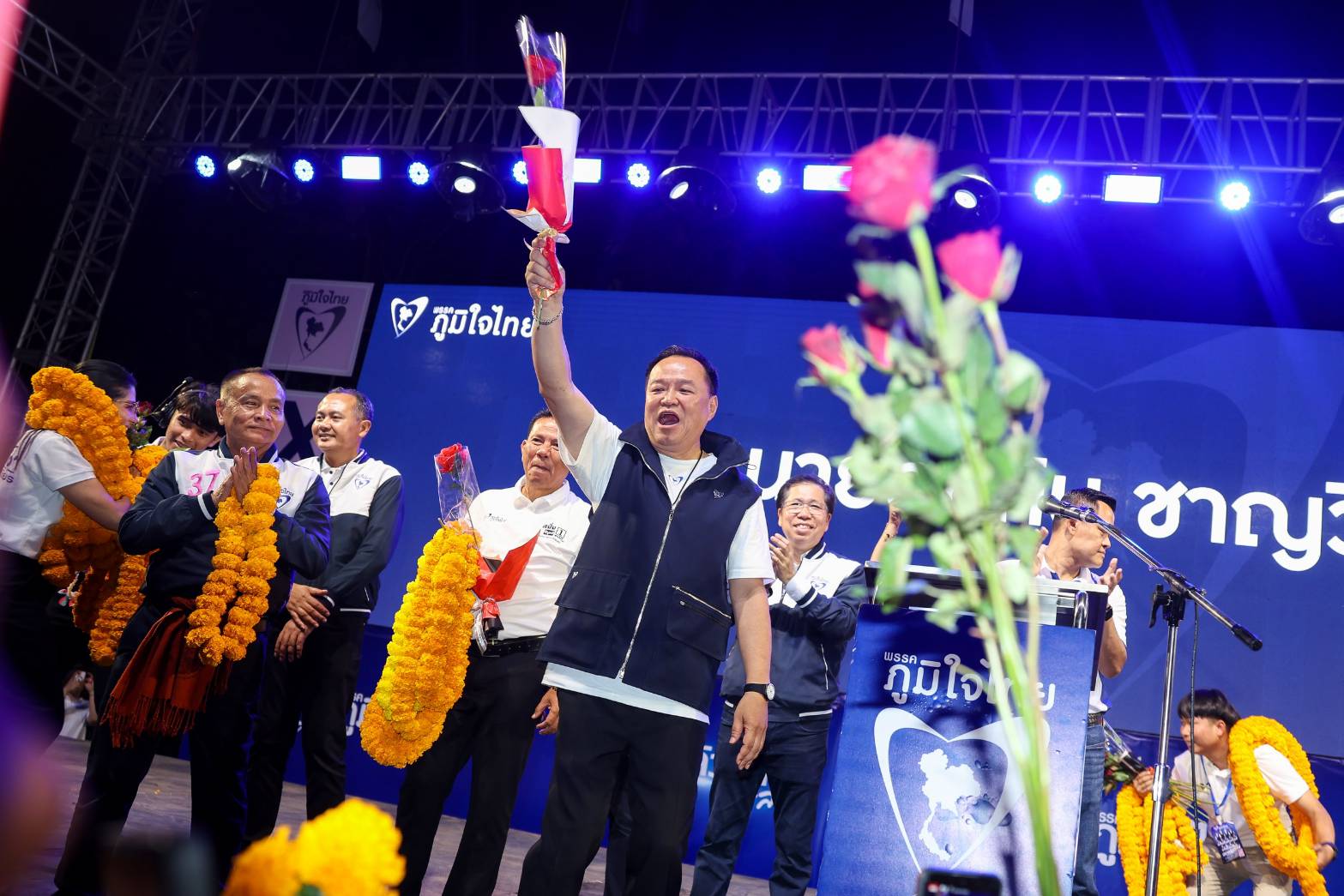
Bhumjaithai party led by caretaker prime minister Anutin Charnvirakul
© Bhumjaithai partyCaretaker Prime Minister Anutin's Bhumjaithai Party secured a majority of seats. The progressive People’s Party finished in second place by a surprisingly wide margin.
Thais have cast their votes for a new parliament. With more than 90 percent of vote counting results, the Bhumjaithai Party of caretaker Prime Minister Anuthin Charnvirakul is likely to have 193 seats in the general election held on 8 February, according to a preliminary calculation by election authorities. Bhumjaithai is followed by the progressive People’s Party and Pheu Thai party, who won 118 and 74 seats respectively. The parliament consists of a total of 500 seats. 400 of them are allocated to the winners of the constituencies, and a further 100 are distributed based on the party-list vote.
Bhumjaithai promotes conservatism , populism, and economic liberalism in its policy platform. Founded 17 years ago, this is the first time the party emerged as the largest force in the parliament.
In the previous election, they were only able to secure 71 seats in parliament. According to analysts, the high vote share in 2026 can be traced back to the party’s strategy in the immediate run-up to the election.
The party attracted multiple party leaders and political dynasties under its umbrella, strategically concentrating resources on candidates with high chances of winning in several constituencies.
The party also positions itself as the “leader of conservative forces.” Amid clashes along Thailand-Cambodia border that resulted in the displacement of hundreds of thousands of people, the party played on patriotic sentiments to boost its popularity. Anutin, serving as the interim prime minister at the time, was frequently seen at the border expressing full support for the military and delivering strong nationalist messages. One of its flagship policies is to build a wall along the border to curb illegal activities. The inclusion of well-known technocrats in its ranks also plays a part in its popularity.
Bhumjaithai’s rise coincided with a surprising setback of the reformist People’s Party. Projected to lead in the polls, People’s Party came in second with 118 seats, down from 151 seats during the last election. Pheu Thai, once one of the largest populist parties, won only 74 seats, a drastic decline from 141 seats from 2023 election. Meanwhile Democrat party is making a comeback after the return of its charismatic leader Abhisit Vejjajiva, receiving over 3.6 million party-list votes, an increase from 900.000 votes from the last election. At the same time, because of the system of seat distribution, the party lost three seats overall, since they lost 12 constituencies, which they had won in 2023. They came in a distant 5th among all parties.
“We respect the voters’ choice.” People’s Party leader Natthaphong Ruengpanyawut said in a press conference after the election. He concedes to the party’s defeat and says they will let the party with majority votes form the government. The People’s Party is likely back in the opposition, together with the Democrat Party.
In a related development, the general election also included a referendum on reforming the current constitution. 60 percent of voters, or around 19 million people, voted in favor of the reform, opening the door to a process of constitutional overhaul.
The Election Commission of Thailand is expected to announce the official election results until 9th April, according to the official timeline. The House of Representatives is expected to convene within 15 days after the announcement. Experts estimate a new prime minister will be elected within May and a new government formed in June. Caretaker prime minister Anutin and veteran diplomat Sihasak Phuangketkeow are the two prime ministerial candidates proposed by Bhumjaithai.
*Takdanai Ketkaew is a Project and Communication Officer at FNF Thailand.