Senegal
The end of dual leadership

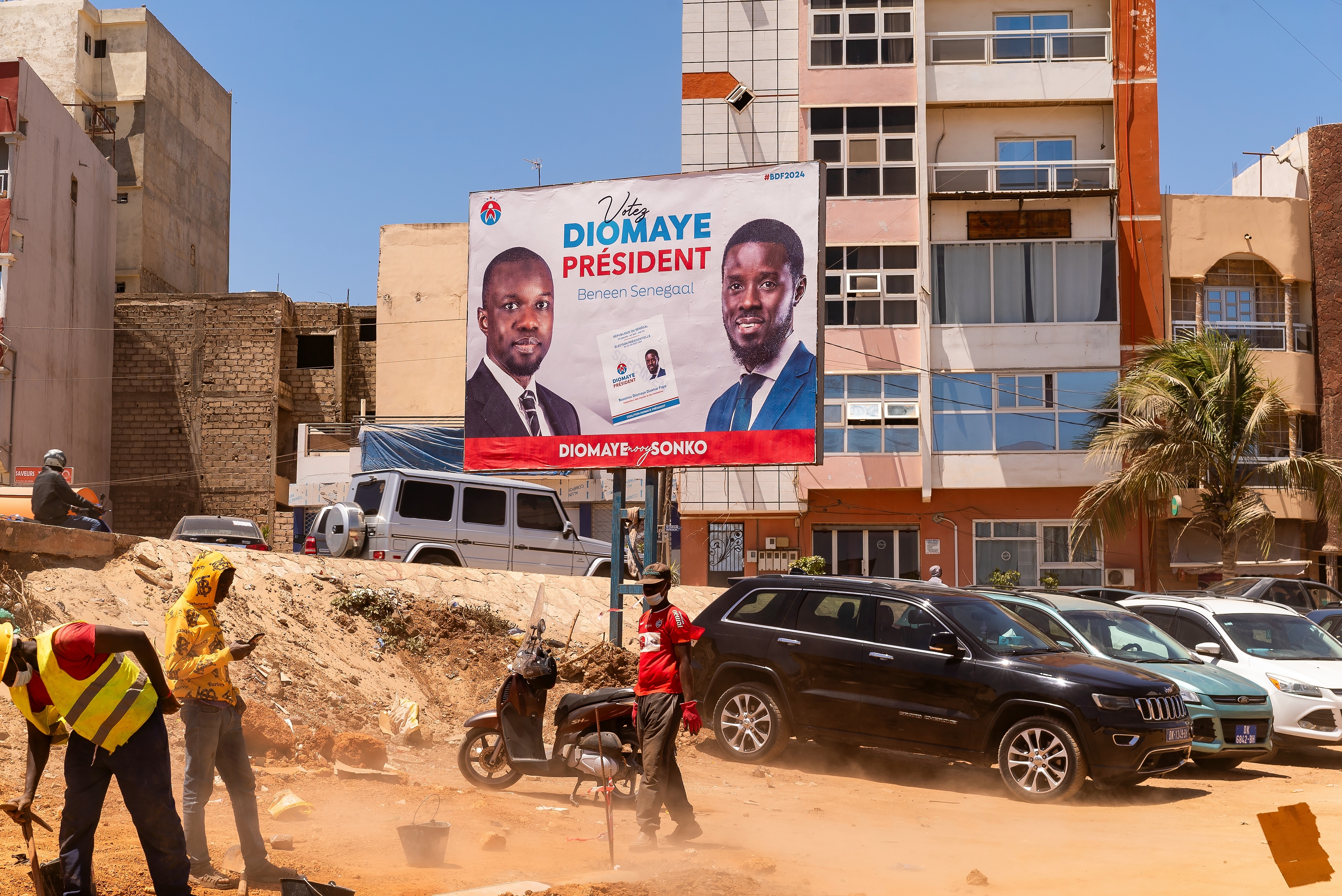
Dakar, Senegal, Africa, March 17 2024, electoral campaign poster presenting a candidate for the presidency of the republic.
© ShutterstockFor several days now, Senegal’s political landscape has been in turmoil. This new dynamic was triggered by the dismissal of Prime Minister Ousmane Sonko, his return as a member of parliament to the National Assembly, and finally his election as President of the Senegalese Parliament.
The two leaders and representatives of the ruling party PASTEF, who appeared as a united front during the 2024 presidential elections under the campaign slogan Diomaye-Sonko / Sonko-Diomaye, have now fallen out. President Bassirou Diomaye Faye and Prime Minister Ousmane Sonko, who have jointly steered the country for the past two years, are now divided. Ambition and political power struggles have transformed the unity of the two former opposition leaders into a political deadlock that is now openly visible.
This political development highlights the growing tensions at the top of the state, particularly between the executive and legislative branches. At the same time, it reveals an imbalance within the institutions and marks the beginning of a new phase in the power relationship between the organs of state.
An analysis of the relevant legal foundations — the Constitution, the Electoral Code, and the Rules of Procedure of the National Assembly — further shows that holding a government office and a parliamentary mandate are fundamentally incompatible. Senegal follows a constitutional model inspired by the French system, in which parliamentary office and government responsibility cannot be exercised simultaneously.
Unlike Germany, where an appointed or outgoing minister does not automatically lose their Bundestag seat, the Senegalese Constitution provides for a clear separation of powers. Much therefore suggests that Sonko’s parliamentary mandate should be considered terminated rather than merely suspended, since he had chosen to serve as Prime Minister and thereby effectively relinquished his seat. His return to parliament could thus be interpreted as a violation of the existing legal framework.
By dismissing his Prime Minister and former political ally Ousmane Sonko over differences in governance and strategic disagreements concerning economic and institutional reforms, President Bassirou Diomaye Faye is sending a clear message: he intends to put an end to the long-standing dual leadership at the top of the state. This rupture marks a decisive turning point in the relationship between the two historic allies within the PASTEF party and has significant implications for the institutional balance of the republic.
Yet contrary to many expectations, Ousmane Sonko has by no means disappeared from the political stage. On the contrary, his return to the National Assembly has enabled him to quickly regain a central position of power. Many observers see this as evidence of his strong influence over the parliamentary majority and the unwavering support he continues to enjoy.
However, Sonko did not stop at this controversial return to parliament. The resignation of the President of the National Assembly, El Malick Ndiaye, ultimately paved the way for Sonko to assume the leadership of parliament. Shortly thereafter, he was elected President of the National Assembly with an overwhelming majority of 131 out of 165 votes. This office now grants him an exceptionally strategic position within Senegal’s institutions. As Speaker of Parliament, Sonko retains considerable influence over both the national political debate and the country’s legislative agenda.
This has created a configuration unprecedented in Senegal’s political history: a president who can no longer rely on parliamentary support, while the parliamentary majority no longer aligns itself with the political direction of the government.
Senegal is therefore entering a kind of experimental phase of cohabitation that carries the risk of an institutional crisis. This comes on top of the economic and social difficulties the country has faced since PASTEF came to power. At the same time, however, this new distribution of power could also represent an opportunity — provided that both political leaders are willing to compromise and place the national interest above personal rivalries. In that case, the new arrangement could even strengthen democratic balance and parliamentary oversight.
Equally conceivable, however, is a conflict-ridden cohabitation shaped by inflated egos and far-reaching ambitions for power.
Moreover, this political crisis is unfolding against the backdrop of a tense economic situation. Senegal is currently confronted with budgetary problems, a debt crisis, tensions with international partners — particularly the International Monetary Fund (IMF) — as well as significant social expectations from the population.
The country’s future political trajectory will therefore depend largely on how the relationship between President Bassirou Diomaye Faye and the new Speaker of Parliament Ousmane Sonko develops. One thing is already certain: Senegal’s political landscape is undergoing a profound transformation in which state institutions will increasingly play a central role in redefining the balance of power.