Ethnopolitics
“Ethnic politics is dangerous” – Dr Allan Boesak

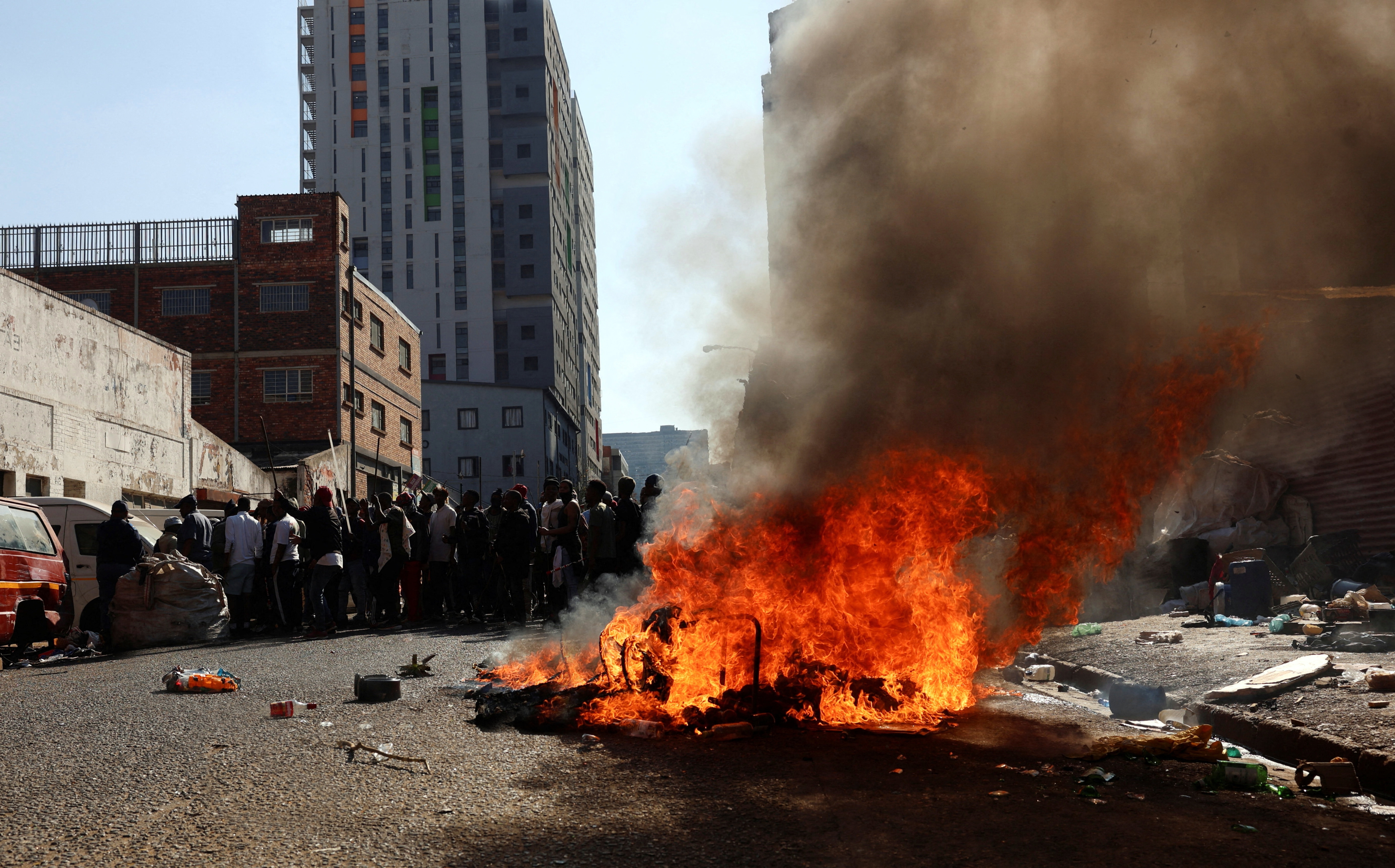
Johannesburg, South Africa - July 4, 2026: Belongings that anti-immigrant demonstrators say belong to foreign nationals burn on a street during an anti-immigrant demonstration in Johannesburg, South Africa.
© ShutterstockSouth Africa and much of the world is witnessing a renewed rise in populism, with ethnic politics increasingly at its core. In the South African context, this resurgence is particularly concerning, echoing a painful history of racial division and exclusion. As identity based politics gains traction, so too does the risk of deepening societal fractures along ethnic and tribal lines, fault lines the country has long sought to overcome in its democratic journey.
We spoke to anti-apartheid activist and religious leader Dr Allan Boesak, who warns that ethnic politics is not only divisive, but fundamentally dangerous to the project of unity, reconciliation, and social cohesion in South Africa.
“Any form of ethnic or tribal politics is dangerous. It does not unite, it divides.”
“Any form of ethnic or tribal politics is dangerous. It does not unite, it divides. It fractures society and creates the false belief that some people are more entitled than others: to greater privilege, more attention, and more resources.”
In the 2024 national election, South Africans witnessed several political parties campaigning along lines of ethnicity and tribal identity. Now, as the country enters yet another election cycle, similar rhetoric is re-emerging. The reality is that populism resonates but, as Boesak argues, it is deeply harmful in a society still grappling with the legacy of division following the dawn of democracy in 1994.
“It makes social cohesion impossible. It makes reconciliation impossible; we are still striving for both. Ethnic politics is a curse.” Boesak reflects on his involvement in the United Democratic Front (UDF), a broad anti-apartheid coalition formed in 1983 that united civic organisations, churches, trade unions, and community groups against the apartheid regime. The UDF played a crucial role in mobilising mass resistance and promoting non-racialism as a central principle of South Africa’s democratic future.
He recalls warning against ethnic division even then: “Way back in the 1980s, when I called for a united democratic front, I spoke about ethnic politics. I said it is like a snake that you nurture in your bosom. It is like a fire against your breast. And I believe it today. Look at what we have now.”
His warning feels particularly urgent in light of recent xenophobic tensions in South Africa, where certain organisations and movements have mobilised against foreign nationals, often blaming immigrants from neighbouring countries for economic and social challenges. These tensions have, at times, erupted into violence, further exposing the fragility of social cohesion.
Boesak argues that the rise of such hostility is directly linked to ethnic and tribal politics. “When ethnicity becomes something that you rally around, then you must not be surprised when you have xenophobia, when you have Afrophobia, and when it breaks out in the brutal and violent ways that it does here in South Africa today.”