Smart Cities
Bilbao’s Lessons for Smarter Cities

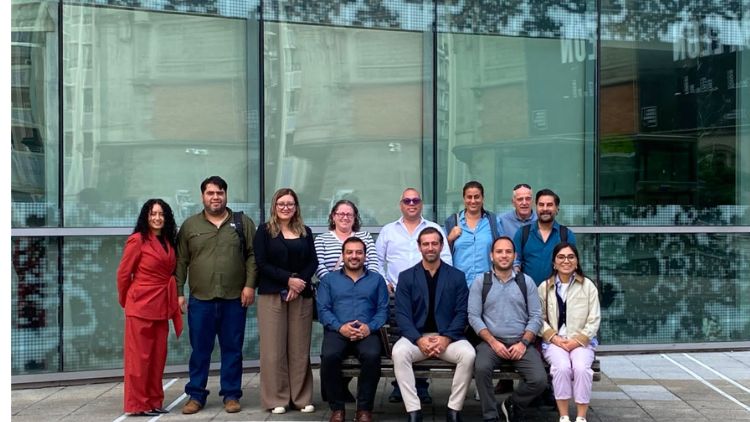
For decades, Bilbao was defined by heavy industry, shipbuilding and port activities. The industrial crisis of the 1980s, combined with environmental degradation, rising unemployment and the devastating floods of 1983, forced the city to rethink its urban and economic model.
Today, Bilbao's transformation offers valuable lessons for cities across Mexico and Central America. A smart city does not begin with technology—it begins with a shared vision, institutions capable of sustaining it, and public policies centered on people.
A Long-Term Vision
Our visit to Bilbao made it clear that its transformation was not the result of isolated projects. It was built upon a long-term strategic plan supported by different levels of government and implemented through specialized institutions. This consensus made it possible to convert former industrial sites and contaminated land into public spaces, housing, cultural facilities and new economic districts.
For Latin America, where urban policies often change with each administration, the main lesson is straightforward: continuity is essential for transforming a city.
Mobility as a Tool to Improve Quality of Life
Bilbao stopped viewing mobility simply as a way to move people. Instead, it became a tool to reclaim public space and improve everyday life.
The city was among the first to introduce a 30 km/h speed limit across much of its urban area, reducing accidents, noise and emissions while encouraging local commerce and more walkable streets. At the same time, Bilbao expanded public transport, cycling infrastructure and underground parking facilities.
The goal was never to ban cars, but to provide enough alternatives so that driving would become a choice rather than a necessity.

An Accessible City for Everyone
Accessibility became a central priority in response to both Bilbao's aging population and its hilly geography. Urban elevators, ramps, escalators and funiculars connect neighborhoods located on steep hillsides with the rest of the city.
The city also incorporated a gender perspective into its mobility policies. Recognizing that caregivers—most of them women—make more frequent and complex daily trips, Bilbao introduced measures such as on-demand nighttime bus stops and safer public transport spaces.
These solutions could prove especially valuable for Latin American cities with similar topography or significant territorial inequalities.

Regeneration before Expansion
Bilbao restored its river, removed obsolete railway infrastructure and transformed former industrial areas into parks, libraries, cultural centers and new urban districts.
Although the Guggenheim Museum became the international symbol of Bilbao's transformation, the city's renewal had already begun long before its opening. Rather than a standalone project, the museum formed part of a broader strategy to shift the local economy from heavy industry toward culture, tourism and advanced services.
The key lesson is that urban regeneration is not about iconic buildings alone. It is about reclaiming neglected spaces and linking physical renewal with a broader strategy for economic transformation.
This transformation also included a new economic model based on advanced services, technology, creative industries and support for small and medium-sized enterprises.
Today, universities, technology centers, businesses and public authorities work together to strengthen strategic sectors and value chains.
For Mexico and Central America, the central lesson is clear: truly smart cities combine long-term planning, accessibility, sustainability and institutional cooperation to improve people's quality of life