Liberalism
Liberalism and Incommensurability in a Time of Deep Pluralism

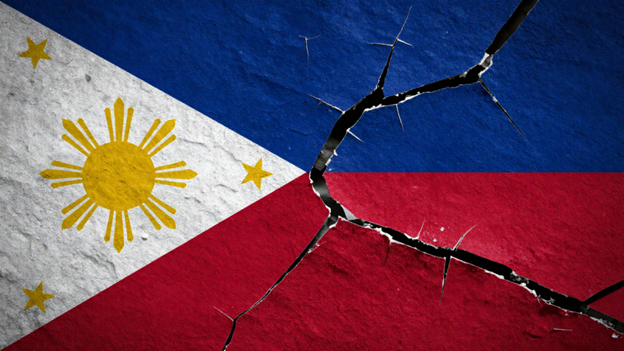
Philippines flag
© canvaIt’s not an exaggeration to state that Filipino society is deeply polarized today. Political disagreements increasingly spill beyond elections into everyday life. The cracks do not spare public and private spheres. During the 2022 elections, for instance, social media is brimming with stories of family rifts, workplace tensions, and social media hostility as rival camps framed one another not merely as political opponents, but as existential threats to the nation.
Much has been said about the rhetoric of populism. One side is “woke” or “informed,” while the other is “deceived,” “idiotic,” or a “sellout.” In many cases, the discourse ends with each camp reducing the “other” to an irredeemably evil or hopeless case. All hell breaks loose. Nothing gets solved. This was especially visible during the Duterte years, when political debates online frequently devolved into labeling critics as either “bayaran,” “DDS,” or “elitista,” leaving little room for nuance or persuasion. This collectivist impulse to lump people into a singular category (take the popular term “masa,” for example), as if citizens are either uniformly incapable of reason or, alternatively, so helpless that they must be continuously “rescued” or educated by the “enlightened ones,” must be resisted. Such paternalistic misdiagnoses fail to recognize an individual’s capacity for reason and reflection, as well as the diverse motivations behind their voting choices and political beliefs.
This tendency is reinforced by a broader framing that political decisions are direct reflections of moral character or personal values, with an implicit assumption that only one correct set of values exists. To deviate from this morality is to be an “other”, worse an “oppressor.”
Different interpretations are raised as to why such polarization exists, with those of disinformation scholars being the most popular. They often point to organized disinformation networks as a primary culprit. Indeed, studies as early as late 2010s documented the rise of coordinated trolling, influencer networks, and algorithm-driven amplification during the Duterte and Marcos campaigns. Many Filipino liberals extend this view to an incorrect conclusion. They reduce the issue to a matter of miseducation or character defect, as if citizens are simply victims of disinformation campaigns.
This conclusion is erroneous for two reasons. First, it is unsatisfactory and reductive, because disinformation amplifies existing socio-economic grievances. Second, this totalizing narrative of the “misinformed citizen” fails to confront the longstanding divisions and transformations that have transpired in the religious, moral, socio-economic, and political landscapes of the country.
But when has the Philippines ever been unified? For one, we have always been linguistically and culturally diverse, with strong regional identities and at least 170 living languages spread across the archipelago. Politically, Duterte’s anti-crime rhetoric resonated strongly in areas where citizens experienced weak rule of law, slow justice systems, and insecurity in everyday life. Likewise, the label “Imperial Manila” captured the sentiment of those in regions that have been neglected for decades in infrastructure and economic development.
The same can be said for religion, where sociologists of religion like Jayeel Cornelio spent years disproving the notion of the Philippines as a monolithic “Catholic nation.” Aside from our sizable Muslim minority, surveys show the growth of evangelical and other non-Catholic denominations alongside diverse forms of Catholic practice. The rise of megachurches, charismatic movements, and independent Christian communities has reshaped the country’s moral and political landscape among Filipinos. Let’s face it: the Filipino “masa” is far from homogeneous. Filipinos hold different and often conflicting values, worldviews, and economic interests.
So, then, how do we better make sense of these inherent differences that fuel much of our polarization? Popular discourse would benefit from liberal democratic theory by drawing on two useful concepts: pluralism and incommensurability. While pluralism describes the existence of many competing values, incommensurability explains why those values cannot always be harmonized or reduced to one master principle. In simple terms, Filipinos disagree on what counts as “truth”, “development”, “justice”, or even what “being a good Filipino” means.
By accepting these realities, the central question of democracy today becomes clearer: how can we allow others to live their lives according to values that may differ from our own, without allowing those differences to spiral into violence or the collapse of our democratic system?
There’s nothing unique about our situation. In fact, liberalism emerged precisely out of deep pluralism. The scholar Peter Boettke recounts that the Reformation and the Counter-Reformation of the 16th century forever fragmented the moral, political, and religious monopoly of the Roman Church. Protestantism resulted not only in numerous Christian denominations, but in the fragmentation of European Christendom into sovereign states. The Westphalian consensus that arose from decades of war for religious orthodoxy made it possible for Catholics and Protestants to live in peace through pragmatic compromise and mutual restraint, despite each side regarding the other as heretical or eternally damned.
Our present desire for political purity bears similarity to this period, particularly in our tendency to morally delegitimize opponents and treat disagreement as existential. So where should we go from here? The two lines of thinking offer different, yet complementary answers.
For Boettke, liberalism’s Westphalian roots suggest that societies marked by deep pluralism should focus less on achieving moral consensus and more on building institutional rules capable of managing disagreement peacefully. With deep pluralism rendering moral consensus an impossibility, argued Boettke, procedural consensus would prevent disagreements over economic priorities, national security, and cultural fragmentation from devolving into dehumanization. In this regard, liberals must confront the deficiencies of present constitutional and legal arrangements. For example, what are the material causes of regional factionalism, and how can constitutional restrictions be amended to fast-track prosperity outside Manila?
Debates surrounding a federal government, constitutional reform, and the unequal concentration of infrastructure investment in Metro Manila all stem from these unresolved tensions. What economic and security “pain points” do strongmen successfully address that liberals fail to confront? The popularity of punitive anti-drug policies, despite widespread human rights concerns, suggests that many citizens feel that liberal procedural guarantees to ensure their safety remain ineffective. How should the political party system be reformed to allow greater competition, accountability, and collective action? The 1987 Constitution failed in its liberal promise to curb dynastic behavior.
Yet the recent Senate fiasco reveals the limitations of Boettke’s procedural approach in fragile democracies like ours. It rests on the assumption that parties are willing to operate under mutually agreed rules. But news of late shows lawmakers increasingly disagree on the legitimacy and interpretation of the rules and procedures themselves, even to the point of reinterpreting them for political maneuvering.
Meanwhile, Cornelio emphasizes the importance of norms and virtues that comprise so-called “informal rules”—the cultural infrastructure that puts “a face to religious difference” and, as he writes, “might temper violence and the sense of superiority.” In their 2022 study of the country’s growing religious pluralism, Cornelio and Aldama described our absence of “covenantal pluralism,” or a morally grounded commitment among deeply different religious and moral communities to remain bound together in shared civic life, even without agreement on ultimate truths.
Cornelio’s work hints that religious pluralism spills into politics, especially when disagreements surrounding divorce, abortion, homosexuality, and the death penalty are rooted in competing religious and moral frameworks. The intense public backlash against proposals on divorce and reproductive health in previous years illustrates how policy debates in the Philippines are often inseparable from deeply held theological and moral commitments.
Without covenantal pluralism, productive listening and dialogue won’t be possible because these procedures presuppose liberalism’s emphasis on restraint, epistemological humility, and mutual recognition. It asks citizens at the grassroots level not to abandon their convictions, but to reject coercion, resist dehumanization, and remain committed to shared civic life despite deep and enduring disagreement. But like all other community-level efforts, such an undertaking will require a lot of resources and face barriers to scalability.
The practical challenges posed by incommensurability leave little room to resolve the “chicken-or-egg” problem between institutions and norms. For Filipino liberals who are visibly engaged in policy, this calls for a reassessment of aspects of our democratic process and constitutional design that may no longer adequately address deep social and moral divergence. The strength of liberalism lies in its capacity to adapt to the demands of its time.
At the same time, the rest of us must reflect on whether we still practice what we call “everyday liberalism.” Are we still capable of engaging others in good faith? Can we enter discussions with people of different political and moral persuasions while still recognizing the validity of their opinions and lived realities? Do we know when to step away from conversations that have become unproductive, or do we easily get drawn into cycles of mutual dehumanization?
It remains to be seen if we will adapt.
*Jam Magdaleno is Head of Information & Communications at the Foundation for Economic Freedom (FEF) and an Asia Freedom Fellow at the London School of Economics and Political Science (LSE) and King’s College London.
*Cesar Ilao III is Research and Communications Lead at the Foundation for Economic Freedom (FEF) in Quezon City. He is also a lecturer at the University of the Philippines Los Baños.