Defence of Freedom
The Volatility of the New World Order

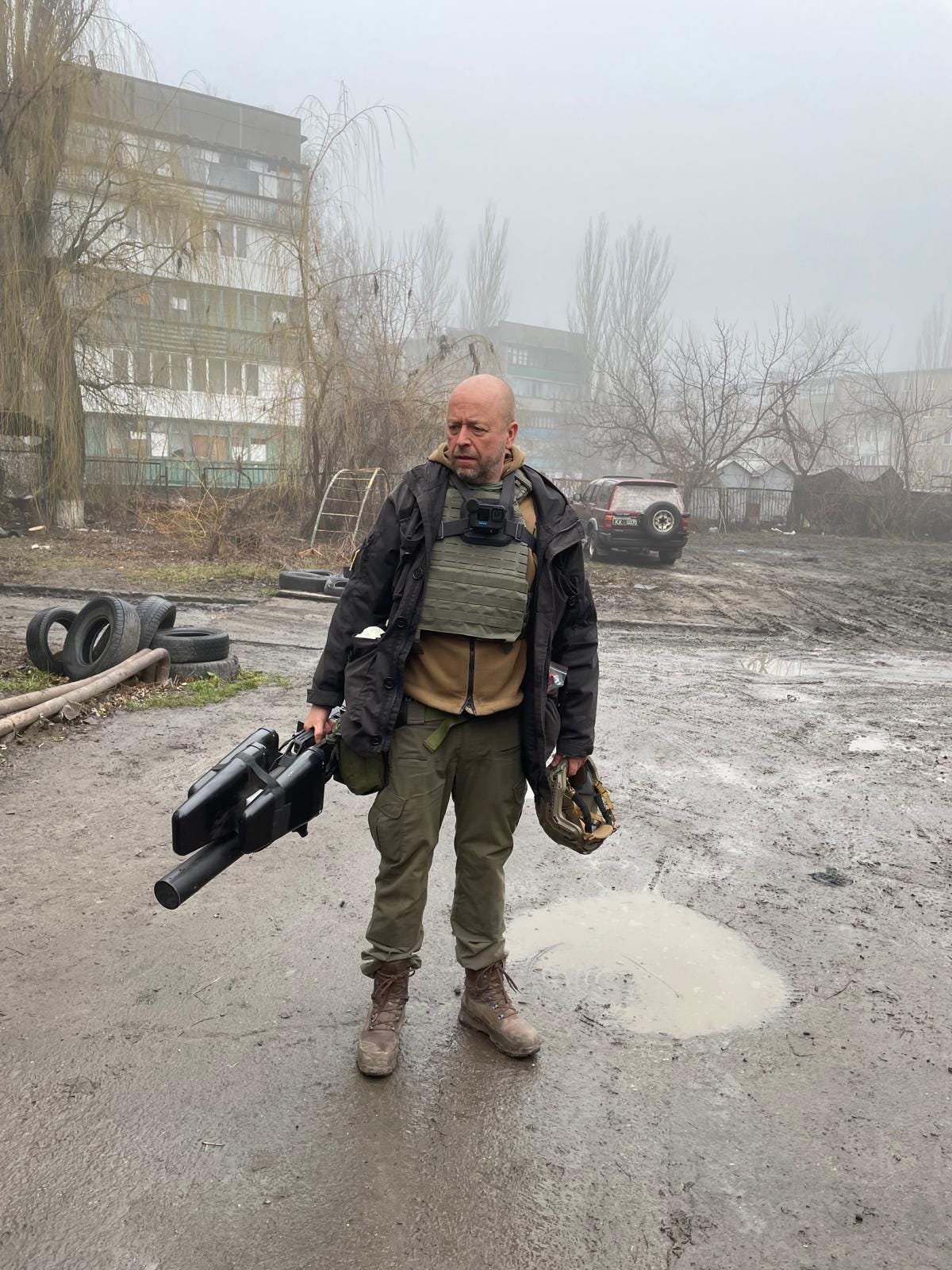
Jonas Oehman, morning of February 23rd, 2022, in Avdiivka (Ukraine), holding a Lithuanian-made drone rifle.
© Blue / YellowWe have entered an age in which war is no longer whispered about as tragedy, but spoken of by some as utility. Not as catastrophe, but as instrument. The unthinkable has become negotiable; the exceptional is fast becoming routine.
This did not happen overnight. It is the product of erosion — of will, of structure, of clarity.
Democracy retreating
First, democracy is retreating from the field — both literally and in spirit. We proclaim readiness, we announce mobilization, we draft communiqués — yet our societies hesitate at the decisive hour. We debate while others deploy. We schedule meetings while others launch strikes. The spectacle of democracies “meeting on Monday” after bombs have fallen is not merely procedural — it is symbolic. It conveys doubt. And doubt, in a dangerous world, is an invitation.
Authority of international order eroding
Second, the guardians of international order have grown frail. Institutions meant to prevent conflict now issue statements of concern while conflict advances undeterred. The United Nations, conceived in the ashes of global war, too often resembles a chamber of lamentation rather than a council of resolve. Vetoes silence action. Aggressors sit in judgment. The architecture remains; the authority has thinned.
Autocracy ascending
Third, autocracy is ascendant. In Moscow and Pyongyang, power resembles something ancient — courtly, personal, imperial. The state bends to the will of the ruler. The citizen bends to the state. Strength is projected outward; fear is cultivated inward. Even within traditional democracies, we observe an expanding appetite for executive force — the temptation to act first and justify later.
War politically convenient
Fourth, war has become politically convenient. It distracts. It rallies. It reframes domestic weakness as international strength. The external enemy is an old remedy for internal fragility. The present developments teach us that leaders under domestic pressure look beyond their borders for solutions, or diversions, they cannot find at home.
Alliance of Aggressors
Fifth, aggressors are learning to cooperate and diversify. They exchange technology, labor, resources. Production lines stretch across borders of convenience. Drones designed in one country are manufactured in another and deployed against a third. This is not ideological solidarity; it is pragmatic hostility — a cartel of disruption.
Yet the volatility does not belong to states alone.
Technology has armed the underdog. Commercial drones can wound armored columns. A thousand-dollar device can demand a million-dollar response. Cyber operations can paralyze infrastructure without a single soldier or guerilla crossing a frontier. Artificial intelligence grants individuals and organizations insights once reserved for intelligence agencies. Connectivity binds like-minded actors across continents in common causes.
We are therefore entering an era in which both giants and insurgents possess new instruments of coercion. War is cheaper to start, harder to contain, and far more ambiguous to attribute.
This is the climate in which we must now live. What, then, is to be done? The answer is neither mystical nor novel. It is difficult, but it is clear. We must reestablish that aggression fails. And that begins in Ukraine.
Ukraine is not merely a battlefield. It is the proving ground of whether borders matter, whether sovereignty means anything, whether force redraws maps in Europe in the twenty-first century. If aggression yields territory, leverage, or legitimacy, then the lesson will not be confined to Eastern Europe. It will echo.
For more than a decade, some of us, including me, have argued that Ukraine is not peripheral, but pivotal. Not a charity case, but a strategic fulcrum. Today that truth stands exposed. The war has clarified what complacency obscured.
History does not reward the hesitant. It tests them.
We must therefore do two things — win, and integrate.
Winning means ensuring that Russia does not achieve its aims through force. Integration means anchoring Ukraine within Europe’s political, economic, and security structures. Victory without integration invites repetition. Integration without victory invites humiliation. The two must proceed together.
We must also recover something less tangible but more essential: conviction. Red lines must be real. When crossed, they must impose cost. Not rhetorical cost. Not delayed cost. Real cost.
Russia, for the foreseeable future, will remain a source of instability and coercion. That is not a moral judgment; it is a strategic assessment. If we allow partial successes to accumulate — if we normalize the slicing away of sovereignty — we shall find ourselves in a harsher world, one for which we are unprepared and poorly defended.
But if we prevail — if Ukraine stands, sovereign and secure — we do more than end a war. We establish precedent. We rebuild deterrence. We demonstrate that democracies, though slower to anger, are not weaker in resolve.
And we gain a partner forged in adversity: a nation experienced in modern warfare, adaptive, innovative, hardened — not a supplicant, but an asset.
Is this simple? No. Is it possible? Yes.
History does not reward the hesitant. It tests them. We may not have chosen this era of volatility. But we will choose how we meet it. And if we choose firmness over fatigue, clarity over confusion, and courage over convenience — the future, though turbulent, need not be tragic. The first step is to stand. The next is to persist. The rest follows.
This article was first published on Substack Jonas Oehman | Notes from the War