Breaking Barriers
Zimbabwe’s young innovators bring home grown breakthroughs to the global stage

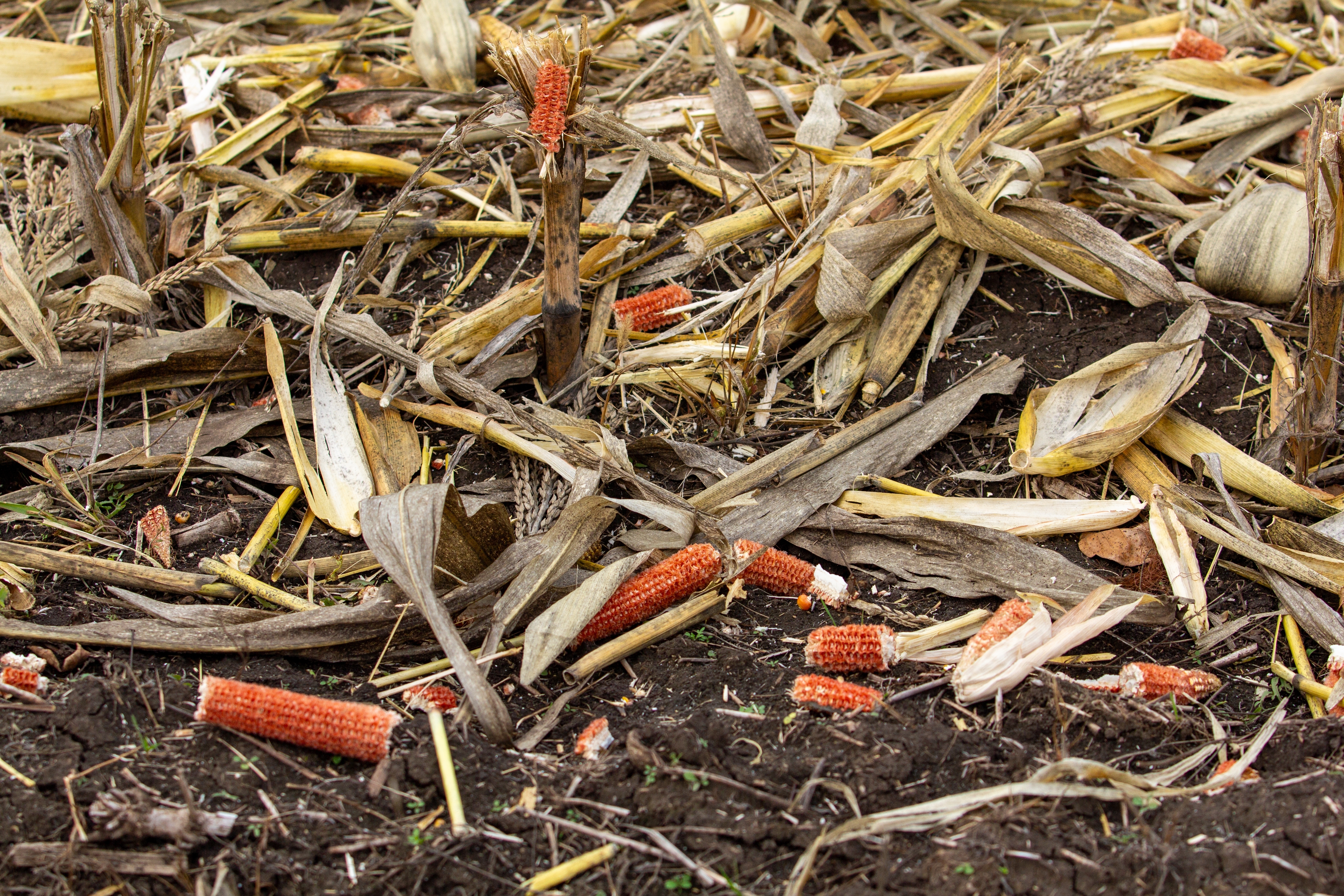
Close up of dried corn cobs and kernels scattered on dark, tilled soil amidst corn stalk residue, depicting harvest loss, farming aftermath, and the texture of post-harvest fields
© ShutterstockHeld at the Stanbic Incubator Hub in Harare on 31 July 2026, the fifth Lab brought together ideas in health, energy, climate resilience, agriculture, mining safety and the circular economy. Organised in partnership with the Friedrich Naumann Foundation Zimbabwe and Stanbic Bank, it showed innovation beginning with Zimbabwe’s realities.
Tafadzwa Edna Marufo recalled cyanide contaminating a community water source. Her BioSafe device fits beneath a laboratory sink to treat hazardous wastewater before it reaches the environment. Gravity fed and electricity free, it is designed for resource-constrained schools, hospitals, laboratories and mines.
Another pitch started in a barber’s chair. Malvin Chetse left with half a haircut after the barber’s solar battery ran out. That frustration became a question about energy storage. His team is exploring sugarcane waste as material for higher capacity battery anodes, turning an agricultural by-product into part of Zimbabwe’s clean energy future.
The most moving moments anchored technical ideas in human experience. Joseph Nisome described newborns struggling with hypothermia during his placement at Harare Hospital. His neonatal pouch imitates a mother’s warmth and heartbeat, supporting kangaroo care rather than replacing it. The breakthrough was not simply a device, but the possibility of helping more babies go home with their families.
Other ideas addressed unsafe drinking water, gaps in African genomic data and climate-resilient planning, ensuring that overlooked communities were not left outside scientific progress.
The pitches also challenged Zimbabwe to move from exporting raw resources to creating value at home. Proposals included locally manufactured lithium batteries, longer endurance survey drones and reforestation techniques designed to help newly planted trees survive. Together, they showed that waste and local materials can become economic opportunity.
The German connection is central. Falling Walls was founded in Berlin, a city whose history turned the fall of a wall into a symbol of possibility. Each year, local Lab winners from around the world travel to Berlin for the Global Finale and the Falling Walls Science Summit. There, the Zimbabwean winner will enter a global conversation involving researchers, businesses and policymakers.
For Germany, this is more than an opportunity to showcase African talent. Zimbabwe’s ideas speak directly to German priorities: the energy transition, sustainable industry, resilient infrastructure, health innovation and responsible uses of artificial intelligence. They also offer something valuable to German research and business partners, solutions shaped by resource constraints, but capable of travelling far beyond them.
The exchange should run in both directions. Germany can offer research networks, investment, mentorship and routes to scale; Zimbabwe brings experience in designing for affordability, scarcity and resilience. On equal terms, cooperation becomes less about transferring answers and more about building them together.

Group photo with the winner Anesu Mukuwane.
© Friedrich Naumann Foundation for Freedom
Dr Emmie Chiyindiko, Founder of Falling Walls Lab Zimbabwe.
© Friedrich Naumann Foundation for Freedom
Eventual winner Anesu Mukuwane during her Breaking the Wall of Post Harvest Losses pitch.
© Friedrich Naumann Foundation for Freedom
The 2026 Falling Walls Lab Zimbabwe jury.
© Friedrich Naumann Foundation for Freedom
Audience at Falling Walls Lab Zimbabwe 2026 listening to one of the pitches.
© Friedrich Naumann Foundation for Freedom
Second place went to Melinda Kufeni for “Breaking the Wall of Invisible Fatigue in Mining”.
© Friedrich Naumann Foundation for Freedom
Trymore Kunjenjema took third place for “Breaking the Wall of End-of-Life Vehicle Tyre Disposal”.
© Friedrich Naumann Foundation for Freedom“Falling Walls Lab Zimbabwe is about more than a stage, it’s a bridge. The ideas coming out of Harare speak directly to what Germany is also working through: energy, health, resilient infrastructure. Anesu’s journey to Berlin is proof that this exchange runs both ways,” said Dr Emmie Chiyindiko, Founder of Falling Walls Lab Zimbabwe.
The judges ultimately awarded first place to Anesu Mukuwane for “Breaking the Wall of Post Harvest Losses”. Her idea uses waste brewer’s yeast to create an environmentally friendly, non-toxic coating that could protect fresh produce from microbial spoilage and extend its shelf life. The innovation could give informal traders and small scale farmers more time to sell their produce while turning an industrial by-product into value. As Zimbabwe’s winner, Mukuwane will represent the country at the Falling Walls Lab Global Finale in Berlin in November.
Second place went to Melinda Kufeni for “Breaking the Wall of Invisible Fatigue in Mining”. Her smart safety glasses can detect fatigue and activate a vehicle’s brakes when a driver fails to respond to an alarm. Trymore Kunjenjema took third place for “Breaking the Wall of End-of-Life Vehicle Tyre Disposal”, transforming discarded tyres into safer rubber paving products.
Their victories closed a day built around a stubborn belief: a wall is not the end of the story. It is an invitation to begin breaking through.