War in the Middle East
Petrol pump, fertiliser, dilemma

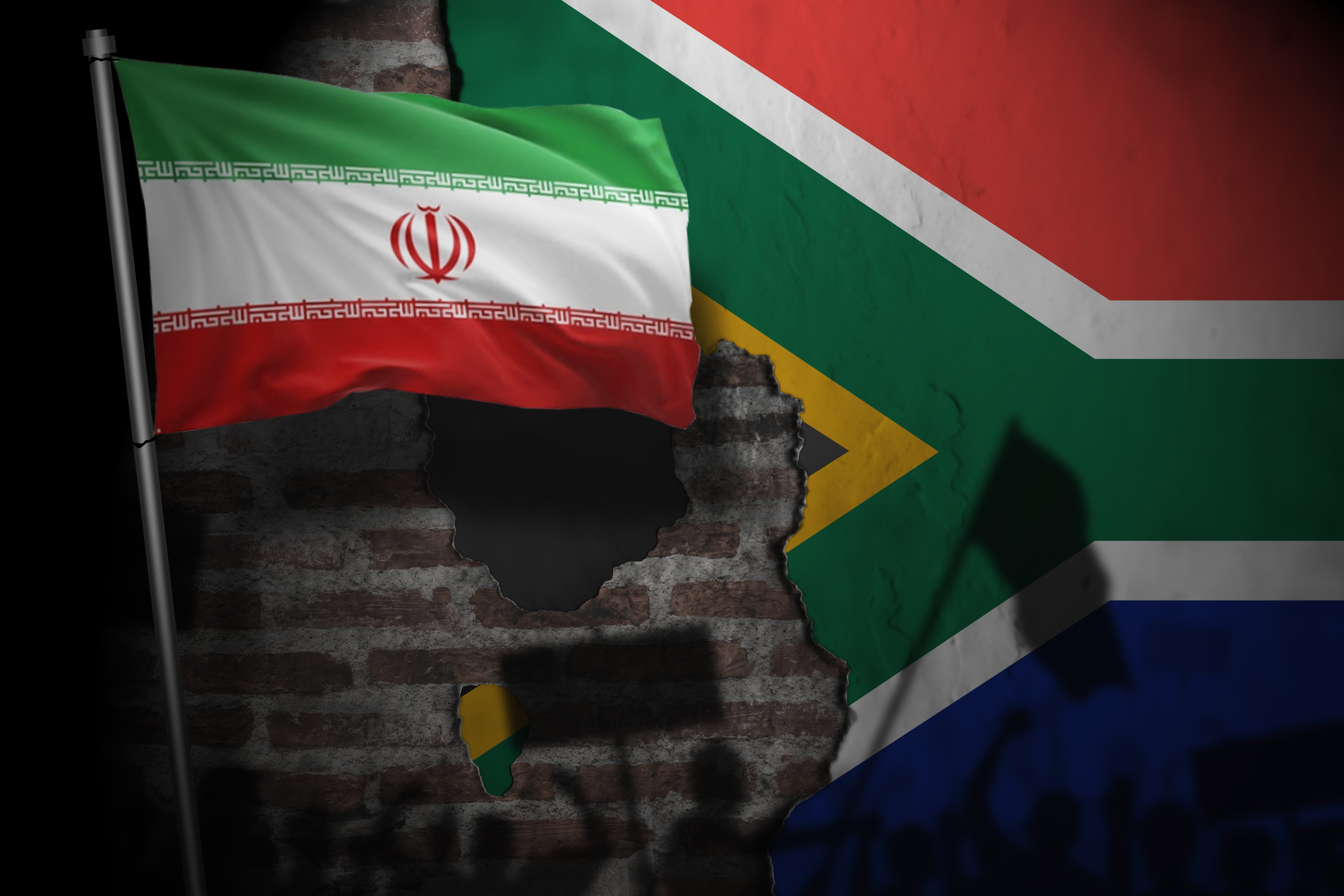
Die Flaggen des Iran und Südafrikas
© ShutterstockIran’s de facto blockade of the Strait of Hormuz is hitting South Africa with full force: as a net importer of fuel, fertilisers and liquefied natural gas, the country is structurally vulnerable to global energy shocks. Rising prices at the petrol pump and the threat of food price inflation are the immediate consequences – but the crisis also exposes deeper-seated weaknesses.
The economic consequences of the Hormuz crisis are global – but asymmetrical. Energy importers are hit harder than exporters, poorer economies harder than richer ones, and countries with low reserves harder than those with stable buffers. South Africa is one of the most structurally vulnerable economies in southern Africa: more than 90 per cent of its fuel is imported, strategic reserves are limited, and domestic refining capacity is low. What is the specific impact on this country – and what else is looming?
Fuel: price pressure with a direct impact on consumption
South Africa imports over 90 per cent of its fuel. A large proportion of its diesel, petrol and kerosene supplies come from Gulf states – particularly Oman, Saudi Arabia and the United Arab Emirates. With shipping traffic through the Strait of Hormuz effectively at a standstill, the country was abruptly cut off from its main sources of supply. South Africa’s fuel pricing mechanism is linked to the global market, as if every litre were freshly imported – meaning that rising crude oil prices, insurance and freight costs are passed on directly at the pump without any buffer.
Current forecasts from the state-run Central Energy Fund (CEF), which calculates and recommends fuel prices in South Africa on a monthly basis, point to petrol price increases of up to 2.63 rand per litre for May 2026. For diesel, surcharges of between 2.00 and 4.00 rand per litre are forecast. The rand-dollar exchange rate (currently around 16.47 rand per dollar) is further exacerbating price pressures. The government has temporarily reduced the fuel tax by 3.00 rand per litre. Economists such as Gina Schoeman of Citigroup consider an extension of this measure by one to two months to be fiscally sustainable – at a cost of 10 to 12 billion rand. However, this does not provide a structural solution.
The government has responded more quickly than expected to supply issues: the industry has diversified its sources of supply to Mexico, Brazil and, increasingly, the US. According to analysts, stock levels are currently stable. Diesel is scarcer than petrol, but available. The Competition Commission is currently investigating cases of price gouging.
Fertilisers and food security
Around a third of global urea production – the most important nitrogen fertiliser – is exported from the Gulf states and normally passes through the Strait of Hormuz. A disruption in this area would hit South African agriculture at a critical stage. Rising fertiliser prices are increasing production costs for maize, wheat and soya. These are staple foods for which South Africa, despite local production, relies on stable input prices. Low-income households, which have to spend a disproportionately high share of their budget on food, face the threat of significant price rises. The International Monetary Fund explicitly warns that rising fertiliser prices in developing countries pose not only an economic problem, but also a social and political one.
LNG and energy infrastructure
The global availability of LNG has fallen dramatically after the Ras Laffan plant in Qatar – the world’s largest LNG liquefaction facility – was damaged by Iranian missiles. The repair work could take years. For South Africa, which aims to diversify its energy mix through gas imports, among other measures, this undermines the basis for medium-term planning, as a global shortage and rise in the cost of LNG make establishing a reliable gas supply for South Africa both more expensive and more uncertain.
South Africa’s foreign policy balancing act
The outbreak of the Iran war comes at a time of considerable foreign policy turmoil for South Africa. Pretoria finds itself in an uncomfortable position. On the one hand, there are historical ties with Iran and BRICS membership; on the other, there is an urgent need to stabilise the severely strained economic relations with the US – particularly as Washington has imposed a 30 per cent import tariff on South African goods.
President Cyril Ramaphosa has officially positioned himself as a mediator. He implicitly condemned the US and Israeli attack as incompatible with international law (“Pre-emptive self-defence is not permitted under international law”) – without naming the US – and offered South Africa’s services to help resolve the conflict. Ramaphosa is attempting an almost impossible balancing act: neither Washington nor Iran is to be angered.
However, this stance takes on added significance due to the BRICS naval exercise “Will for Peace” in January 2026. Despite Ramaphosa’s explicit instructions, the Iranian navy took part in the joint naval manoeuvre off Simon’s Town. The president ordered an investigation, but the damage to South Africa’s credibility in Washington had already been done by that point. The US embassy commented sharply on this: South Africa could not “lecture the world on justice whilst currying favour with Iran”.
From a liberal perspective, this presents a fundamental problem: South Africa’s foreign policy, which should be based on value-driven neutrality, is coming under pressure due to its close ties with authoritarian BRICS members. The attempt to juggle relations between democratic partners and autocracies is neither credible in the long term nor in the interests of the South African population, whose prosperity depends on open markets, rules-based trade and a stable energy supply. In the Iran conflict, BRICS has not formulated any collective position. The alliance remains divided: whilst Russia, China and Brazil condemned the US-Israeli attacks, India refused to take a clear stance. South Africa also remained silent. This underscores what analysts have long emphasised . BRICS is not a geopolitical alliance and can hardly offer South Africa reliable backing in times of crisis.
Vulnerability as a political mandate
The Hormuz crisis exposes structural weaknesses in South Africa that extend far beyond the current conflict. These include excessive dependence on fossil fuel imports, the lack of substantial strategic raw material reserves, insufficient domestic refining capacity, and a foreign policy orientation that is, in part, subordinate to economic interests. The government’s immediate response – diversifying energy sources and introducing temporary tax relief – demonstrates a capacity to act, yet structurally South Africa remains exposed.
A consistently liberal foreign policy course would entail the following: prioritising rules-based multilateral structures, clearly distancing itself from authoritarian partners, and making decisive investments in energy sovereignty. South Africa has the potential to assume regional leadership – but only if its foreign policy ceases to oscillate between the legacy of anti-Western solidarity and the real interests of its citizens – a stance consistently advocated by the Foundation’s partner, the Democratic Alliance, a coalition partner in the GNU.