Bosnia and Herzegovina
General Elections 2026: New Technology, Familiar Outcomes

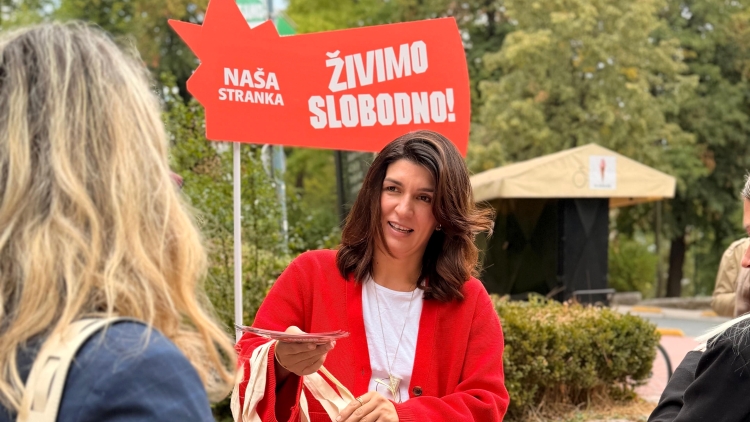
Bosnia and Herzegovina’s 2026 general elections produced a striking contrast: a technologically transformed and considerably more credible voting process, but a political outcome still dominated by established nationalist parties. The liberal Naša stranka suffered heavy losses, including in its traditional Sarajevo stronghold. With the indirect election of the Federation House of Peoples still ahead, the election results are the first stage of what is likely to be a lengthy and complicated process of government formation.
General elections took place as scheduled on 4 October. Citizens of Bosnia and Herzegovina (BiH) voted, among others, for the three-member Presidency, whose method of election continues to violate a ruling by the European Court of Human Rights because it discriminates against citizens who do not belong to the country’s three constituent ethnic groups – Bosniaks, Croats, and Serbs. Voters also elected the members of the Parliamentary Assembly on the state level, representatives to the two entity parliaments in the Bosniak-Croat “Federation of BiH” (FBiH) and “Republika Srpska” (RS), as well as members of the ten cantonal assemblies in the FBiH. In addition, voters in the RS elected the President and Vice-Presidents of their entity.
The elections came at the end of four particularly turbulent years in Bosnia and Herzegovina. This period was marked by a serious constitutional crisis triggered by the secessionist authorities in the RS, as well as a significant divergence between the United States and the EU member states over their respective approaches to Bosnia and Herzegovina.
Against this turbulent political backdrop, the election campaign itself was strikingly subdued. Many observers described it as unusually anaemic, with political competition largely unfolding within three separate ethno-national electoral arenas. Equally notable was the absence of the kind of dramatic political crisis that has often emerged, or intensified, immediately before or during previous election campaigns. Even Milorad Dodik, the de facto leader of the Serbian entity, fulfilled his role as the country's disruptor-in-chief only to a limited extent.
For the first time in BiH elections, technical devices were used to ensure the integrity of the vote with stunning success. The legal basis was set by High Representative Christian Schmidt, who imposed extensive amendments to the election law, introducing biometric scanners for voter identification and ballot scanners to prevent vote theft and other manipulations. The years before, the integrity, transparency, and credibility of the electoral process had been steadily eroding. In a survey in September 2026, 74 percent of Bosnians said that elections in BiH were neither free nor fair, while every tenth voter reported having personally witnessed vote buying or another form of electoral fraud. However, citizens’ reactions to the new way of voting were very positive, as the country made a quantum leap from sluggish and manipulation-prone system of vote counting to a system that ensures timely and accurate results.
Stable Blocs and Shifting Electorates
Election turnout was markedly lower than four years ago. According to preliminary data, overall turnout stood at approximately 42 percent, compared with just above 50 percent in 2022. The decline was particularly pronounced in the Bosniak-Croat Federation, where turnout consistently lagged behind that in Republika Srpska throughout election day. This appears consistent with a broader demobilization of voters who had previously supported pro-European parties, who were not able to deliver on their promises due to a blockade by the omni-present nationalist forces.
The three members of the Presidency for the term will be incumbent Bosniak Denis Bećirović of the SDP-led coalition, which also included Naša stranka, the Serb Željka Cvijanović of SNSD and Croat Darijana Filipović of HDZ BiH. At national level, the Bosniak-nationalist SDA will be the largest party in the House of Representatives with nine seats, followed by the Serb-nationalist SNSD with six seats, the Social Democratic SDP with five, and the Croat-nationalist HDZ with four seats. The nationalist forces have thus once again prevailed by constantly stoking fears in their electorates.
The most convincing electoral performance came from SNSD and its allies in Republika Srpska. While retaining the Serb seat in the state Presidency, SNSD candidate Savo Minić won the race for President of Republika Srpska. SNSD also emerged as by far the strongest party in the National Assembly of the entity, with close to 40 percent of the vote according to preliminary results. Milorad Dodik claimed that the governing bloc could ultimately command a two-thirds majority in the Assembly, which would give it the numbers required for constitutional amendments, although the final distribution of mandates was not yet confirmed at the time of writing. In the Bosniak-Croat Federation, Bosniak-nationalist SDA again emerged as the strongest individual party, although not winning the Bosniak seat in the presidency.
Liberal Setback
The liberal Naša stranka, by contrast, suffered a substantial decline across all three levels where its performance can readily be compared with 2022. At state level, its vote fell from 49.000 to approximately 30.000, a decline of almost 40 percent. In the Federation parliament contest, the party managed to win four seats, compared with its current total of six. The most severe setback came in the Canton of Sarajevo, historically the party‘s principal stronghold, where its vote dropped from 25.000 in 2022 to approximately 11.500 in 2026, a decline of more than 55 percent.
The Sarajevo result is particularly important politically. Naša stranka had built much of its electoral identity and organisational strength in the capital, and such a sharp decline cannot be explained by lower turnout alone. Together with weaker results for other components of the so-called pro-European “Troika”, it points to a significant erosion of the urban reformist electorate that brought these parties into government after the previous election cycle. Whether these voters shifted primarily to other parties or simply remained at home will be one of the more important questions in the post-election analysis.
From Results to Coalition Deals
With several months likely to pass before the Federation House of Peoples is fully constituted and operational, it remains difficult to predict the shape of future governments at either the state or Federation level. The process of government formation in the Federation is particularly complex because it depends not only on the composition of the directly elected House of Representatives, but also on the indirectly elected House of Peoples. Following certification of the election results, the ten cantonal assemblies have 30 days to elect their respective delegates to the Federation House of Peoples. If a canton fails to elect delegates from a particular constituent people (or from the group of “Others”) within that deadline, the seats allocated to that canton can be reassigned in accordance with the Election Law.
Only once the House of Peoples has been constituted can the next stages of executive formation proceed. The two chambers of the Federation Parliament participate in the election of the President and two Vice-Presidents of the Federation, after which the President, with the agreement of both Vice-Presidents, appoints the Federation Government. The eventual configuration of the Federation government will therefore depend not simply on the election results themselves, but on the complex arithmetic of majorities in both parliamentary chambers and, crucially, within the constituent-peoples' caucuses in the House of Peoples.
This institutional sequence also has direct implications for coalition-building at the state level. Because many of the same parties will be negotiating simultaneously over governments at the cantonal, entity and state levels, coalition arrangements are likely to be interconnected. Consequently, the preliminary election results provide only a partial indication of the eventual governing majorities, while the decisive phase of political bargaining will begin only after the indirect election of the Federation House of Peoples.