Coalitions
The South African 2026 Local Government Election

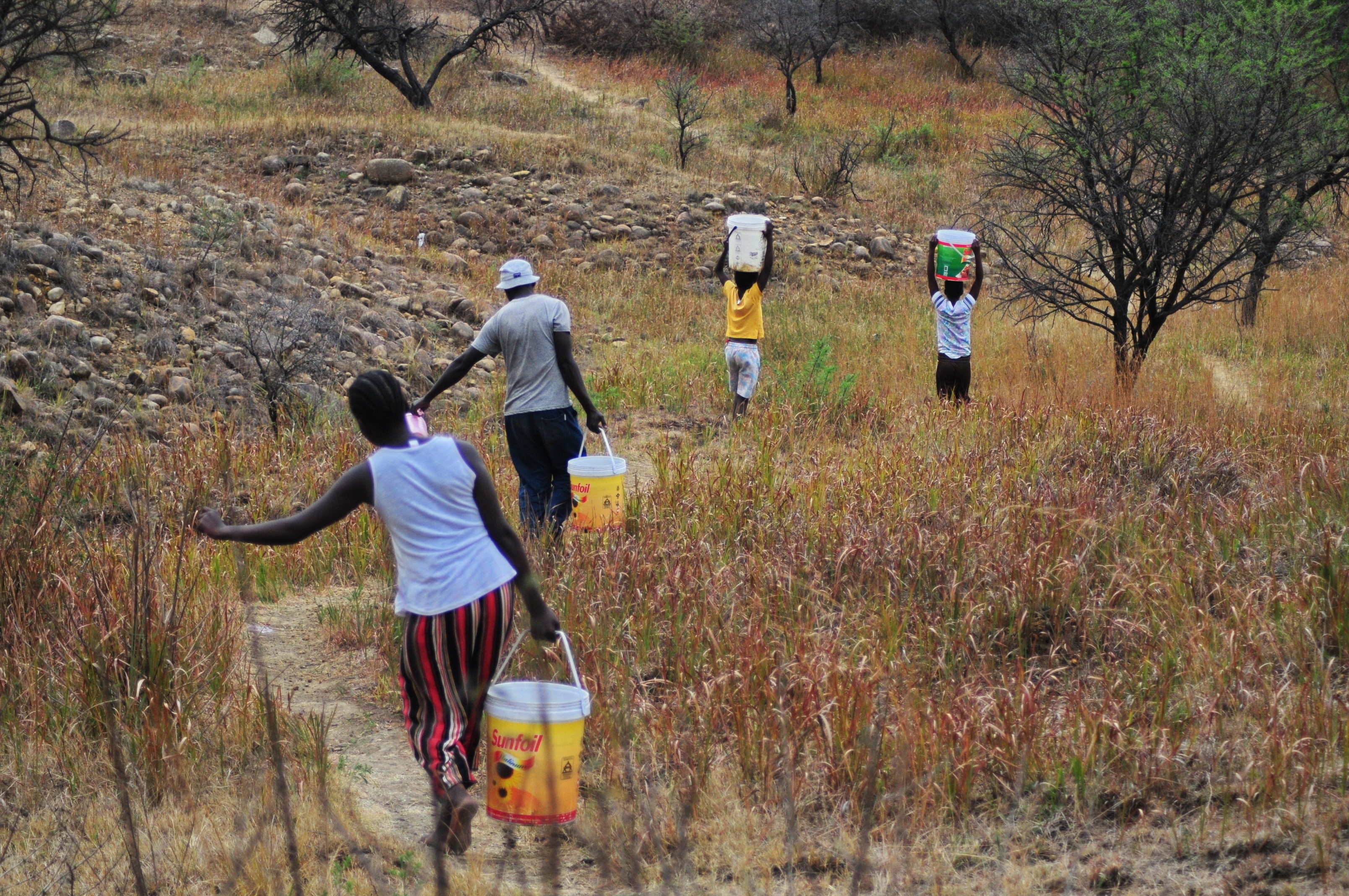
Rural farm dwellers in South Africa face the daily challenges of living without receiving basic water and sanitation from local government.
© ShutterstockSouth Africans across the country will head to the polls for the country’s local government elections on 4 November. This takes place two and a half years after a seismic general election, which saw the African National Congress (ANC) lose its outright majority at national level for the very first time since the advent of democracy in South Africa in April 2024.
South Africa has three tiers of government: national, provincial and local. General elections take place every five years to elect members of the National Assembly and members of provincial legislatures in nine provinces. The National Assembly then elects the country’s President, while provincial legislatures elect “Premiers” (equivalent to a “Ministerpräsident”). The last General Election took place in May 2024.
Local government elections also take place in five-year cycles and elect councillors to municipal councils in 257 municipalities across the country. Unlike at national and provincial level, where the electoral system is strictly proportional representation (PR), elections at local government level are mixed. Voters are able to vote for the party of their choice on the PR ballot and for the ward councillor of their choice in the municipal ward where they live. Ward councillors are elected on the first-past-the-post (FPTP) system.
This year’s local government election has taken on added importance given the changed nature of the political landscape since the 2024 general election. In 2024, the ANC was driven down to 40.2% of the vote (from 57.5% in 2019), following the emergence in December 2023 of a breakaway party called MK, led by former ANC and South African president Jacob Zuma. Zuma’s party won 14.6% of the vote, which represented the best debut of a new political party in South Africa’s democratic era. Following the election, the ANC was forced to contemplate a coalition government in order to guarantee the election of Cyril Ramaphosa as President.
Thus followed the formation of the Government of National Unity (GNU), which is essentially a Grand Coalition between the ANC and Democratic Alliance (DA) – the second-biggest party in the country – supported by eight other smaller parties. The DA had, until 2024, been the official opposition for 25 years, and its 21.8% of the vote gave the ANC the numbers it needed for stability. This is the first-ever coalition of substance at national level in South Africa’s democratic history. Despite some tensions over the past two and a half years, the most acute of which centred on the country’s budget debate in 2025, the GNU has held together relatively well.
At provincial level, the ANC was forced below 50% in Gauteng, the Northern Cape and KwaZulu-Natal (KZN). In KZN, the party was forced into third place (dropping 37 percentage points), behind MK in first and the Inkatha Freedom Party (IFP) in second. In KZN, the IFP, DA, ANC and a small party called the National Freedom Party (NFP) formed a Government of Provincial Unity (GPU) that has a majority of a single seat. In Gauteng, the ANC elected to form a minority government with three smaller parties that has since been bolstered by the recent inclusion of the Economic Freedom Fighters (EFF). In the Northern Cape, the ANC governs based on a confidence-and-supply arrangement with the Freedom Front Plus (FF+).
The biggest battles of the local government election this year will be fought in the country’s metropolitan municipalities, referred to as the “Metros”. There are eight Metros: Buffalo City (East London), Cape Town, Ekurhuleni, eThekwini (Durban), Johannesburg, Mangaung (Bloemfontein), Nelson Mandela Bay (Port Elizabeth) and Tshwane (Pretoria).
Buffalo City is likely to be retained by the ANC with an outright majority, and the DA is likely to retain Cape Town with an outright majority. In Mangaung, the ANC is expected to drop below 50% but be in a position to put together a coalition as the dominant party. The other five Metros are significant electoral battlegrounds where the ANC is likely to have a very bad election.
The focus of much of the current election analysis is on the City of Johannesburg, South Africa’s economic hub. No one has held a majority in the Metro since 2016. The ANC currently leads a coalition which is plagued by delivery failures and poor management of finances. The DA is in the ascendancy ahead of November, with a campaign led by mayoral candidate Helen Zille, a former leader of the party. Recent public polling by The Common Sense and The Social Research Foundation puts the DA on 42% and the ANC on 18%.
In Tshwane, recent public polling has the DA on 43% and the ANC on 32%. In eThekwini, the same polling has MK at 33%, the DA at 23% and the ANC at 18%. Election forecasters anticipate a decline for the ANC in Ekurhuleni, with MK emerging as a kingmaker, while in Nelson Mandela Bay, the contest is expected to be tight between the DA and the ANC, with the Patriotic Alliance (PA) emerging as a kingmaker there.
Nationally and across the remaining 249 municipalities, the ANC will be under significant pressure. Pollsters and prognosticators expect the party to drop to at least 35% of the national vote in November, which will trigger an existential crisis for the party as it prepares for its elective conference in December 2027, where it will elect the successor to Cyril Ramaphosa as ANC President.
What will be another very significant result of the election in November is that multiple municipalities across the country will be hung councils and require coalitions to be formed. At present in South Africa, there is no statutory coalition framework that governs the formation and running of coalitions. This has contributed to great instability over the past ten years in places where coalitions have existed, and South Africans are increasingly uneasy as the country moves into a political era where coalitions will become the new normal. A new bill proposing a coalition governance framework has been proposed by the Department of Co-operative Governance and Traditional Affairs but is unlikely to be passed before November.
South Africa will do well to learn from international best practice, particularly that of Western Europe. Now that the ANC’s electoral dominance has been broken, the country’s PR-dominant system will perpetuate coalitions. In theory, this can be a very good thing, but in practice, it needs a lot of work to ensure better governance and more trust from the electorate.
It may be a local government election, but 4 November is shaping up to be a defining moment in South Africa’s political history.