Brazil
Elections in Brazil: Causes, Consequences and What Is at Stake
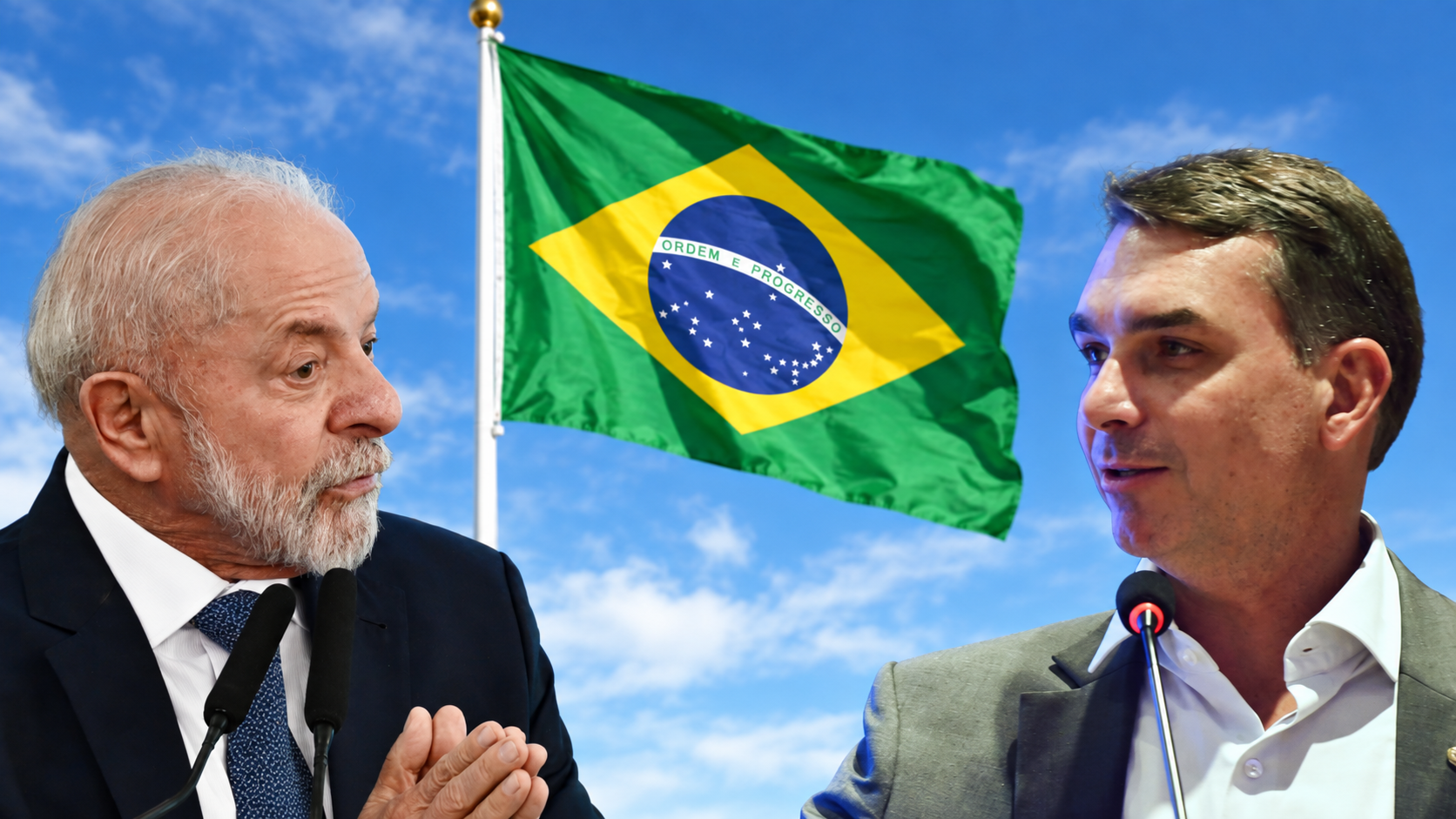
On October 4, 158 million Brazilians will be able to take part in the elections that will set the country's course for the next four years. Voters will elect the President of the Republic, two thirds of the Senate, all 513 members of the federal Chamber of Deputies, the governors of Brazil's 26 states and of the Federal District (where the capital, Brasília, is located), as well as the members of the state legislatures.
In the presidential race, polarization has once again divided the country: on one side stands incumbent President Lula of the Workers' Party (PT), who was imprisoned between 2018 and 2019 for corruption and money laundering; on the other, the Bolsonaro family, now represented by Flávio Bolsonaro, the eldest son of former President Jair Bolsonaro, who is under house arrest for an attempted coup d'état.
The first casualty of this polarization is public debate. The country's most important issues have been pushed aside, and the decisive factor for winning the election is currently the rejection of Lula or of Bolsonaro, which has serious social consequences. Once again, families and friendships can be seen breaking apart because of Brazil's political divide, and social media (Brazil ranks among its largest users worldwide) reinforces the echo chambers in which each group communicates only with its own members. This climate, however, did not first emerge in 2018. For decades, the PT cultivated a rhetoric of attacks on and persecution of conservatives, Christian groups and business owners, branding as a fascist anyone who dared to disagree or to criticize the countless corruption scandals under Lula's government. Radical Bolsonarism must therefore also be understood as a reaction to this environment.
Brazil's Three Great Challenges
Meanwhile, the country's real problems remain unresolved. The first is poverty. Around 60 million Brazilians live in poverty or extreme poverty, and without economic growth there is no sustainable way out. Yet the economy's productivity has practically stagnated for forty years, the country faces strong obstacles in its external economic relations, and it suffers from high interest rates and public debt that is spiraling out of control.
The second challenge is insecurity. Over the past twenty years, Brazil has recorded more than one million homicides, and between 2023 and 2024 there were more than a hundred cell phone thefts per hour. This is largely due to criminal gangs that export drugs to Europe and are increasingly gaining a foothold in the formal economy. To make matters worse, these gangs are rapidly expanding their territorial control in various regions, acting as a parallel state. Estimates suggest that between 28 and 60 million Brazilians live in areas under the control of organized crime, which has already infiltrated the political system and the judiciary.
The third factor is institutional decay. In recent years, the country has seen a rise in censorship and in political persecution through judicial proceedings. At the same time, corruption scandals that until now had mainly involved members of the executive and legislative branches have now hit the judiciary with full force.
Since 2025, Brazil has been following the investigations into the largest fraud case in the history of the Brazilian financial system, linked to Banco Master. According to the findings so far, the bank's owner allegedly bribed deputies, senators, members of the federal government and justices of Brazil's Supreme Federal Court in order to keep the fraudulent schemes going. The case has triggered a corruption scandal that has shocked the Brazilian public.
Among the Supreme Federal Court justices named in connection with the investigations is Alexandre de Moraes. His wife allegedly signed a legal services contract worth R$131 million (about €22 million) with Banco Master. Dias Toffoli, a former lawyer for the Workers' Party, has also been named in connection with the case. His family is reportedly a shareholder in a resort allegedly financed with fraudulently obtained funds.
Kassio Nunes Marques, a justice of Brazil's Supreme Federal Court and, since April 2026, President of the Superior Electoral Court, has also been named in connection with the investigations. A consulting firm that employed his son received payments from Banco Master. Nunes Marques denies any improper connection.
Furthermore, during Lula's current term, a fraud of around R$6 billion (roughly €1 billion) occurred in Brazil's pension system. The investigations also link President Lula's son to the case.

Rafael Mendonça at the event in Berlin on Brazil’s elections.
Alternatives Beyond Polarization
Given this chaotic scenario, liberals, even though little room remains for technical debate, have put forward solutions in the campaign for the economic, social and institutional reconstruction of the country. The Partido Novo, whose presidential candidate is Romeu Zema, former governor of the state of Minas Gerais, has drawn up, through its think tank Instituto Libertas, a strategy paper with more than 800 proposals for all areas of the federal government, based on consultations with over 350 public administration experts. The persistent problem is that, in a polarized country, well-crafted ideas give way to fear of the other side, and tactical voting stifles alternatives.
Signs of a desire for renewal can be seen above all among young people. This generation feels that, after around 20 years of Workers' Party governments, the state model championed by Lula has failed and that fewer opportunities are available to them today than to previous generations. Rents in major cities are extremely high, food prices have risen in recent years, and more than 80% of families are in debt. Many, like me, witnessed how the crisis of 2015 and 2016 destroyed jobs and careers in their families, and a looming new economic crisis could repeat this scenario. One sign of this is the rise of Renan Santos, founder of the Movimento Brasil Livre (Free Brazil Movement), who is polling at around 10% among voters aged 16 to 34, even though his populist and violent rhetoric puts off women and conservative voters. In addition, the desire for political renewal is also growing among other groups of voters. The candidacy of Augusto Cury, a famous author of self-help books, has gained ground over the past month and reached third place in the polls with a message of national reconciliation.
What Can Be Expected from Brazil in the Coming Years under Lula or Flávio Bolsonaro?
A Lula victory would likely secure good relations with Europe, and the agreement between Mercosur and the European Union could offer new opportunities for cooperation. In the Americas, however, Brazil would likely become increasingly isolated. In Europe and at multilateral forums, Lula presents himself as a socially minded democrat, while downplaying dictatorships on the continent and supporting them financially and politically; on the economy, he insists that higher public spending creates prosperity. With rising taxes and spending and growing debt, the risk of a new crisis is real, and a fourth term would likely heighten that risk even further. Compounding this, Lula presents no proposals to fight criminal gangs, whose growing strength is ignored by the current president, who has always classified criminals as victims of society and of capitalism.
On the other hand, a victory for Flávio Bolsonaro would tend to align Brazil with Donald Trump and international right-wing populists, wary of multilateral organizations but moving closer to neighboring countries governed by the right, such as Argentina, Chile, Colombia, Peru and Ecuador. The fight against organized crime would likely bring him closer to Abelardo de la Espriella in Colombia and Keiko Fujimori in Peru. On the economy, his team advocates fiscal discipline, trade liberalization and structural reforms, which would give liberals the opportunity for technical participation in a coalition built around this agenda, provided they do not dare to criticize other measures by Flávio, lest they be hounded by Bolsonarism's digital reputation-destruction machine.
None of these scenarios, however, offers credible answers to the problems afflicting the Brazilian population. Brazil must free itself from the dichotomy between two personalistic, violent and populist ideologies and return to discussing how to grow, protect its citizens from crime, provide high-quality public services and rebuild its institutions. That is the conversation liberals want to have with Brazilians.