LGE2026
Not apathetic, but unconvinced

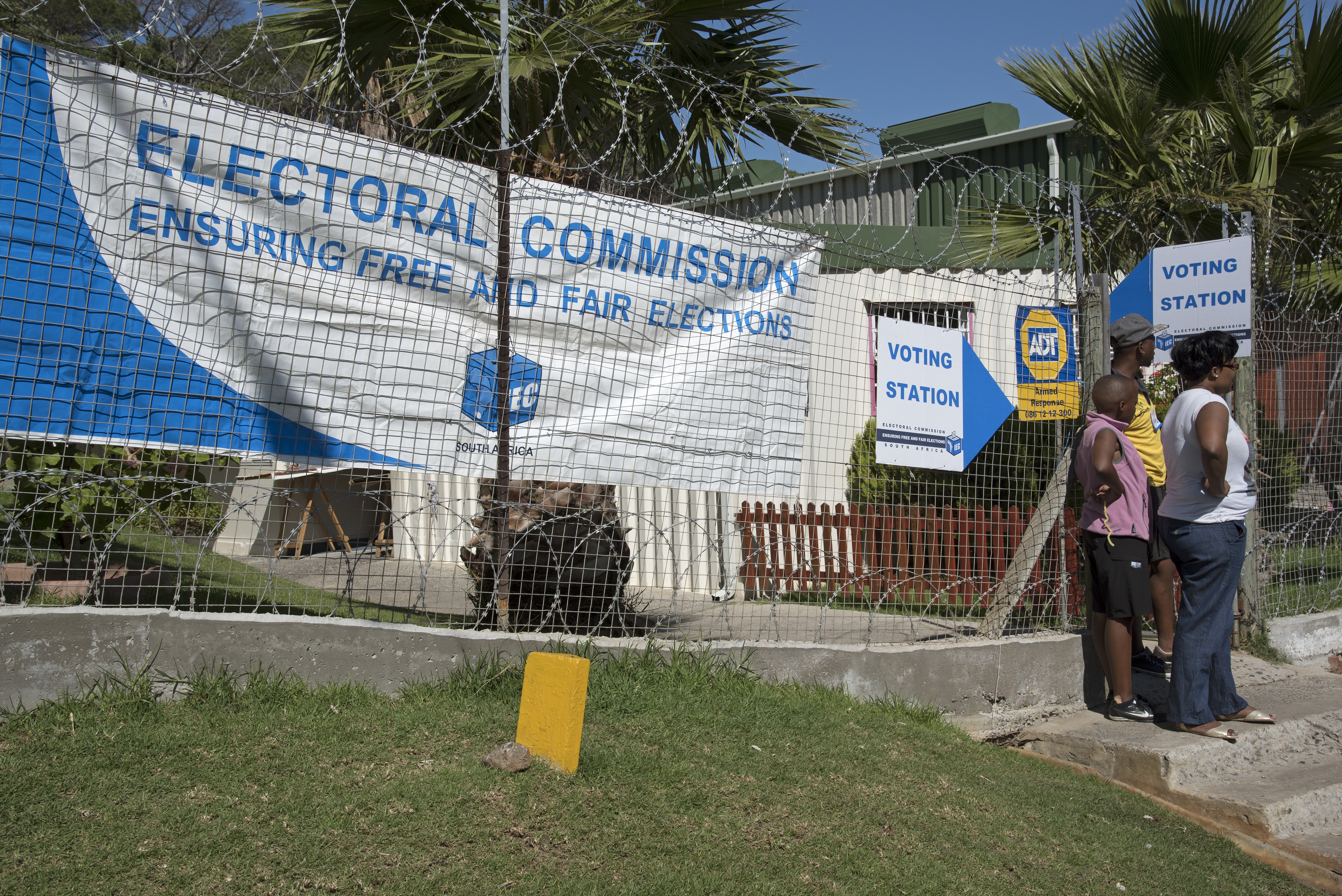
Residents seen at the Voting Station in Imizamo Yethu township.
© Shutterstock"There is no difference, whether we vote or we do not. Nothing will change."
The statement by 21-year-old student Mnqobi Mhlongo captures the frustration many young South Africans feel ahead of the local government elections on 4 November 2026. For a generation facing high unemployment, failing public services and limited political representation, voting can appear less like an opportunity for change and more like an empty ritual.
Yet the issue is not simply youth apathy. Many young South Africans remain concerned about the future of their communities and their country. What they question is whether political parties listen to them, whether institutions respond to their concerns and whether participation produces tangible results.
The numbers
In the 2021 local government elections, 90 percent of 18- and 19-year-olds did not register to vote, while fewer than 20 percent of voters aged 20 to 34 were registered.
The 2026 elections show a more complex picture. More than 29 million voters are now registered, and recent registration drives have brought 754,000 new voters onto the roll. Almost half of all new registrations came from voters under the age of 29.
These figures suggest that young people are not necessarily uninterested in politics. Many are registering to vote, but a significant number still choose not to cast their ballots on election day. The challenge is therefore not only to encourage registration, but to convince young people that voting can lead to meaningful change.
Why young people stay away
A 2025/26 Electoral Commission voter participation survey found that 76 percent of young people aged 16 to 24 believe that political parties pay too little attention to the concerns and needs of young people.
Interviews with young South Africans reveal a similar pattern. Many respondents cited unemployment, crime, poor municipal services, long queues at voting stations and a lack of youth representation as reasons for not voting. Some did not know which party to support, while others believed that election promises would not be followed by action.
The extent of crime in communities reinforces this frustration. As one young voter explained: "We have been addressing this issue as a community for years, but they do not hear us. There are potholes, no sewage drains."
Practical barriers also play a role. Voting stations are often inaccessible, and high unemployment rates, informal work schedules and the need to undertake caregiving activities impede participation.
The economic context reinforces this frustration. According to Statistics South Africa, the unemployment rate among 15- to 24-year-olds reached 60.9 percent in the first quarter of 2026. For the broader 15-to-34 age group, the unemployment rate stood at 45.8 percent.
For many young people, politics is therefore not an abstract question. It is connected to whether they can find work, travel safely, access services and build an independent future.
Democracy, but not empty slogans
The challenge is not simply to persuade young people to vote. It is to convince them that voting, political participation and public debate can lead to meaningful change.
Political parties should therefore move beyond general slogans and explain their impact in concrete terms. Young voters want to know:
- Which problems will be addressed?
- What will be done differently?
- How will success be measured?
- Who will be held responsible if promises are not fulfilled?
This is particularly important in local elections. Parties should explain clearly which responsibilities belong to municipalities and how local government can influence water, electricity, transport, housing, safety and economic opportunity.
Democratic institutions also need to meet young people where they are. Schools, universities, student representative councils, youth organisations, cultural groups and religious communities can provide important spaces for political education and dialogue.
Digital platforms can help, but communication alone will not be enough. Young people need opportunities to ask questions, challenge candidates and follow up on political promises.
Representation must be real
One of the clearest messages from young voters is the demand for stronger representation. Young people do not want to be treated only as a demographic to be mobilised during election campaigns. They want to participate in shaping political agendas and holding responsibility themselves.
This means placing more young candidates in meaningful positions, creating functioning youth councils and providing opportunities for young people to enter public service and political leadership.
Youth participation should not be symbolic. A youth forum that can make recommendations but has no influence over decisions will quickly lose credibility. Young people need to see how their contributions affect policies, budgets and local projects.
Civil society organisations can support this process by creating non-partisan spaces for dialogue, political education and leadership development. A liberal foundation such as the Friedrich Naumann Foundation for Freedom should not tell young people which party to vote for. It can, however, help them understand institutions, formulate their own positions and participate more confidently in democratic life.
Similar to youth parliaments in German municipalities, South Africa has developed models for structured youth participation. The City of Johannesburg has established ward-based youth forums across the city, creating a network that enables young people to engage directly with local councillors, contribute to development planning and demand accountability. These forums provide a channel for youth voices to be heard in municipal decision-making, though their impact depends on whether political leaders take their input seriously.
From information to impact
Practical political education can make a difference. Many young people are unsure how local government works, which level of government is responsible for particular services or how they can hold officials accountable.
A useful civic education programme could show young people how to:
- identify a local problem;
- find the responsible authority;
- submit a formal request or complaint;
- monitor the response;
- hold political representatives accountable.
This would present democracy not only as voting every few years, but as a continuous process of participation.
At the same time, access barriers must be addressed. Long queues at voting stations remain a significant deterrent. Many young people simply cannot afford to spend several hours waiting to cast their vote, particularly when they face informal work schedules, caregiving responsibilities or long commutes.
One practical solution would be to establish additional voting stations at schools and universities, in coordination with the Electoral Commission and educational institutions. South Africans can register to vote from the age of 16, even though they can only cast their ballot from 18 onwards. The IEC already runs a Schools Democracy Programme that encourages 16- and 17-year-olds to pre-register, and its Tertiary Institutions Campaign has reached nearly 100,000 students, resulting in over 45,000 new registrations.
Expanding this approach to include actual voting facilities on school and university grounds could make participation significantly easier for young people. Students who have already registered at 16 or 17 could vote directly on campus when they turn 18, without needing to travel to distant voting stations or wait in long queues.
Such an initiative would require careful planning to ensure neutrality, avoid disruption to teaching and maintain the integrity of the electoral process. But it would also send a clear message: democratic institutions are willing to meet young citizens where they are, rather than expecting them to overcome unnecessary obstacles.
These efforts are important, but they cannot replace political credibility. Better information and easier registration processes can make participation easier, but young people will only vote if they believe that their participation has consequences.
The real test
Young South Africans are not necessarily turning away from democracy. Many are turning away from a political system in which they feel unheard, underrepresented and unconvinced that their participation can improve their lives.
The real test for South Africa's democracy is therefore not only whether young people vote in 2026. It is whether political parties and institutions can demonstrate that their participation has consequences.
Young people do not need another slogan telling them that their vote matters. They need institutions that show them why it matters.