North Korea
Oil Prices Hit North Korea Hard

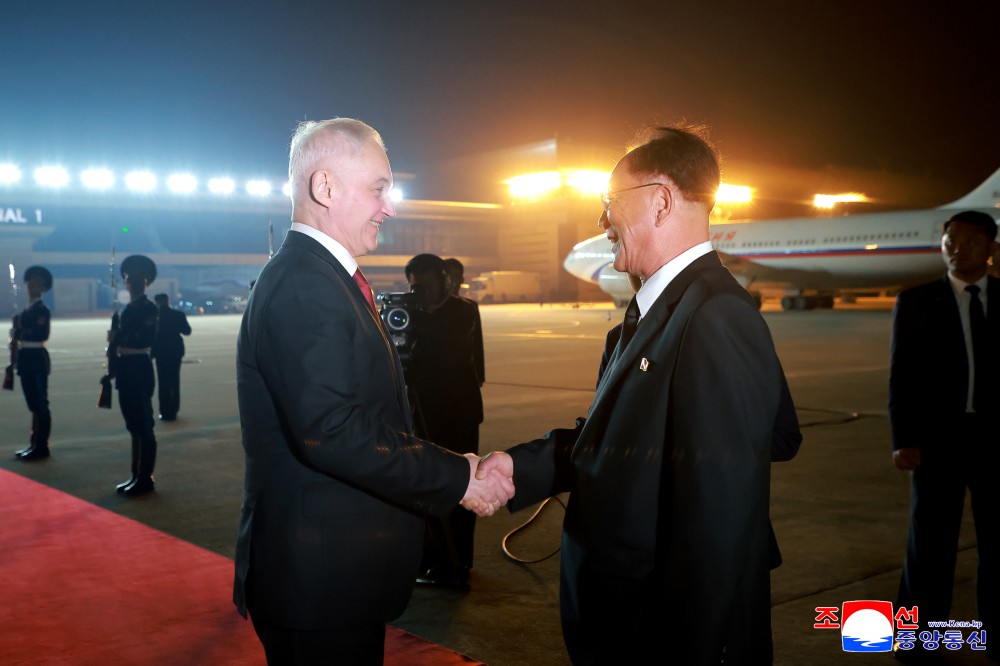
Russian Minister of Defence leaving North Korea on 27.4.2026
© Korean Central News Agency (KNCA)The war with Iran is likely to significantly exacerbate North Korea’s energy shortages once again. According to reports by the South Korean online media outlet Daily NK, which relies on a network of informants in North Korea, gasoline and diesel prices in the border town of Hyesan rose by about 60 percent within a few weeks in April 2026. At the same time, freight transport costs have in some cases doubled, depending on the route.
Due to North Korea’s limited diversification of imports, rising oil prices have a particularly severe impact on the isolated country. The energy supply is fragile. International sanctions limit imports of refined petroleum products to 500,000 barrels and crude oil imports to four million barrels per year. In practice, however, actual demand has been met only partially through legal channels for years. A significant portion of the supply comes from smuggling. This includes ship-to-ship transfers at sea, which, according to the UN Panel of Experts, represent the central mechanism for circumventing import restrictions. Experts also believe that Chinese suppliers are pumping more oil through a pipeline to North Korea than is actually permitted. Since China does not provide complete customs data on these shipments, it is difficult to verify whether UN requirements are actually being met.
In recent years, Russia has also gained importance as an energy partner—in exchange for North Korea’s involvement in the war against Ukraine. Russia supplies refined petroleum products in particular. According to estimates, the share of Russian shipments in this segment now exceeds that of China.
Rising global market prices often have a particularly strong impact on the black market. Smugglers factor in a risk premium because they have to circumvent sanctions. If legal trade becomes more attractive due to higher prices, the risk of smuggling becomes less worthwhile for them—unless they drastically increase their black market prices.
High energy prices have a particularly negative effect in North Korea, as the country must spend a large portion of its economic output on energy. High fuel prices could significantly disrupt the flow of goods, says Hyunseung Lee, a former North Korean businessman, to the specialized media outlet NK News: “Key industries, factories, and construction sites will experience disruptions in material supplies. Since most North Korean factories have virtually no cash reserves or capital, many will be forced to scale back production or shut down entirely.”
Higher fuel prices are also impacting agriculture and could exacerbate chronic food shortages in North Korea. North Korea is heavily reliant on imports of fertilizer and its raw materials. Rising global market prices thus pose significant problems for the country.
The supply situation could worsen dramatically if China reduces shipments due to domestic oil shortages. North Korea would then have to hope that Russia compensates for the shortfalls. The energy shortage caused by the war in Iran could thus bring Russia and North Korea even closer together.
*Sophia Brachtendorf is a program officer for North Korea at the Friedrich Naumann Foundation for Freedom office in Seoul, South Korea.