Malacca Strait
Flowing through the Strait of Malacca: Smooth Sailing or Rough Seas for Germany?

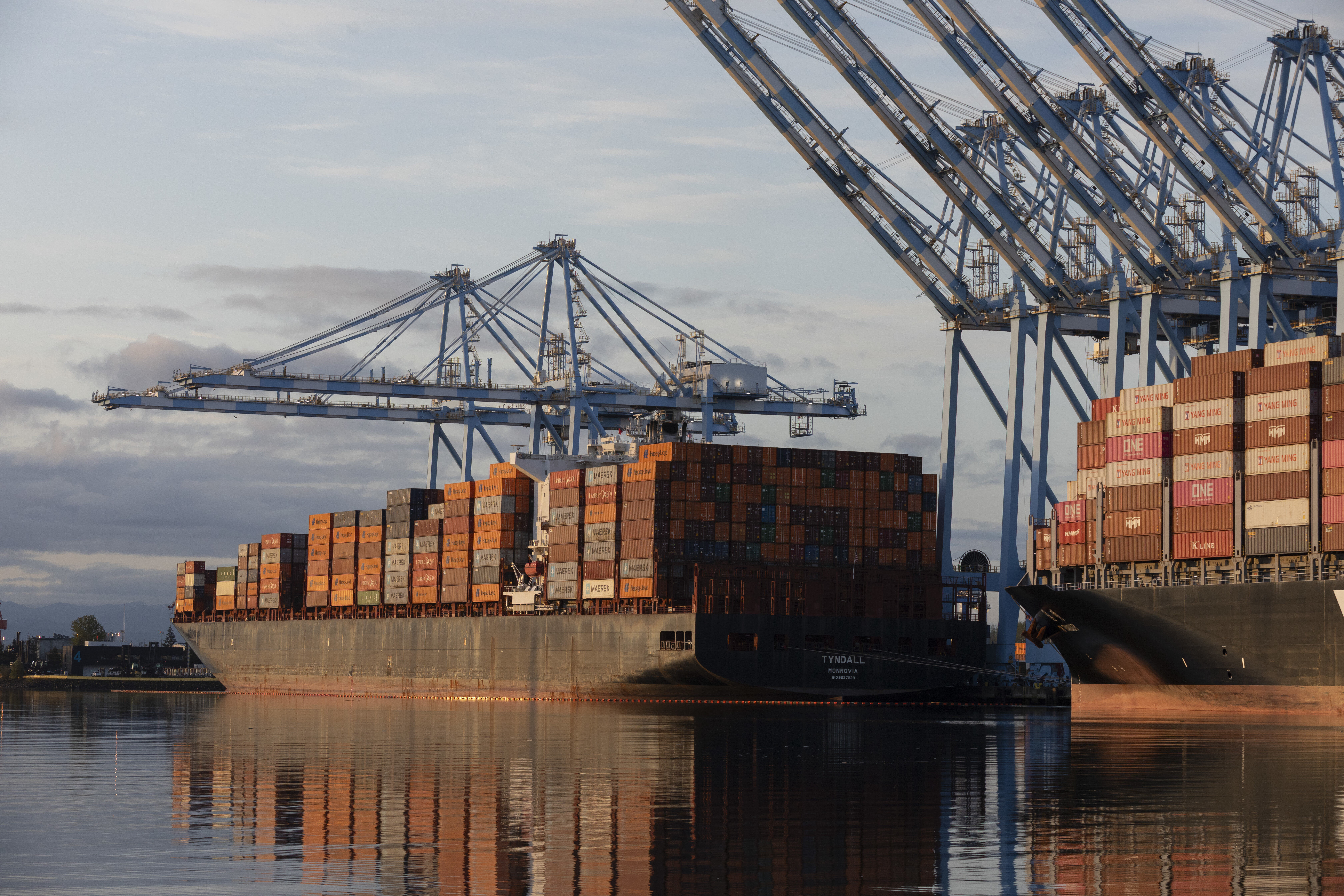
El sol sale sobre los buques portacontenedores anclados en un puerto de Estados Unidos.
© picture alliance / ZUMAPRESS.com | Paul Christian GordonGermany is, by most measures, one of the most trade-dependent large economies in the world. Exports and imports together represent over 70% of its GDP. We can firmly say: if the global supply chain catches a cold, Germany gets it badly.
For most people, this level of maritime geography is invisible – the ships sail, the products arrive, and nobody thinks too hard about the route in between. But recent events have changed that. A surge in piracy, the geopolitical crisis at the nearby Strait of Hormuz, passage congestion, and the increase of Germany’s dependency on Asian imports have all combined to make the Strait of Malacca a topic that deserves attention.
Record Traffic of the Second-Busiest Shipping Lane
As one of the world’s most critical chokepoint and the second-busiest shipping lane globally, hundreds of ships carry goods and raw materials from Germany through a single narrow channel in Southeast Asia, every day. Think of it as a funnel. Almost everything Germany buys from China, South Korea, Japan, and Southeast Asia flows through it on its way to the west. Vice versa, almost everything Germany ships to the east – the cars, the machinery, the chemicals – passes through it heading out. There is no real shortcut and no sensible alternative. Ships have to go through this route, and in 2025, a record-breaking 102,500 of them did.
Stretching 900 kilometers long, the Strait of Malacca has been a functioning commercial highway for centuries. In favour to Germany, it is the shortest sea path between Europe and Asia, three countries – Malaysia, Indonesia, and Singapore with the latter being the world’s second busiest container port where goods get sorted, stored, and distributed with world-class efficiency – have a shared interest in keeping it open, and shipping rates in this corridor are competitive. It is part of the Maritime Silk Road that connects Southeast Asia, East Asia, the Indian subcontinent, the Arab peninsula, eastern Africa, and finally Europe.

Map design adapted for trade route illustration purposes.
© Marine Traffic (www.marinetraffic.com); Natural Earth (www.naturalearthdata.com).Calibrating Risks
These favours come with risks. Piracy and armed robbery incidents – which have been reclassified as “high risk” – jumped over 70% in 2025, the Strait itself is genuinely narrow with just 2.7 KM wide, the fallout from Strait of Hormuz crisis have raised geopolitical temperature around Southeast Asia’s waters which might raise other maritime consequences.
Although not every risk deserves the same level of alarm, some threats are real and immediate, while others are worth monitoring. What is really happening now is the fact that freight costs keep rising. Insurance premiums, fuel surcharges, and piracy-related costs are already climbing. With the regional geopolitical escalation happening, Germany’s economy could hit severely and this situation could prolong if there are no quick alternative supply routes. German manufacturers pay more for every container of parts. These costs gets passed down the chain – ultimately to German businesses and consumers.
China is now Germany’s single most important trading partner, followed by the United States (US), with trade goods worth billions of euro, both countries combined. The goods that Germany imports from Asia are not luxuries. They are production essentials: computer chips, smartphone components, electric vehicle batteries, industrial electronics, and factory machineries. Germany’s green energy transition, its car industry, and its entire electronics manufacturing base depend on goods that travel through this single waterway. If the Strait of Malacca were to be blocked for even a few weeks, German production lines would start going quiet. Not because of a war or political act, but simply because the parts would stop arriving.
The Hormuz Effect
Since late February 2026, the Strait of Hormuz – the narrow passage at the Persian Gulf which roughly a fifth of the world’s oil normally flows – has been effectively closed. The conflict between the US, Israel, and Iran that triggered the closure shook the global energy and shipping markets. Germany itself does not import large volumes of crude oil directly from the Persian Gulf. However when Hormuz closed, the chain effects are global: oil prices rise, shipping companies reroutes, and other sea passage and chokepoints, including Malacca, comes under intensified scrutiny.
For Germany, which had a similar experience with the gas crisis from Russia a few years ago, the lesson learned from it and the efforts that can still be taken is that the restructuring of supply chain is still possible when done rapidly. There is still time to act before a crisis in the Strait of Malacca forces the issue to rise, such as having these contingency plans:
- Diversify where the supply and goods come from
Countries such as Vietnam, Indonesia, India are capable of manufacturing the kinds of electronics and components that Germany is currently buying almost exclusively from China.
- Keep more stock on hand
Having 30-60 days of critical component buffer for key production line is the minimum, and it turns a potential crisis into a manageable delay.
- Testing alternative logistics plans
Having a backup carrier, an alternative port, a second (or third) supplier is necessary to have in order for German companies with significant Asia exposure to cope better should they be faced with a crisis.
- Push for the European Union (EU) involvement in the maritime security
Since the EU currently plays almost no formal role in the Malacca Strait Security Initiative (MSSI), therefore Germany as the EU’s largest economy, should push for a stronger European presence.
- Invest in alternative corridors
Rail links and air freight should also be considered as an alternative. Albeit more expensive and have lower volume limits, but investing in these alternatives now means they are available and scaled if the sea route faces sustained problems.
What’s in it for Germany?
The Strait of Malacca is critically important to Germany, though its significance is often indirect and systemic rather than immediately obvious. It carries 24% of all global seaborne trade, including 45% of seaborne crude oil and 26% of all cars shipped globally. German automakers i.e. BMW, Mercedes, Volkswagen are among the world’s largest exporters of vehicles, making that last figure particularly relevant.
Malaysia itself is a traditional production location for German industry, particularly for the automotive, chemical, and mechanical engineering sectors. Malaysia is a vital global hub in chip assembly, testing, and packaging. Companies such as Infineon (Germany) and Intel (US) have operated in the country for decades. Other than that, Malaysia has declared itself as the most neutral and non-aligned location for semi-conductor production, making its neutrality commercially valuable. This gives a signal that German companies can continue to operate in Malaysia without being caught in geopolitical crossfire. In short, Malaysia offers Germany a politically safe, industrially mature, and strategically well-positioned partner.
Germany has already joined the United Kingdom, France, Italy, the Netherlands, and Japan in pledging readiness to contribute to efforts to keep the Strait of Hormuz open, including coordinating strategic petroleum reserve releases and measures to ramp up production. Germany needs to stay firmly committed to this, both diplomatically and militarily if needed.
The overall picture is this: It is fair to say that the Strait of Malacca is the world’s most important corridor and Germany cannot ignore it. The Strait of Malacca is not about to close. It is functioning and well-patrolled. The three countries that border it – Malaysia, Singapore, and Indonesia have every incentive to keep it open. However, risks are building. The spike in piracy, congestion, and the turmoil of an existing geopolitical conflict that might affect the strait. In other words: deep dependency, single route, no plan B. The time to build a solid plan B is needed now than ever while the strait is still open and the pressure is still manageable.
*Vera Putri is a program manager at the Malaysian Office of the Friedrich Naumann Foundation for Freedom.