RENEWPAC
Is Populism a Threat to Liberal Democracy?
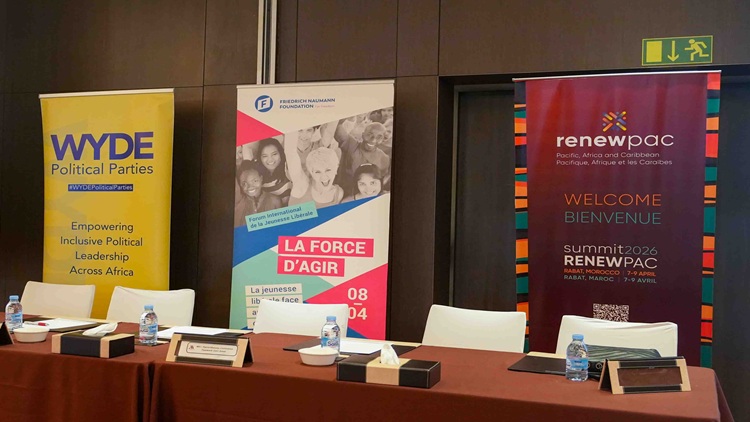
There are pivotal moments in the life of nations—conflicts, major economic crises, social and political upheavals—that alter the course of events and draw a line between a “before” and an “after.” The rise of populism belongs to this category. From Donald Trump’s America to Africa, and through several countries in Eastern and Western Europe, liberal democracy finds itself at the mercy of populist escalation.
During the RENEWPAC Summit held in Rabat, the Friedrich Naumann Foundation for Freedom invited us to reflect on populism and the ways in which it constitutes a threat to liberal democracy. Many ideas emerged from these discussions, particularly regarding the manifestations of populism, and several concrete actions were developed concerning the posture that liberals and all defenders of freedom should adopt in order to protect what they cherish most and what is threatened by the populist project.
At the conclusion of the summit, we committed ourselves to continuing this reflection, because it seemed responsible not merely to issue pious wishes or line up abstract imperatives. We considered it necessary to highlight several promising paths and perspectives, even where the horizon appears obstructed.
Admittedly, the times do not seem favorable to moderation. Hardly has one piece of information been consumed before another, more sensational one joins the stream of warlike narratives and captivating images. Yet the urgency of the moment compels us to share these ideas so that everyone may continue their own reflection and, above all, nourish public debate.
The Essence of the Populist Project: A Democratic Rupture?
By its very nature, populist ideology contradicts the foundations of democracy insofar as it attacks institutions, rejects checks and balances—essential safeguards against executive power—and bans pluralism of opinion.
Populism may be understood as a “corrupted offspring” of liberal democracy. Its principal characteristic is to transcend the Left-Right divide in order to establish a radical opposition between “the People” and “the elite.” This narrative is skilfully orchestrated by a charismatic leader for whom political power, emanating from the sovereignty of the people, has been confiscated by illegitimate forces (the elite, the deep state, the media, among others).
Populism thus becomes a political force as soon as it is embodied in a leading figure. It is the meeting of a man and a people. This man, who presents himself as “anti-establishment” without necessarily coming from popular backgrounds, seeks above all to gain power by appropriating the voice of citizens. This political manoeuvre leaves no room for mediation and places everyone on the same level. The populist leader uses mockery to overturn hierarchies: within populist circles, the opinion of a novice is considered equal to—or even more valuable than—that of an expert. Science and expertise are despised. From mere spectators, everyone becomes an actor without distinction based on education level, united by common fears and a passionate, almost servile devotion to the one who channels their resentments.
Why Such Success?
One may legitimately ask why these simplistic—though carefully crafted—populist theories are so successful. Amin Maalouf provides an enlightening answer:
“All those who were not born with a limousine under their balcony, all those who wish to shake up the established order, all those revolted by corruption, state arbitrariness, inequality, unemployment, lack of prospects, all those struggling to find their place in a rapidly changing world are tempted by the [populist] movement.”
In my view, however, the answer may be even simpler. Populism feeds on real social and economic problems. Immigration and crime have fueled conspiracy theories from Hungary to the United States. Themes of unemployment and sovereignty are brandished in countries such as Senegal or the AES countries (Alliance of Sahel States). Those who exploit these issues for political purposes know that lies provide impatient or uncritical minds with simple answers to complex phenomena.
As for the “men of knowledge” who zealously spread populist propaganda, one should see only opportunism in this: there are circumstances in which ambition temporarily silences even the strongest convictions. By stirring negative emotions and portraying the elite as responsible for all evils, populism makes criticism of the rule of law its spearhead. Intermediate bodies (trade unions, media outlets, political parties) are treated as enemies. Recent examples in Mali and Burkina Faso—the dissolution of political parties or the closure of media outlets such as Joliba TV—are revealing. In Senegal, the discredit cast upon the judiciary and state authority leaves little doubt about this dynamic.
The Establishment of an Orwellian System
Insidiously, bubbles of isolation begin to form. Followers inform themselves through alternative sources on social media, within virtual communities where their opinions are constantly reinforced. This moral comfort eliminates the need for critical thinking while making individuals dangerously susceptible to rumors and slander. In a pernicious manner, an Orwellian system gradually takes hold: the People eventually accept that the rules may change. The democratic façade is maintained, but power becomes locked down and emptied of its substance. As Dominique de Villepin points out, democracy rarely dies from a dramatic coup, but rather through a series of accepted renunciations—initially imperceptible, then irreversible.
What Alternative?
To the question of whether populism threatens liberal democracy, the answer is therefore yes. What, then, should be done? While there is no miracle solution, the urgency of action rests on two pillars:
- The defense of equality and individual freedoms against doctrines that challenge each person’s right to live as they choose.
- The recognition of populism’s ineffectiveness: these movements are never the architects of economic miracles. They often seek instead to remain in power through distorted electoral processes.
However, facts alone are no longer sufficient. Giuliano da Empoli warned in The Engineers of Chaos that lies thrive because they fit into narratives that capture fears, whereas the democrats’ narrative is no longer considered credible. The only promising alternative remains culture. It is the ultimate weapon against the virus of illiberalism.
Ignorance benefits only those who manipulate the masses. Culture is the condition of our democratic vitality; it is impossible to defend rights whose principles one does not understand. A youth without narrative, without reference points, and without critical thinking is a defenseless youth. The first debt a democracy owes its citizens is education. This learning must come from above (the elites) as well as from below (the People); otherwise, we will leave our children nothing but a world without values.
Published by Penda Dieng
