Stability Under Fire
Policy Brief 5: The Economics of De-Escalation
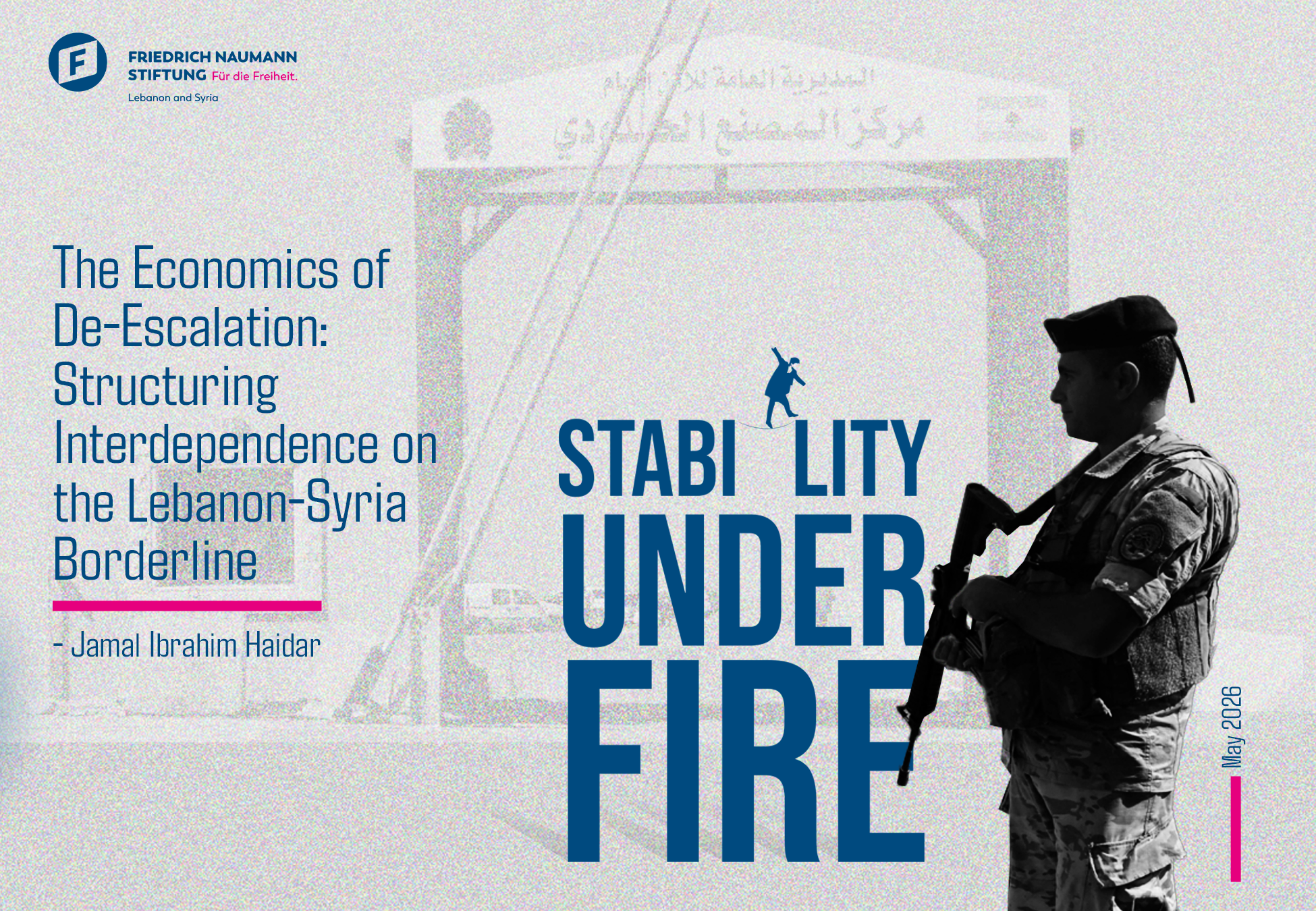
Years of conflict, sanctions, and institutional fragmentation have transformed the Lebanon-Syria border into a space shaped by informality, fragmented exchange, and recurring instability. In this policy brief, Jamal Ibrahim Haidar argues that long-term stability cannot emerge from security measures alone, but from building structured economic interdependence that increases the cost of disruption for all actors involved.
The brief proposes a phased strategy centered on selective cross-border integration in sectors such as agriculture, reconstruction-linked industries, logistics, and light manufacturing. It examines how corridor-based trade facilitation, joint production systems, labor integration, and coordinated infrastructure can gradually shift the border economy from fragmented wartime adaptation toward formalized and mutually beneficial economic cooperation.
Rather than advocating broad political normalization, the paper presents a pragmatic framework for reducing instability through economic structuring, sequencing reforms in ways that are politically feasible and institutionally realistic.
Download the full publication here.