DA Congress:
Liberals gather in South Africa

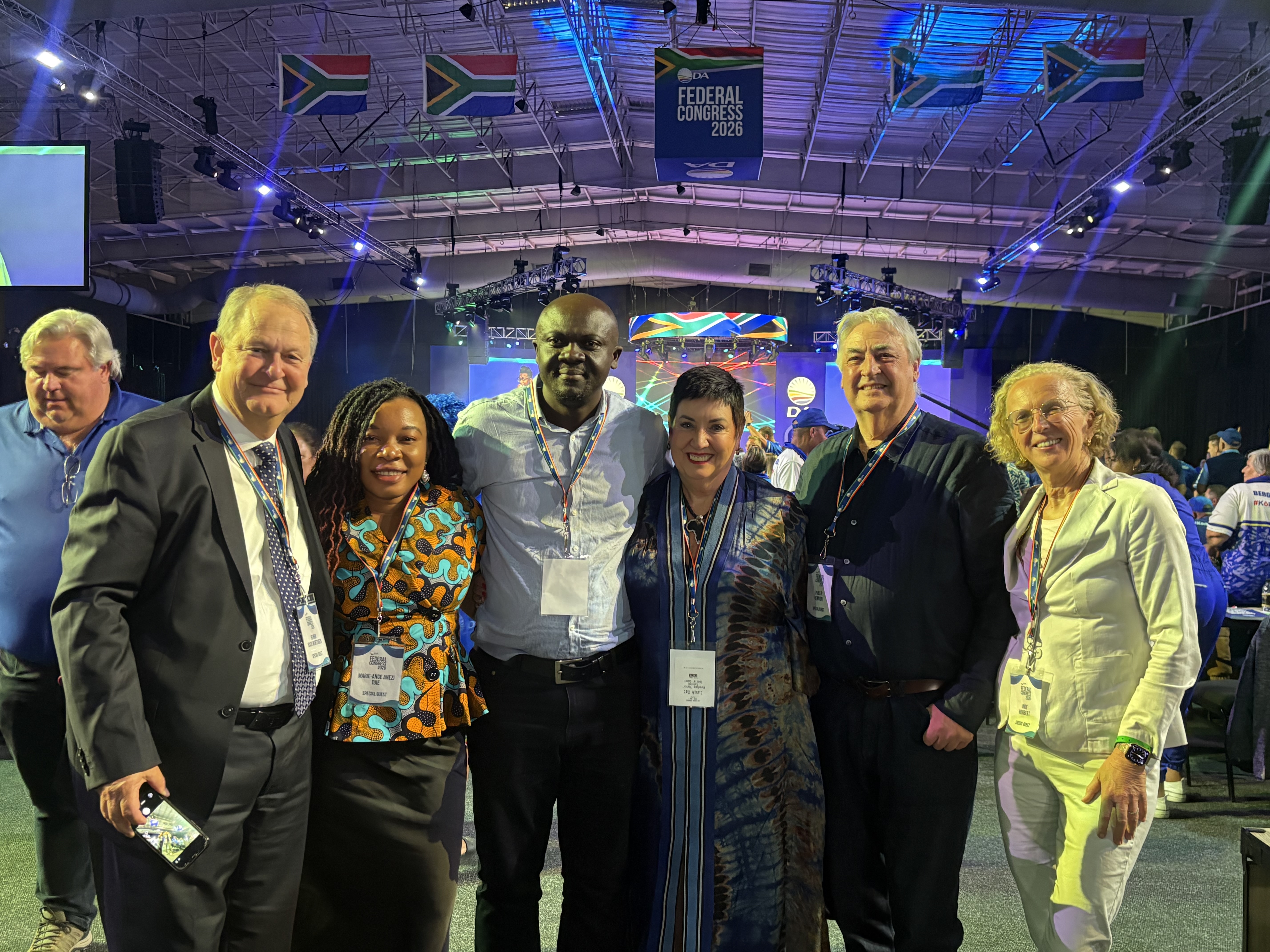
Delegierte aus verschiedenen Ländern nehmen sich während des Kongresses der Demokratischen Allianz am 11. und 12. April 2026 einen Moment Zeit für ein Foto
© Friedrich-Naumann-Stiftung für die FreiheitThe Liberal Workshop (our South African office) had the honour of hosting liberals from Europe and Africa in Johannesburg and Cape Town between 10 and 14 April. The visit saw our international guests attending the Federal Congress of our liberal partner, the Democratic Alliance (DA), as well as engaging with various liberal leaders who are governing across South Africa.
Our liberal partner, the DA, entered the national government for the first time since the advent of democracy in 2024, when the African National Congress (ANC) failed to secure a majority. This paved the way for liberals to help shape not only policy but the trajectory of the country.

Ein deutscher Gast, Mitglied der Partei „Die Yulis“, macht auf dem Wahlkongress der Demokratischen Allianz am 11. und 12. April ein Willkommensfoto
© Friedrich-Naumann-Stiftung für die FreiheitFor the then-leader, John Steenhuisen, the decision to enter government with the ANC and others was driven by the need to prevent populist parties, such as former President Jacob Zuma’s MK Party, from entering government. Such an outcome, he argued, could have led to nationalisation and the implementation of undemocratic policies. This decision resulted in several DA leaders being appointed as ministers and deputy ministers, while also taking up key roles in Parliament.
During this Federal Congress, a new group of leaders was elected to guide the party into its next chapter. The Mayor of Cape Town, Geordin Hill-Lewis, was elected as the new Federal Leader. Hill-Lewis is an alumnus of the DA’s Young Leaders Programme (YLP), a leadership development initiative supported by the Friedrich Naumann Foundation (FNF) in South Africa for more than two decades. His election, along with that of many other former participants of the programme, brings a fresh political energy to both the party and the country.
Reflecting on the congress proceedings, our colleagues from the Junge Liberale, the independent youth wing of the FDP, expressed both excitement and appreciation for the way the DA conducts its work.

Die Delegierten vor dem Parlamentsgebäude in Kapstadt
© Friedrich Naumann Foundation for Freedom
Delegierte am Constitutional Hill, dem Sitz des südafrikanischen Verfassungsgerichts
© Friedrich-Naumann-Stiftung für die Freiheit“Politics in Germany is normally not fun; we just do our business. I think our takeaway here is that politics can be fun,” said Paul Thies from the Junge Liberale. Meanwhile, Jelger Tosch, Deputy Chair of the organisation, noted that the DA’s campaign models could offer valuable lessons for the FDP in Germany.
In Cape Town, the group met with various DA politicians, including the party’s newly elected Federal Council Chairperson, Ashor Sarupen, who shared insights into how the DA operates, particularly its campaign strategies, which have contributed to the party’s growth over the years. At a time when some liberal parties are struggling to regain momentum, these knowledge exchange sessions were aimed to equip our partners with best practices, especially on maintaining a strong brand and consistent messaging.

Teilnehmer in Kapstadt
© Friedrich-Naumann-Stiftung für die FreiheitHowever, liberalism in the African context, particularly in South Africa, where the legacy of apartheid and colonialism remains deeply embedded, and where many citizens continue to face poverty, is complex. Our partners in South Africa have acknowledged this reality and, through governance anchored in liberal principles, are working to address it.
“We have done a lot of work, but there is still so much more to do,” said Western Cape Minister of Health and Wellness, Mireille Wenger, speaking on the DA’s governance in the province. She emphasised that this approach is centred on expanding employment, creating economic opportunities, and boosting economic activity, while remaining mindful of the country’s historical context.