NATO drone warfare
NATO needing Ukraine’s help in drone warfare

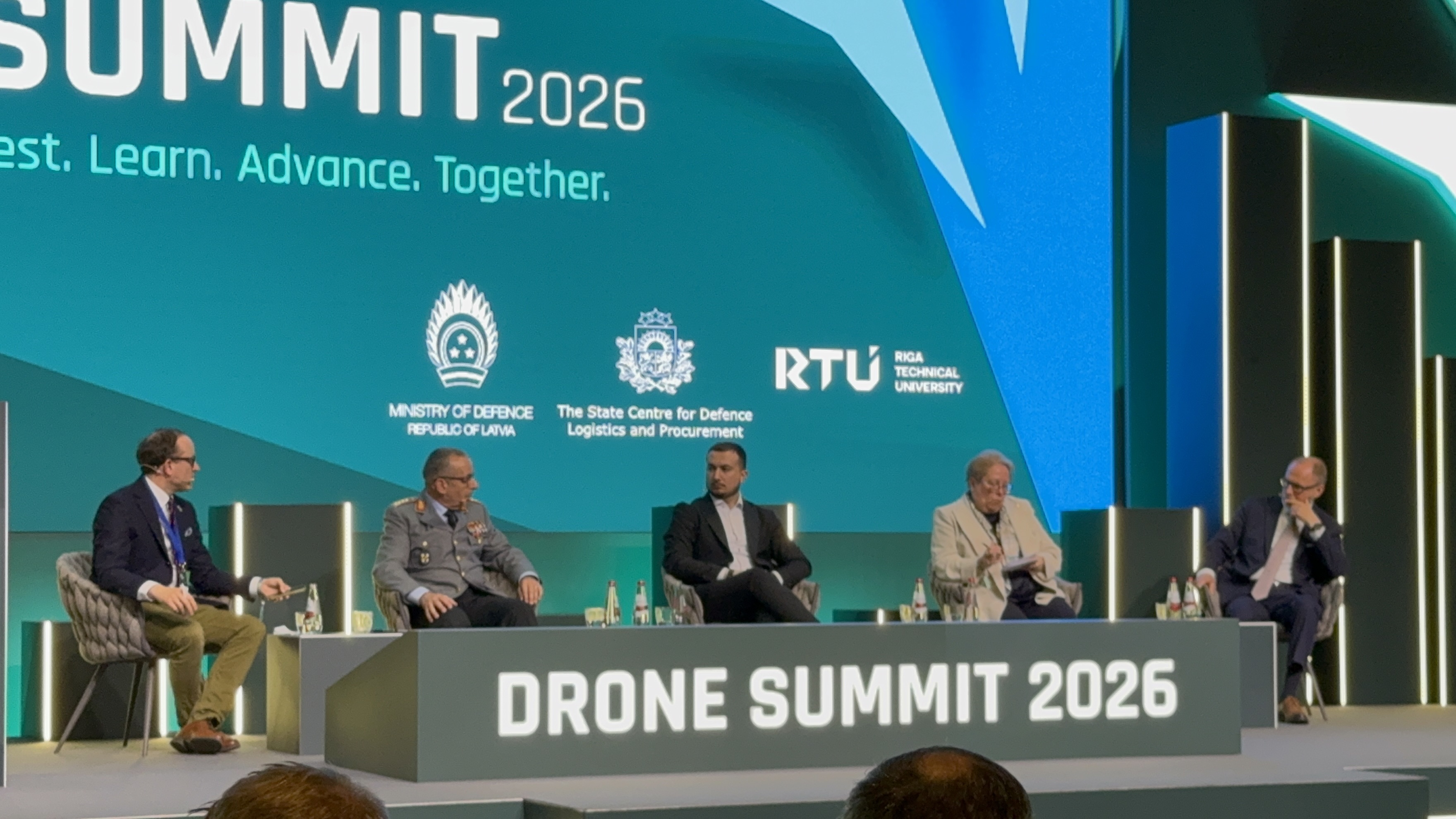
Drone Summit 2026 in Riga
© Copyright FNF Baltic StatesAs NATO leaders debate Europe's future security at the NATO Summit, one lesson is becoming impossible to ignore: Ukraine has become the world's leading laboratory for modern drone warfare. At the Riga Drone Summit 2026, military commanders and political leaders acknowledged that NATO must adapt much faster if it wants to keep pace with battlefield innovation.
Drone Summit 2026 in Riga
© FNF Baltic StatesWhy NATO Must Learn from Ukraine's Drone Warfare
At the Drone Summit 2026 representatives from NATO member states finally seemed to recognize the urgency to learn from Ukraine’s drone innovations. When asked by Julius v. Freytag-Loringhoven, head of FNF Baltic States on the most pressing lesson from the rapidly changing battlefield in Ukraine, German Chief of Defence Carsten Breuer responded: ”rapid and flexible development and solutions with the available resources.”
Ukraine Built Europe's Most Innovative Drone Ecosystem
In the last years, many leaders from NATO countries treated Ukrainian battlefield innovation with much ignorance and arrogance. Ukraine was seen as only improvising under pressure. “It's Ukrainian housewives…” became the in Ukraine widely mocked quote of Rheinmetall CEO Armin Papperger. Meanwhile, Ukraine built the most adaptive, cost-efficient and battle-tested drone warfare and innovation ecosystem in Europe. At the second Drone Summit in Riga, this reality could no longer be ignored.
The determination, adaptability and innovative spirit of the Ukrainian army are unparalleled.

Four Lessons NATO Must Learn from Ukraine
As Major General Kaspars Pudāns, commander of the Latvian Armed Forces, put it, successful drone warfare requires four enoughs: “good enough, fast enough, cheap enough and just enough.” This formula captures a lesson Ukraine has learned through necessity: battlefield advantage increasingly does not depend on perfect systems, but on the ability to process effective technologies at scale and at speed.
Liberal Dutch Defence Minister Dilan Yesilgöz-Zegerius (VVD, with the German FDP member of the European liberal ALDE party) said: “The determination, adaptability and innovative spirit of the Ukrainian army are unparalleled.“
Modern drone warfare is not just about the procurements, it’s about integrating them into our defence system. It’s about the forces, the logistics, the infrastructure and about the concepts about how you operate them.

Drone Warfare Requires More Than Technology
Yet the lessons from Ukraine extend beyond technology itself. As Tara Jaakkola, Assistant Secretary of the General for Defence Industry, Innovation and Armaments at NATO, emphasised, support for Ukraine has evolved “from the donations of stockpiles to involving their own industry and now talking about building with and in Ukraine.” As she highlighted, allies are deeply thankful and grateful that Ukraine is sharing the knowledge gained in this terrible war with its partners.
Jaakkola also stressed that modern drone warfare “is not just about the procurements, it’s about integrating them into our defence system. It’s about the forces, the logistics, the infrastructure and about the concepts about how you operate them.” Ukraine’s experience demonstrates that military innovation succeeds only when technology, doctrine, logistics and organisational structures evolve together.
Speed Has Become the New Military Advantage
Davyd Aloian, Deputy Secretary of the National Security and Defence Council of Ukraine, highlighted another crucial lesson: speed. “One of the most important lessons is that speed is essential in modern warfare.” According to Aloian, the battlefield evolves much faster than traditional defence planning and procurement cycles. “If we take a certain number of months, the technologies will already be outdated.” The intensity of adaptation on the front line requires industry to remain flexible and governments to create frameworks that enable rapid innovation.
NATO Must Reform Defence Procurement
Ukraine has responded by combining centralised and decentralised procurement mechanisms. While centralised procurement remains comparatively slower, Aloian explained that it is continuously being improved. At the same time, decentralised models allow end users to procure and implement new solutions within days, creating a level of responsiveness that many NATO countries are still struggling to achieve.
Ukraine Is Becoming NATO's Teacher
The uncomfortable truth emerging in Riga: Ukraine is no longer only defending Europe. It is the most important teacher for Europe to defend itself. The challenge for NATO is not simply to support Ukraine, but to learn from it and adapt its own institutions to the realities of modern warfare.

The Strategic Consequences for European Security
Alistair Carns, Parliamentary Under-Secretary for the Armed Forces in the United Kingdom (till 11 June 2026) warned that failure to do so carries strategic risks beyond the battlefield. As he argued, “Putin sees a force that is not adapted to the lessons of Ukraine. He will not receive it as a lack of deterrence, but he will see it as an opportunity.” Carns further cautioned that if domestic pressures inside Russia grow, the Kremlin may view escalation abroad as a mean of diverting attention from problems at home.
This is our Chamberlain or Churchill moment: appease or fight for freedom.

Conclusion: The NATO Summit Must Become a Turning Point
This broader significance was captured by Republican U.S. Congressman Don Bacon, who warned: “This is our Chamberlain or Churchill moment: appease or fight for freedom.” His remark underscored that the debate is no longer only about military assistance, but about whether democratic societies are prepared to respond decisively to the security challenges confronting Europe.
The Riga Drone Summit demonstrated that the debate has shifted. Ukraine is no longer only asking NATO for support; NATO increasingly needs Ukraine's battlefield knowledge. Whether the Alliance can translate those lessons into faster procurement, more flexible institutions and modern military doctrine may determine Europe's future security.
Special thanks to Artis Pabriks, former Latvian Minister of Defence and Foreign Affairs, long-standing partner and liberal friend, to Sandis Šrāders, Director for Defence Technology Innovation at Riga Technical University, Fēlikss Neimanis and the whole wonderful team that pulled this groundbreaking event together!