Serbia
A clear victory for the Students’ List
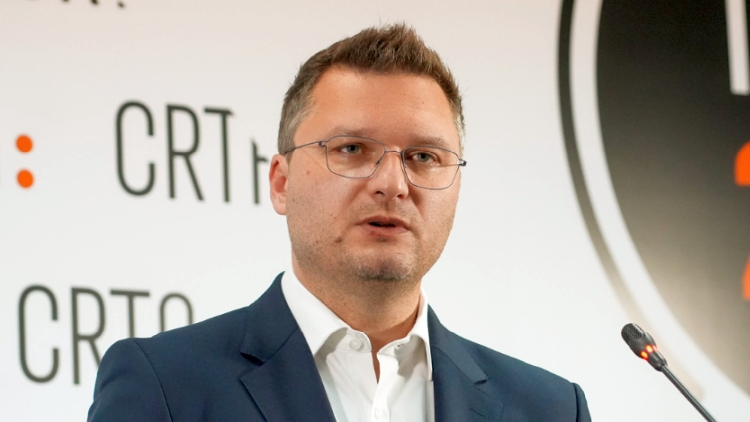
Raša Nedeljkov, Head of the CRTA Election Observation Mission
The protest movement has secured an absolute majority; the ruling SNS party has maintained its 2023 vote tally but has lost share of the vote due to the higher turnout. Voter turnout is the highest since the break-up of Yugoslavia.
On 25 October 2026, Serbia elected a new parliament, and the result marks a political turning point. According to projections by the CRTA election observation mission, the “Students’ List – Students Win” (Studentska lista – Studenti pobeđuju) received 52.5 per cent of the vote and 138 of the 250 seats. It thus holds an absolute majority and can form a government without coalition partners. With 2,246,423 votes, it was more than half a million votes ahead of the SNS list, according to preliminary results from the Serbian Electoral Commission. The “Aleksandar Vučić – United Serbia” (Aleksandar Vučić – Ujedinjena Srbija) list of the Serbian Progressive Party (SNS) secured 39.2 per cent of the vote and is projected to win 103 seats. All figures are provisional; final results are not expected until early November.
A list of politically inexperienced citizens
The student movement traces its origins to the student protests that began following the collapse of the railway station canopy in Novi Sad in November 2024. Sixteen people lost their lives in the incident. The Students’ List was registered as a citizens’ group rather than a coalition of political parties; it has no formal leadership. Although it bears the name ‘Students’ List’, it does not include any students. The lead candidate is Ilija Srdanović, a doctor and university professor from Novi Sad. The list was supported by several parliamentary opposition parties, including the liberal “Movement of Free Citizens” (Pokret slobodnih građana, PSG) and the Green-Left Front (ZLF). Three other groups withdrew their own lists, which had already been approved, in September in order to support the students. Their priorities are the fight against corruption and the restoration of institutional independence and the rule of law. The list is committed to close cooperation with the EU, but wishes to leave the decision on full membership to a referendum. A key objective is for Serbia to receive the Interim Benchmark Assessment Report (IBAR) as soon as possible. This would pave the way for the provisional closure of negotiation chapters.
The SNS, which has been the dominant force in the country since 2012, was running under the name “Aleksandar Vučić – United Serbia” (Aleksandar Vučić – Ujedinjena Srbija). Formally, the party is led by Miloš Vučević, but Aleksandar Vučić continues to set its course. The party officially supports EU accession, but treads a fine line between the EU, Russia and China, and refuses to join the EU’s sanctions against Russia. Its vote tally remained roughly at the same level as in the parliamentary election of December 2023. However, as significantly more people voted, its percentage share fell. The former coalition partner, the SPS, led by Ivica Dačić under the banner “Ivica Dačić – Factor of Stability” (Ivica Dačić – Faktor stabilnosti), failed to clear the three-per-cent threshold, securing 2.17 per cent of the vote. The pro-European coalition “European Serbia” (Evropska Srbija) and the nationalist alliance “Authentic Right” (Autentična desnica) also failed to secure a seat, although the former had deliberately stood separately from the Students’ List. This means that, apart from the Students’ List, the SNS and four small minority parties – to which the three-per-cent threshold does not apply – no other party will be represented in the future parliament.
Voter turnout makes all the difference
According to CRTA’s projection, voter turnout stood at 69 per cent (±1). In December 2023, it was 58.9 per cent. More than 4.4 million of the 6,450,523 eligible voters cast their ballots. This is the highest turnout since the break-up of Yugoslavia in 1992. CRTA attributes this to intensive mobilisation of the public and to the changed social and political circumstances of the past two years. Regionally, the picture is varied: turnout was highest in Western Serbia at 70.5 per cent, followed by Vojvodina (70.2) and Belgrade (70). It was lowest in Eastern Serbia (64.1 per cent). The Students’ List led in almost all regions. Its largest lead, in Belgrade, was around 31 percentage points. Only in southern Serbia did the SNS lead by around eight percentage points, whilst in the east the two lists were virtually neck and neck.
The political timetable has already been set: the new National Assembly will be constituted within 30 days of the final result being confirmed. A government must be elected within 90 days of that, for which at least 126 votes are required. Furthermore, the presidential elections must be called by 27 November, and are to take place no later than 27 December 2026. The Students’ List therefore faces the task of forming a government that has emerged from a protest movement. Whether it can effectively lead the fight against corruption and the strengthening of institutions remains to be seen in the coming months.