LGE2026
What South Africa can teach liberals about earning trust

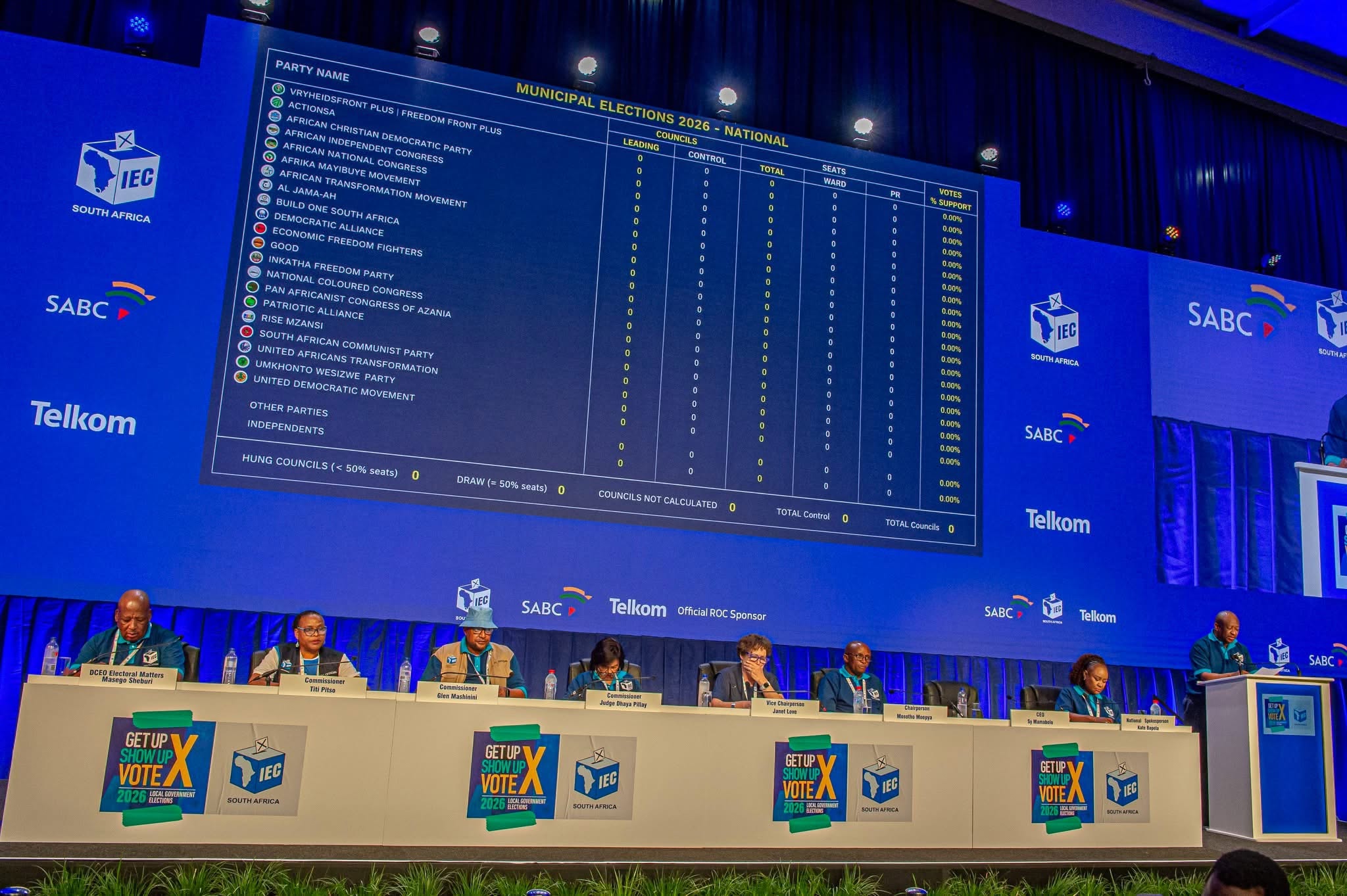
IEC vote counting centre
© Supplied: Brent NicolasjenSouth Africa’s local elections offer liberals a reason to pay attention. The Democratic Alliance (DA), the country’s largest liberal party, has gained ground nationally since 2021, held its majority in Cape Town and become the largest party in Johannesburg, South Africa’s economic hub.
At a time when some liberal parties in Europe are asking how to rebuild trust, the South African experience reminds us that people need to see freedom at work in their daily lives.
The numbers need perspective. The DA won 24.6% of the combined national ward and municipal proportional representation vote, up from 21.7% in 2021, but below its 26.9% in 2016. In Johannesburg, no party won a majority, and being the largest party does not guarantee the DA will govern. The African National Congress (ANC), which has led South Africa’s national government since the end of apartheid, remains the largest party nationally, despite major losses.
To me, the result raises a bigger question: how does a liberal party turn support at the ballot box into lasting trust?
A person running a business without a reliable water supply has less freedom to plan and grow. A young person cannot take up an opportunity if basic transport cannot get them there. When getting a response from a municipality depends on who you know, equal citizenship becomes harder to feel.
These are liberal concerns. Freedom requires rights and limits on power, but it also depends on public institutions that can carry out their responsibilities fairly. A working municipality cannot solve every problem, yet it can give people a more secure foundation from which to build their lives.
The DA has made governing competence central to its political offer. That record must stand up to scrutiny, including in the areas where the DA governs. Cape Town’s financial and administrative record is one part of the picture; residents’ experiences across the city are another. A good audit alone does not tell us whether every neighbourhood receives the services and opportunities it needs.
In a country still shaped by apartheid, a commitment to non-racialism has to be felt by people who have lived with exclusion. The DA’s growth will depend in part on whether citizens who have not historically supported it see themselves and their aspirations in its vision.
During our recent international election study tour in Johannesburg, 21 participants from 16 countries in Africa and Europe followed the DA campaign and compared their own political experiences. The Friedrich Naumann Foundation for Freedom organised the exchange with the Danish Liberal Democracy Programme and the DA.
Several visitors were interested in the party’s campaign organisation and use of data. They also noticed the energy of its volunteers and the effort that goes into making people feel part of a team. Some German participants said their own campaigns could be too serious.
That points to a wider challenge. People are more likely to give their time when they feel valued, know what they can contribute and have a reason to stay involved between elections. Political parties need to be places of belonging, not just vehicles for winning votes.
Germany’s Free Democratic Party lost its parliamentary representation in the 2025 federal election. Liberal parties across Europe face different electoral systems and challenges, but the questions raised in Johannesburg will be familiar: how do we remain visible, relevant and connected to people beyond election day?
Another lesson concerns the reality of sharing power. Since 2024, the DA and the ANC have served together in a national government of unity. Now Johannesburg’s election makes cooperation between parties necessary, even if negotiations do not produce a DA-led administration.
For liberals in Europe, governing with competitors is familiar territory. Compromise is part of democracy, but voters should be able to see what coalition partners have agreed to do and hold them accountable. A coalition will be judged by its ability to serve the public and respect democratic rules.
The lessons also have limits. Participants from some African countries described intimidation and restrictions that make opposition politics dangerous. Training volunteers or improving a campaign message cannot, on its own, create the freedom to organise. Liberal solidarity must include standing up for the rights and institutions that make political competition possible.
South Africa’s election has given the DA an opportunity. Its next task is to turn electoral gains into broader confidence by governing effectively and fairly wherever it has power. The wider liberal movement should take the challenge to heart: freedom is most persuasive when people can see what it makes possible in their own lives.
Wayne Alexander is Head of the Liberal Workshop at the Friedrich Naumann Foundation for Freedom in South Africa. The Foundation works with the DA on political education and exchange.