Environment & Transport
EU Hits Reverse Gear on Combustion Engine Ban

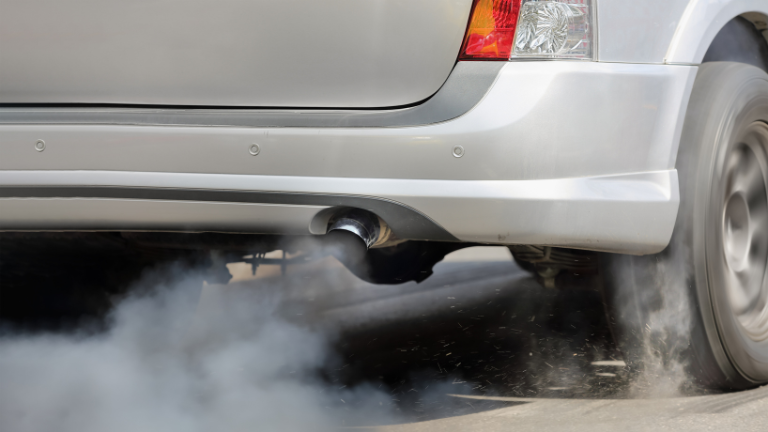
In 2023, the EU made a landmark decision. From 2035 onwards, all new cars sold in Europe would effectively have to be emission-free. For petrol and diesel cars, this meant the beginning of the end. Just three years later, the European Union is shifting into reverse gear. On 4 November, the Parliament's Environment Committee (ENVI) voted in favour of relaxing the 2035 CO2 targets. The vote followed an agreement between the European People's Party (EPP), the Socialists and Democrats (S&D) and Renew Europe.
The reason behind the change is hardly surprising. Europe's automotive industry is struggling with high production costs while simultaneously facing fierce competition from China. Germany, France and the automotive industry have been pushing for more flexibility for some time. The recent parliamentary compromise clearly supports these concerns by softening strict targets, while strategies to strengthen Europe’s competitiveness remain subject to ongoing negotiations.
From strict targets to flexible approaches
The parliamentary compromise follows a Franco-German agreement reached in October between Chancellor Friedrich Merz and President Emmanuel Macron. Both governments had been pushing for changes to the EU's 2035 rules, driven by shared concerns about the future of Europe's automotive industry but differing priorities on how to address them. So they made a deal. France would accept greater flexibility on combustion engines, while Germany would back stricter “Made in Europe” requirements. Their joint position, presented to the Council in October, added momentum to the negotiations in the European Parliament. On 20 October, negotiators from the EPP, S&D and Renew Europe reached a separate compromise, which received the backing of Parliament's Transport and Industry Committees two days later. Alongside more flexible CO2 targets, the committees supported recognising vehicles running exclusively on qualifying renewable fuels. Their votes paved the way for the Environment Committee's approval on 4 November, bringing the proposed revision another step closer to adoption.
At the heart of the parliamentary compromise is a significant change to the 2035 emissions target, which would allow combustion-engine cars to survive beyond 2035. Under the current legislation, car manufacturers must achieve a 100% reduction in the average CO2 emissions of their new cars by 2035 compared to 2021 levels. In practice, this would mean no more new conventional petrol and diesel, not even hybrid cars on Europe’s streets. The new Parliament compromise lowers this target to 95%. In addition, manufacturers using European-made green steel could receive additional flexibility of up to 7.5%, bringing the effective reduction target down to 87.5%. As the CO2 targets are calculated across manufacturers’ entire fleets of newly registered vehicles, the revised rules would allow combustion-engine and hybrid models to remain on the market alongside electric cars. The compromise also proposes a separate category for vehicles powered exclusively by qualifying renewable or low-carbon fuels, although the precise technical requirements and eligibility criteria remain to be defined. The compromise also introduces a three-year averaging period from 2029 to 2031 for the 2030 CO2 targets, replacing the requirement to meet the targets in 2030 alone. This gives manufacturers more breathing room to meet their CO2 targets, allowing them to balance out a slower year with better performance in another.
European industry interests vs. long-term competitiveness
Overall, the agreement shows a clear direction: Fewer rigid deadlines and more room for manufacturers to decide how they meet their emissions targets. Critics warn that compromise is a short-term relief that comes at the expense of Europe's long-term competitiveness. Organisations such as the International Council on Clean Transportation (ICCT) and the economic think tank Bruegel argue that weakening the targets risks undermining investment in electric vehicles and their supply chains at a time when European manufacturers are already struggling to keep pace with Chinese competitors. Keeping combustion engines on the market for longer could also prolong Europe's dependence on imported oil, rather than accelerating the transition towards electric mobility. The proposed “Made in Europe” requirements have sparked a separate debate. While intended to strengthen European production, stricter eligibility criteria for subsidies and public procurement could exclude vehicles manufactured not only in China but also in partner countries such as Japan, South Korea and Canada. Critics warn that such restrictions could add administrative burdens and create tensions with international trading partners. At the same time, they would not necessarily prevent Chinese manufacturers from competing in Europe, particularly if they establish production facilities within the EU.
Supporters of the compromise, however, argue that greater technological openness and flexibility are essential for Europe's automotive industry at a time of mounting economic pressure. Allowing manufacturers to continue developing combustion-engine and hybrid vehicles, while recognising the contribution of alternative fuels towards climate targets, would give companies more options to manage the transition. As Renew MEP Jan-Christoph Oetjen (FDP, Germany) emphasised in October:
“Flexibility for car manufacturers and technological openness in achieving our climate targets benefit not only manufacturers but also suppliers.”
This is particularly relevant for Germany's automotive supply industry, which is facing significant pressure from the transition to electric mobility. The German Association of the Automotive Industry (VDA) argues that easing the targets could help manufacturers navigate the transition and protect jobs, particularly in Germany's automotive sector. The trade union IG Metall has also expressed support for greater flexibility, provided that manufacturers commit to maintaining production and investing in European factories.
Awaiting inter-institutional negotiations
For now, the existing 2035 rules remain in place. Following the ENVI Committee's approval, the compromise still needs to pass a vote in the European Parliament's plenary. The vote is expected to take place late November or beginning December at the earliest. According to Renew MEP Pascal Canfin (Renaissance, France), the political groups behind the compromise have agreed that Parliament will only vote on the revised CO2 standards once the same political majority has agreed on the definition and criteria for “Made in Europe”. This is intended to ensure that the proposed flexibility for car manufacturers is tied to clearly defined European production requirements. Meanwhile, EU member states still need to establish a common position in the Council. Once Parliament and Council have adopted their respective positions, they can enter negotiations, together with the European Commission, to agree on a final legislative text. The existing 2035 rules can only be amended once the revised legislation has been formally adopted. Until then, it remains to be seen how the EU legislature can reconcile the interests of European manufacturers with the overarching aim of ensuring Europe’s competitiveness.