Lobito Corridor
Germany's critical-minerals security must be a partnership

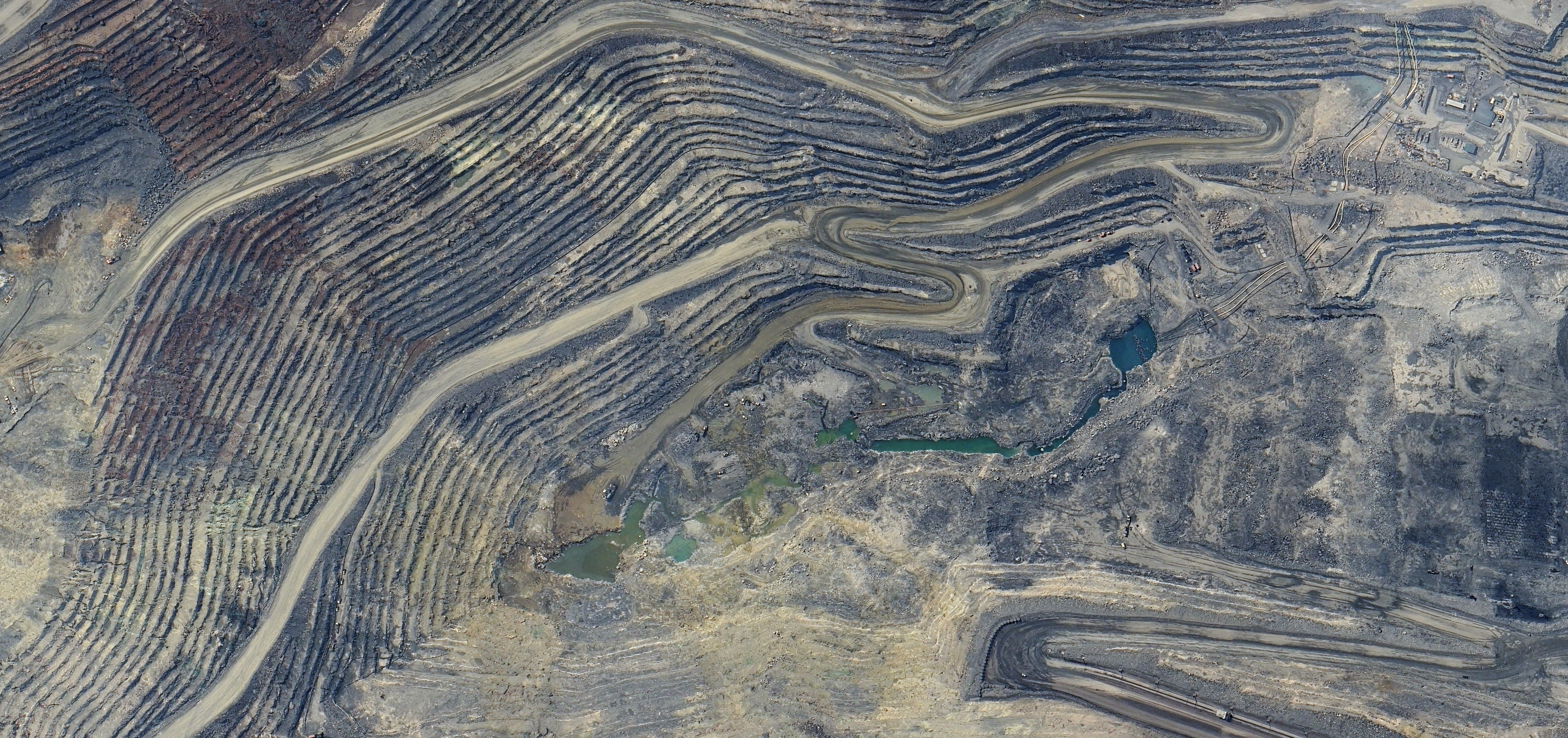
Striped Dump Terraces, Kansanshi Copper-Gold Mine, Zambia: High-Resolution Aerial View of Open-Pit Operation and African Industrial Landscape
© ShutterstockGermany's industry runs on copper, cobalt, lithium and rare earths. Yet their mining, refining and processing are concentrated in a small number of countries.
Today, the Friedrich Naumann Foundation for Freedom (FNF), in collaboration with the Impact Centre for Policy Research Zambia, is launching a policy paper and a report that examine this dependency. They pose a practical question: Can the Lobito Corridor help to diversify Germany’s supply chains without repeating the old pattern, whereby raw material exports create hardly any value added in the resource-exporting countries?
The policy paper
The paper, Can Lobito Put Germany on Track for Critical Mineral Security?, is written by Kenny Suze and Emmanuel Muma. It examines the corridor linking the mining regions of the DR Congo and Zambia to the Atlantic port of Lobito in Angola.
China accounts for roughly 70 per cent of global refining capacity for key battery and magnet materials, and the DR Congo produced more than two-thirds of the world's cobalt in 2024. The corridor is growing but still underused. In 2025 the Lobito Atlantic Railway carried close to 200,000 tonnes of international cargo and 65,000 tonnes of domestic cargo, more than double 2024.
Growth alone does not guarantee development. Without investment in processing, manufacturing and skills, the corridor risks becoming a faster route for unprocessed minerals. A survey of 50 Zambian small and medium-sized enterprises (SMEs) identifies border procedures and unpredictable informal costs as major constraints.
The paper proposes linking German support, such as the Raw Materials Fund, to processing capacity, skills transfer, environmental standards and local content.
The documentary
The Lobito Corridor - Germany's Critical Mineral Solution? runs for 18 minutes and follows the same question from the ground up.
The first part explains the geography. Zambia is landlocked, and the speakers argue that Lobito offers a shorter route to the Atlantic than the alternatives. There is no established rail or road link between Angola and Zambia, and the Kasumbalesa border is a major bottleneck. Proposed fixes include one-stop border posts, pre-clearance and data exchange.
The second part turns to strategy. Interviewees argue that Germany and Africa both need diversified mineral supply chains, but that value must be added in Africa itself through processing, financing and sound policy. The film also raises risks, including financing gaps, governance and the effect on people who earn a living in long-haul trucking.
Our view
Open markets, the rule of law and predictable administration are the foundations of prosperity. Reliable trade routes depend less on large announcements than on transparent customs procedures, competitive logistics and entrepreneurs who can invest with confidence.
German engagement should therefore be judged not only by the tonnes it delivers, but by whether it opens real opportunities for African enterprises.
"Securing Germany's supply of critical minerals only makes sense if it also strengthens the economies that produce them. Partnership, not dependence, is the real test." — Inge Herbert, Regional Director, FNF Sub-Saharan Africa
Read and watch
- Read the policy paper: Can Lobito Put Germany on Track for Critical Mineral Security? | Friedrich Naumann Foundation
- Watch the documentary (18 min): The LOBITO CORRIDOR – Germany’s CRITICAL MINERAL SOLUTION?
The paper is free of charge and not for sale. It may not be used for election advertising during election campaigns.
_________________________________________________________________
About FNF: The Friedrich Naumann Foundation for Freedom is a liberal political foundation founded in 1958 and based in Potsdam. It promotes political education and participation and works for freedom, democracy, the rule of law and human rights.