Europe 2050
Reverse Mentorship 2050: Lessons for Europe’s Future from Kyiv to Belgrade

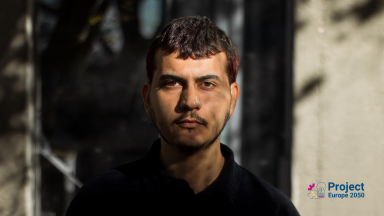
It’s the year 2050, and Europe is facing a profound paradox. Once the cradle of freedom, social justice, and prosperity, Europe has now fallen prey to populism, nationalism, and worn-out institutions. The world is now looking at Europe, once the primary champion of liberal values, with questioning and critical eyes. Values that cherish individuals simply because they are individuals, such as the rule of law, human dignity, and pluralism, are now being questioned by European citizens as well. But the paradox begins here: freedom has not vanished or disappeared from Europe. Freedom is no longer in Brussels or Berlin, at the heart of Europe, but in Kyiv and Belgrade, cities that have been waging an honorable struggle for liberal values for decades, carrying this struggle to their streets and even to the front lines. Only one question remains: Will Europe learn from the struggles around it to uphold its values?
Today, there is no doubt that liberalism faces serious challenges. This is most evident in Europe, the bastion of liberal values. The rise of populism and a shift to far-right politics are eroding Western institutions, established on centuries-old foundations that have fostered social and individual liberties. In a globalizing world, economic systems have never been independent of one another, and crises such as global pandemics and incessant armed conflicts can destabilize economies. In the face of this situation, populist and far-right leaders who adopt a policy based on the distinction between friend and enemy claim to be acting on behalf of their people by creating an enemy (immigrants, of course) for themselves, from Paris to Budapest, from Rome to Berlin.
Meanwhile, the new generation of European citizens, who have grown up prosperous under liberal values for centuries, who have experienced liberal values from birth, and who, fortunately, have not had to struggle for them, have the privilege of living politically indifferent lives, and they blame liberalism for the loss of prosperity they experience due to the major problems created by authoritarian states globally.
Although, the historical evidence is not that far away, the lessons learned from the loss of millions of lives three or four generations ago and the costs of achieving these entrenched liberal values have been forgotten. In addition, the European Union, which successfully resisted the authoritarianism, dictatorship and oppression that came with the 20th century with its strong institutions, seems disconnected from the people today because it cannot provide the order it once promised with its lengthy procedures, agreements and new laws. The younger generation, having lost their enthusiasm and grappling with inequality and environmental problems, views liberal values as the root of their problems rather than embracing them. The idea of freedom that held the continent together has now become an empty promise offered by elites disconnected from society to lull the public.
While this is the case in the Western world, a very different example of struggle is unfolding in neighboring countries, where individuals have lived for years under authoritarian and oppressive regimes, forcibly swayed from liberal values, the rule of law, pluralism, and democracy. There is a widespread mass struggle, particularly in Georgia, Ukraine, Serbia, and Turkey, that has been ongoing for decades, to defend and embrace liberal values. The far-right and populist political atmosphere that has increased, especially after the COVID-19, in Western European countries, which are always cited as epitomes of liberal values, is being followed with astonishment by individuals from countries that have been part of the freedom struggle against authoritarian states for years.
In Serbia, people have repeatedly taken to the streets against corruption, electoral manipulation, and rising authoritarianism. In Turkey, the history of the struggle for civil and political liberties has continued for over fifty years through civil society and public movements. The Ukrainian people are perhaps paying the heaviest price for their freedom as they fight for independence. A protester in Tbilisi holding a battered EU flag tells a more powerful story than any treaty signed in Brussels. It reminds us that freedom is most treasured where it is most at risk. However, this struggle serves as an example to their Western neighbors. They are writing a story of heroism, willing to sacrifice their lives for their independence and liberal values. The ultimate guardian of freedom is the individual, and unlike the EU, these countries exhibit an instinctive commitment to freedom of their own. This is precisely why, by 2050, we are likely to see an EU that examines the achievements of its neighbors' struggles for freedom and questions where it has lost its commitment to the rule of law, social justice, and pluralism.
Imagine Europe in 2050. The countries once cited by opposition groups, as examples of their prominent countries returning to their former glory, are no longer Brussels or Berlin, but Ankara, Belgrade, or Tbilisi. The slow and aging institutions of lawmaking and enforcement must be replaced by a more dynamic EU that draws lessons from neighboring countries and demonstrates this capability with tangible reforms. The European Union, a liberal democratic project based on pluralism, the rule of law, and the value of the individual, may need to learn from the struggles for freedom experienced in neighboring countries to sustain this future.
Where freedom is most severely tested, it is also most deeply valued. Liberal values, the achievements of the struggle for freedom that emerged from places where opposition resulted in imprisonment, death, or exile, and the adjustments individuals made to preserve these gains, along with the stories of heroism that emerged from this situation, may inspire future EU citizens, not only to understand how the founders of these values were gradually led to abandon them, but also to better understand the value of the freedoms they once sacrificed for a secure life under the influence of populism or the authoritarianism of the far-right.
By 2050, the story of Europe may be a tale of reverse mentorship where lessons on resilience, civic engagement, and liberal renewal flow not from the West to the East, but from the streets of Kyiv, Tbilisi, and Belgrade back to Brussels. Liberalism's most significant characteristic, distinguishing it from other ideologies, is its dynamic and changing nature. It can be shaped by the active norms of society and has the most rapid capacity to take action. This potential future is not supposed to be depressing but instead hopeful for liberal democracy. The stories written by those who sacrificed their lives to protect their freedom demonstrate that liberalism is not stable and static, but vibrant and ever-renewing. The EU will provide the best answer to the globally trending fairy tales that the far-right constantly cite, such as the implausible ideas that the European Union is not working, has finished, and European integration is impossible. They will do this by listening to their neighbors, by forming a solidarity network with the people who have fought against authoritarianism for liberal teachings, and, if necessary, by remembering how to fight for freedom and bringing the dreamed-of European liberal democracy to life.
In shaping Europe's future, the biggest question that needs to be answered, from the smallest building block of society—the individual—to state institutions, is: has the end of history truly arrived? Approaching this question with a presupposition of "yes" unfortunately means overlooking the dynamism and change inherent in liberal ideology. This, in turn, will likely lead to problems like far-right and populist politics, which I mentioned earlier, by 2050. While there are still twenty-five years to go to prevent these problems, taking the right steps can ensure that the image that comes to mind when we think of Europe today is preserved.
First and foremost, the European Union must carefully embrace the innovative nature of liberalism. The top-down approach, coupled with the Kantian understanding of policymaking and legislative enactment, often results in long bureaucratic cycles such as the EU’s delayed response to migration crises or its fragmented stance on climate policy which are difficult to explain to the public. Instead, Europe must learn from the struggles in its neighboring countries. This means opening political dialogue with civil society actors in Turkey, Ukraine, Georgia, and the Balkans through structured forums, joint research initiatives, and EU-funded cultural and educational exchange programs that foster mutual understanding. Europe's liberal future should not be considered independently of Tbilisi, Kyiv, or Ankara. The voices emerging from these countries, perhaps rarely heard today, will take their place on the dust-free shelves of history as cries for freedom that should serve as models for Europe's liberal democracy in the future.
Secondly, Europe must invest in increasing dialogue between its neighbors and young people. Fortunately, young people in Western Europe, who were not born into the struggle for freedom, can learn much about protecting freedom from their peers living in border countries who took to the streets to understand the value of their freedoms and fought against authoritarianism. Instead of romanticizing these street movements in Serbia or Georgia, the EU together with its member states should be recognized and supported through educational programs, exchange networks, and digital platforms that enable young Europeans to learn from one another. Ultimately, a continent that truly values freedom should create spaces where its youngest citizens shape narratives together, beyond national borders.
Thirdly, Europe must embark on a new revolution in storytelling. The European Union is undoubtedly a unique project, and this project has achieved many successes, both economically and through treaties. From Lisbon to Athens, there is unprecedented integration. However, what motivates people and compels them to take action is the narrative behind it. While it is undeniable that this success has been achieved through the enactment of laws and regulations, the question of how and what was achieved will unfortunately remain unclear to the public without an effective storyteller. One of the biggest problems is that European citizens currently fail to recognize their immense privileges compared to the rest of the world. The liberal values implemented during the achievement of these distinctions are not recognized by the public. To address this, Europe must better explain how it succeeded by using social media, public education, and cultural initiatives to tell the story of liberal democracy’s concrete achievements. At the same time, the heroic struggle waged in Kyiv and the slogans put forth by young people against authoritarianism in Tbilisi are part of the price Europe has paid for liberal democracy, a shared legacy. It is essential to properly evaluate this legacy, to recount the struggles waged today, and to present a compelling narrative, as well as to demonstrate how liberal achievements and the ideology of freedom can be applied across the European continent today.
Fourthly, Europe must not succumb to the arrogance of "we have succeeded." There is always a struggle for freedom, and this struggle may be in a neighboring country, sometimes within its own country, or sometimes overseas, but the continuity of the struggle is one of the most crucial building blocks of liberalism's dynamism. Learning from others is not a weakness, but a significant strength. Ultimately, Europe's embrace of its freedom is linked to its capacity for self-criticism, its renewal, and its dynamism. A Europe, seeking to uphold its founding philosophy and moral purpose, must first acknowledge the current situation and engage in greater dialogue with its neighbors, where liberal values are being fought for. Because the European Union is a solidly founded structure capable of solving potential future problems well in advance by demonstrating to its own society the consequences of the loss of liberal democracy and by adapting to the transformations of the age.
As a result, by 2050, Europe will face two distinct paths. Either Europe will succumb to populism, nationalism, and tired institutions, or it will listen to its neighbors and embrace its founding values with greater dynamism, remaining a symbol of freedom to the rest of the world while preserving its proud legacy. Europe has not lost its commitment to liberty; freedom still exists in the streets of Tbilisi, Kyiv, or Belgrade. The answer to this paradox lies in whether Europe can learn from these struggles. Liberalism’s strength lies not in perfect stability; rather, it stems from its capacity to offer diverse solutions to the various crises that arise over time. If Europe embraces this dynamism, it can rebuild a sense of shared purpose among the people, rather than making empty promises. If this is achieved, liberal values will emerge not as abstract products crafted by elites, but as concrete achievements fought for a common goal. If Europe dares to humbly confront its weaknesses, connect with those fighting for freedom on its borders, and invest in a new culture of solidarity, it can once again become the epicenter of liberal democracy. Europe's story is not yet over; it is still being written. The question is whether it will be one of surrender or regression, or one of courage, renewal, and hope.