Argentina
Argentina After the World Cup—More United as It Heads Into an Election Year?

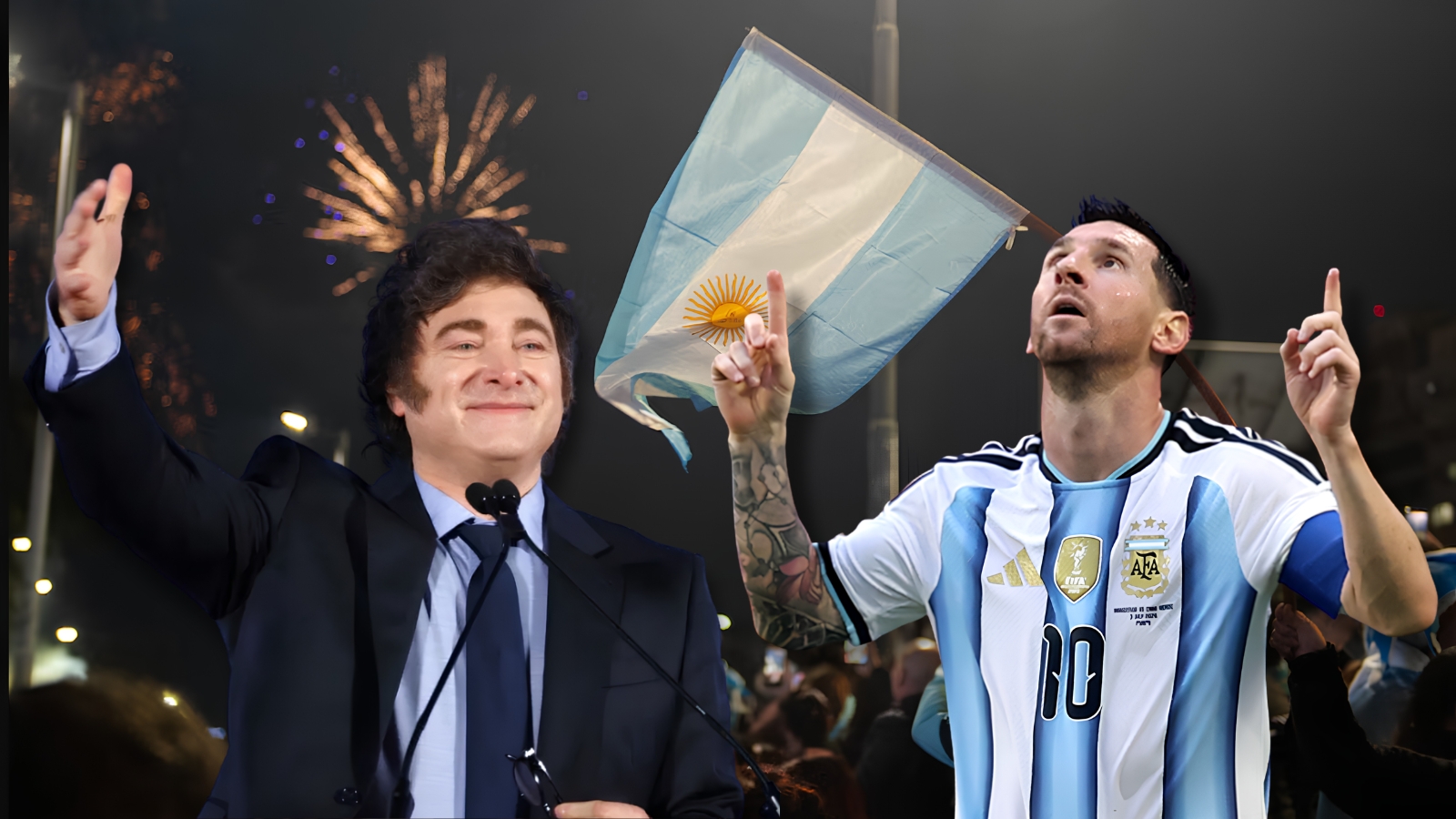
In the end, it wasn’t enough on Sunday in the World Cup final in the U.S. against the strong European champions, Spain. The Argentine national team (“Albiceleste,” “the White and Sky Blues”), led by captain and superstar Lionel Messi, suffered a 0–1 defeat in extra time. This does nothing to dampen the Argentines’ enthusiasm for soccer and their team. What does this display of social cohesion mean for the political outlook and for President Javier Milei one year before the next elections?
The national team unites an otherwise deeply divided country
In Argentina, the national team achieves what is otherwise nearly impossible: uniting the country, at least temporarily. Whether supporters of President Milei or the Peronists, whether living in the capital or in a province, whether wealthy or in need, whether young or old: the entire nation has been on the edge of their seats rooting for their team and celebrating its victories. Despite the Argentine national team’s sometimes less-than-constructive and borderline physical style of play—particularly in the final against Spain—the Argentines’ enthusiasm for their team remained undiminished. Milei even initially announced a national holiday for the day the team returned to celebrate their runner-up finish in style, but then backed away from the idea because Messi and other players returned directly to their foreign clubs. The team’s white-and-blue jerseys were visible everywhere on the streets during the tournament—most notably, of course, the No. 10 jersey worn by the idol Messi. He and the other players were omnipresent as symbols of goodwill and brand ambassadors during the weeks of the World Cup —whether as souvenir items or in advertisements on billboards or on television for (almost) every product.
Soccer in Argentina is always political, too
In Argentina, soccer is more than “just” the number one national sport. Politicians use “their” soccer club as a platform to gain popularity among members and fans. A prominent example is former President Mauricio Macri, who previously served as president of Boca Juniors; as a traditional working-class club, it was the ideal complement for the middle-class politician to appeal to additional voter demographics.
Currently, a highly emotional debate is taking place in Argentina over whether clubs should be allowed to convert to private legal structures in order to become more attractive to private investors. Milei justifies his legislative initiative on this issue by citing the lack of international competitiveness among Argentine clubs (in stark contrast to the national team’s successes). For example, the last time an Argentine club (River Plate) won the South American Champions League (“Copa Libertadores") was in 2018, and with the exception of one player (Leandro Paredes of Boca Juniors), all members of Argentina’s World Cup squad play abroad. Critics strongly oppose opening the clubs to private capital, citing their fear that this would reduce members’ influence and the clubs’ social engagement, although fears of diminished political influence over the clubs as platforms for voter support likely also play a role.
Even on the field, the World Cup wasn’t always just about soccer. After the semifinal match against England, some Argentine players unfurled a banner reading “Las Malvinas son argentinas,” which reignited the long-standing dispute with the United Kingdom over territorial claims to the archipelago in the South Atlantic and could result in a penalty from FIFA for making a political statement on the soccer field.
Next elections in Argentina in October 2027
Following the Argentine team’s advance to the World Cup final and the national unity demonstrated—in every respect—during the tournament, the question arises as to how long the population can maintain the enthusiasm displayed during the World Cup. The World Cup has been the dominant topic in the country over the past few weeks.
When Argentina won the World Cup title in Qatar in December 2022, it did little to help the ruling Peronists under President Alberto Fernández. For one thing, his attempt to take credit for the team’s success and invite them to a celebration at the presidential residence, the Casa Rosada, failed. The team led by Messi and coach Lionel Scaloni has repeatedly made it clear that they will not allow themselves to be co-opted by party politics. The players belong first and foremost to themselves, then to all Argentines, and finally to the (soccer) world—but not to any particular party.
For another, the next (presidential) elections won’t take place until October 2027—in just over a year. What is considered short-term in Germany is an eternity for Argentina—in other words, a lot can still happen. As a result, the Peronists led by then-President Fernández (who did not run for reelection) were unable to capitalize on the 2022 World Cup victory and lost the election in October 2023 decisively to Milei.

Across Argentina, people gathered at the Obelisco in Buenos Aires and at other public landmarks to celebrate the national team’s World Cup journey.
Milei Will Be Judged on Core Issues
After the euphoria of finishing as World Cup runners-up, Argentines are likely to shift their focus back to the country’s concrete challenges and their daily lives in a short time.
One of these is the economic situation. While macroeconomic stabilization is continuing encouragingly, with inflation falling (to 1.9% in June—the first time in 10 months that it has dropped below 2% on a monthly basis), this is also helping the population’s purchasing power to recover slowly. On the other hand, the Argentine economy is achieving record export surpluses, driven primarily by the agriculture, energy, and minerals sectors. However, other sectors—particularly (parts of) manufacturing, construction, and consumer goods—continue to struggle with adjustment problems amid the necessary yet difficult process of opening up national and international markets. Since these sectors are particularly labor-intensive and more severely affected by job losses, job security is currently the top concern among Argentines in surveys.
A key factor in Milei’s chances of reelection will therefore be whether job creation in the highly competitive sectors at least offsets the losses in the weaker sectors. This is precisely the goal of the government’s systematic reform efforts, which aim to ease the burden on businesses through structural reforms— , particularly labor market and tax reforms—and through consistent deregulation.
Another key issue in polls is corruption. Although this problem extends beyond the national level, the Milei administration has recently been grappling with renewed allegations of corruption. This contradicts its claim—unlike the established parties, which Milei refers to as a “caste”—to combat mismanagement and increase transparency in government actions.
The resignation in late June of Manuel Adorni—chief of staff, government spokesperson, and a longtime close confidant of Milei, who faced an ever-growing list of unresolved allegations of self-enrichment—therefore sent an important, albeit belated, signal that Milei is taking necessary action on this front.
Chances for Re-election Are Good
In the coming months, Milei has it in his own hands to capitalize on the newfound positive sentiment among the population—by maintaining a clear focus on the core issues for which he was elected in 2023—and to defend his presidency for a second term.
Recent polls show that he currently leads—in some cases by a significant margin of 10 percentage points—over his likely Peronist challenger, Axel Kicillof, the governor of the Province of Buenos Aires. The majority of the population, especially amongst younger people, has no desire for a return of the spectacularly failed policies of the Peronists, who ran the country until 2023.