Uncle Stan
“I am a Cape Flats citizen”

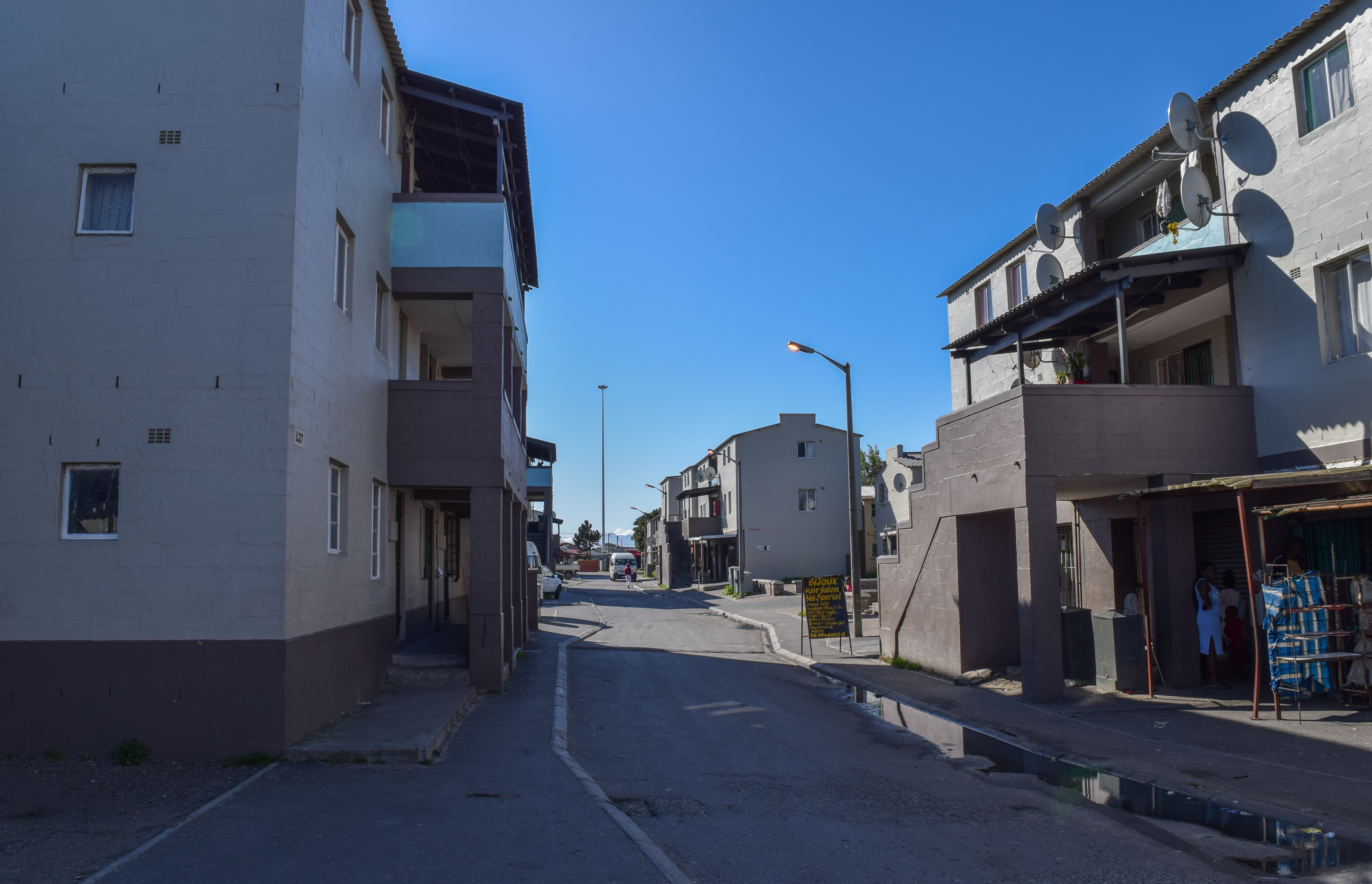
Township in Cape Town.
© ShutterstockThe Facebook page Cape Flats Stories is no stranger to South Africans. But behind every story lies a story. Stanley Jacobs, or Uncle Stan as he is known, started this trademark platform in 2018 to create conversation and tell the stories of a community that is often forgotten.
“A lady was telling me years ago about Mitchells Plain, how the people were standing together and protesting. She asked me why we on the Cape Flats are not doing the same. I then realised people don’t know what or where the Cape Flats is. I wanted to change the narrative.”
When you hear about the Cape Flats, you normally read about gangsterism, crime and children being murdered. That is what the headlines tell us. Though these stories are true, the successes of the Cape Flats rarely make headlines.
For heritage month, we spoke to Uncle Stan about his upbringing and what inspired him to start positive conversations.
My dream is for our children to have freedom — freedom to move and freedom to breathe.
Growing up on the Cape Flats
Growing up on the Cape Flats in a very Christian family, Uncle Stan learnt about the firm principles of love, patience and community. “I grew up in Parkwood on the Cape Flats. My mother and father were very spiritual people. We would go to church every day.”
Parkwood is considered one of the more dangerous areas on the Cape Flats. His parents later moved to Ottery for a while. “My father was a construction worker, so we were fortunate in a way to get out of the most dangerous parts. Later, we were able to move to Grassy Park. Now, Grassy Park has always been seen as one of the elite places to stay on the Cape Flats.”
What made Grassy Park different was that it had a police station, shops, a civic centre, recreational facilities, schools and a library. Later in life, Uncle Stan realised that these are the things that matter when building a positive community. But not every part of the Cape Flats had access to these facilities.
“So we had access to things, and it made me think, what if the whole of the Cape Flats had such access?”
For Uncle Stan, his activism started with seeing these differences. “Some places on the Cape Flats are more privileged, others are really just very marginalised.”
Not everyone “makes it out” of the Cape Flats. Many young people get caught in the cycle of gangsterism and crime.
Uncle Stan reflects on making it out.
“Many of the people I grew up with are either on drugs, some have passed on, but there are also those who got out.”
He shares a recent experience. “Last week I was at Checkers to get some, you know, some nice things to eat. And here one of my peers came, my cousin, my uncle’s daughter. And the last time I saw her, she was on drugs. But it was so nice to see her cleaning. Not the best job, but she’s dressed clean. She looks happy.
“And that made me realise, you know what, there is still hope. And for my other cousins, I actually feel very sad because some of my friends and other family members, they are stuck. They didn’t see any escape, you know, so now the escape mechanism is alcohol, drug abuse and gangsterism.”
This realisation makes him sad at times, but he says it is also what keeps him motivated to do what he does.
Although Cape Flats Stories started out as a platform for positive stories, the platform now also hosts debates around democracy and involves itself in community work.
“What started out as posting stories later turned into something else. We started getting requests from parents whose children didn’t have school uniforms, or people who didn’t have food, or didn’t have this and that. So it also became a point of reaching out for help.”
Though he can’t help everyone, he started connecting with other changemakers and organisations in the community to help build bridges and provide support. “We started doing all kinds of events. Fundraisers. Singing competitions, because we realised there is so much talent out there.”
During COVID-19, the page reached more than 120,000 followers, showing the impact and interest in the positive stories of the Cape Flats. “It’s very important for us to create platforms for everyone. The idea is to create a safe space for dialogue. We want to create a space where everyone can feel equal.”
The Cape Flats
Many people, including politicians, have ideas for the Cape Flats. But for Uncle Stan, it starts with healing.
“Following 1994, we haven’t healed. Families were destroyed in the past. And the pain and trauma is intergenerational. So we need healing first.”
On coloured identity, which is a heated debate in the country, Uncle Stan says he is not a coloured, but a Cape Flats citizen.
Belonging to the Cape Flats
“Yes, we were forcefully removed, but we were a resilient people. Some of us managed to make it out of the ghetto. Some of us, we play the victim.
“And therefore, we have a story to tell. But it totally depends on us. But on the broader issue, if we’re not going to heal, we’re going to hurt more people in the process. We’re going to raise more children with trauma in the process.
“Until we heal. And the other thing, what keeps the stories going is, you will see, we bring this factor: we need to unite people.”
His dream
“So the dream would be to get rid of these gangster territories and give the freedom back to our children to move and to go where they want to go and where they need to be. Because the lack of freedom is what is keeping our kids from progressing in life. They can’t go to a library. If they go to the library, then the gangsters shoot. So my dream would be for our kids to have freedom. Freedom to move and freedom to breathe themselves. Because if you give them freedom, and in our homes, we also need to mentor our kids. It’s important for us as parents to mentor our kids.”