LGE 2026
Political parties and accountability for GBV

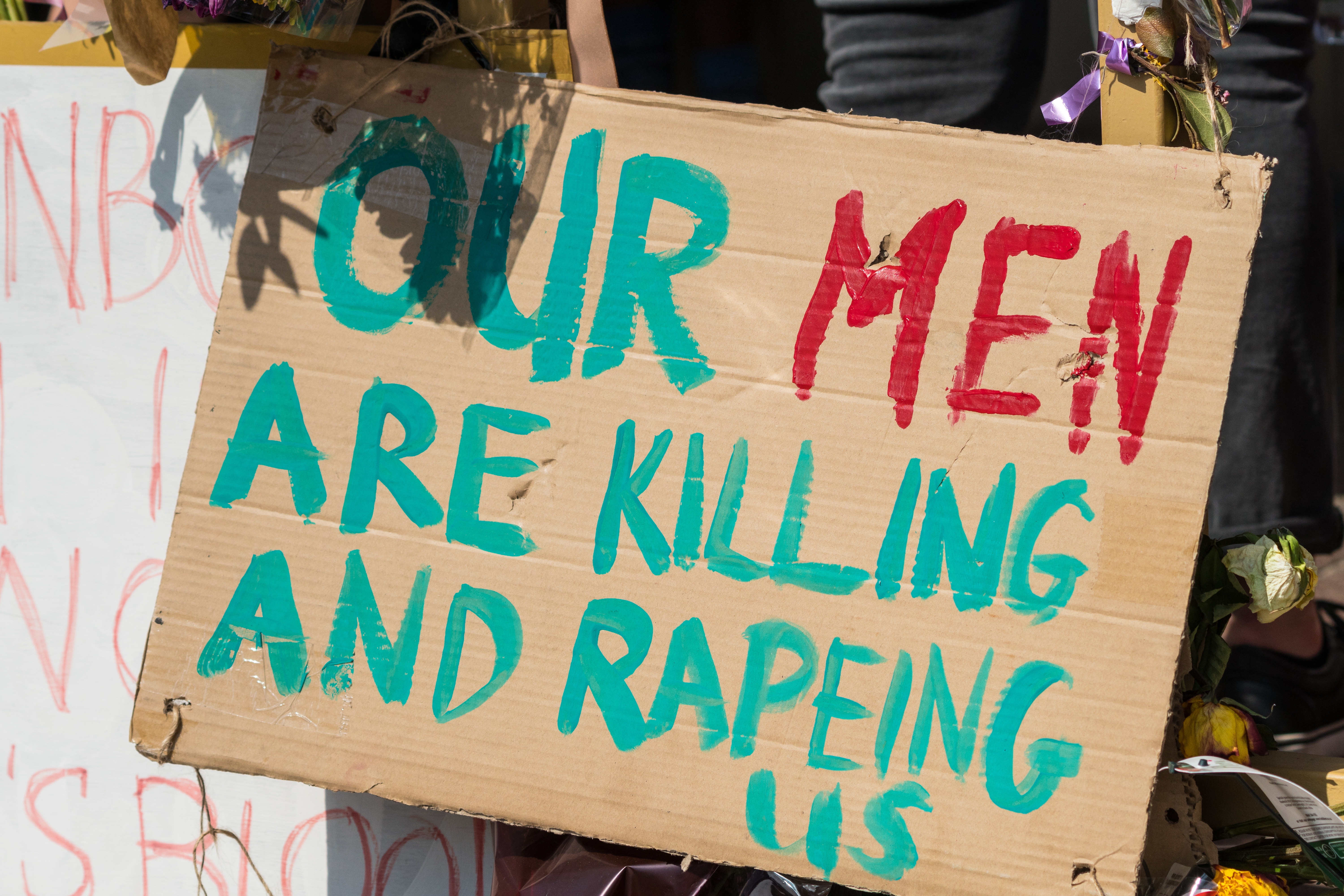
Gender based violence cardboard poster with handwritten strong and powerful message or text in Cape Town, South Africa concept rape and violence against women
© ShutterstockAs South Africa prepares for its local government elections, political parties face questions that go beyond service delivery. During a Cape Flats Stories mayoral debate, candidates vying to become Cape Town’s next mayor were asked how they would respond to gender-based violence (GBV) in the city.
While municipalities are responsible for essential services such as water, sanitation and electricity, mayors and councillors cannot ignore another reality – the violence affecting the communities they serve.
GBV remains one of South Africa’s most pressing societal challenges. In 2025, President Cyril Ramaphosa declared GBV and femicide a national crisis, following growing public pressure for urgent action. The discovery of multiple women’s bodies near Johannesburg has once again brought the country’s pain into sharp focus, prompting renewed calls for government to demonstrate that it is doing more than making promises.
The public outcry reflects a society demanding accountability. While national government has a responsibility to lead the response, GBV is a systemic problem that cannot be addressed by one sphere of government alone. It requires commitment across all levels of government, particularly from local leaders who are closest to the communities experiencing its effects.
When violence becomes part of everyday life
Violence in South Africa takes many forms, but GBV remains particularly concerning in rural areas and townships, where poverty, inequality and limited access to services can make an already difficult situation worse.
In some communities, violence has become part of everyday life, alongside unemployment, poverty and inadequate public services. When violence becomes so familiar, there is a danger that society begins to accept it as normal. Yet no community should have to live this way.
The problem requires systemic redress. Across the country, organisations are working to prevent GBV, support survivors and help communities respond to violence. However, these organisations cannot carry the burden alone. Too often, partnerships between government, civil society and communities remain inadequate, leaving significant gaps in support.
Where systems lack capacity, resources or coordination, survivors bear the consequences. Access to forensic evidence collection, appropriate medical care, counselling and safe accommodation can be essential to seeking justice and rebuilding lives, yet these services remain inaccessible or unavailable in some communities.
This is about more than individual cases of violence. It is about whether the systems meant to protect people can respond when they are needed most. And whether community organisations receive the necessary support, and survivors can access help without navigating a fragmented system alone.
South Africa cannot continue responding to GBV only when another tragedy makes headlines. Stronger systems, sustained support for organisations on the ground and meaningful cooperation between government and civil society are essential to moving beyond repeated declarations of crisis.
Why local government matters
Municipalities are not responsible for solving every societal problem. Policing and criminal prosecution, for example, fall primarily outside their mandate. However, this does not mean mayors and councillors can look away from the realities facing their communities.
Local government is where democracy is experienced in everyday life. Residents engage with elected representatives and expect them to understand the challenges affecting their neighbourhoods. These challenges extend beyond access to water and electricity. They include whether people feel safe in public spaces, whether vulnerable residents know where to seek help, and whether community organisations have the support and partnerships they need.
Municipalities have a role to play. Through safer public spaces, better infrastructure, local partnerships and collaboration with relevant government departments and civil society, they can contribute to prevention and strengthen community-level responses to GBV.
The question is whether political parties are prepared to make this part of their local government agenda, and whether they will account for their commitments once elected.
As the elections approach, voters should be able to ask prospective councillors and mayors what they intend to do about the challenges affecting their communities. What role will municipalities play in supporting local GBV organisations? How will they work with police, healthcare providers and social services? And how will they ensure that promises to translate into action?
These questions cannot be answered by municipalities in isolation. Addressing GBV requires cooperation across government and society. However, local leaders must be willing to take responsibility for the role they can play. Accountability cannot stop at national government, nor should it begin only after another tragedy. It must be part of how political parties engage with communities, make commitments and govern.