“Thirsty Tunisia”
Rethinking Water in Tunisia: A Public Debate Around “Thirsty Tunisia”

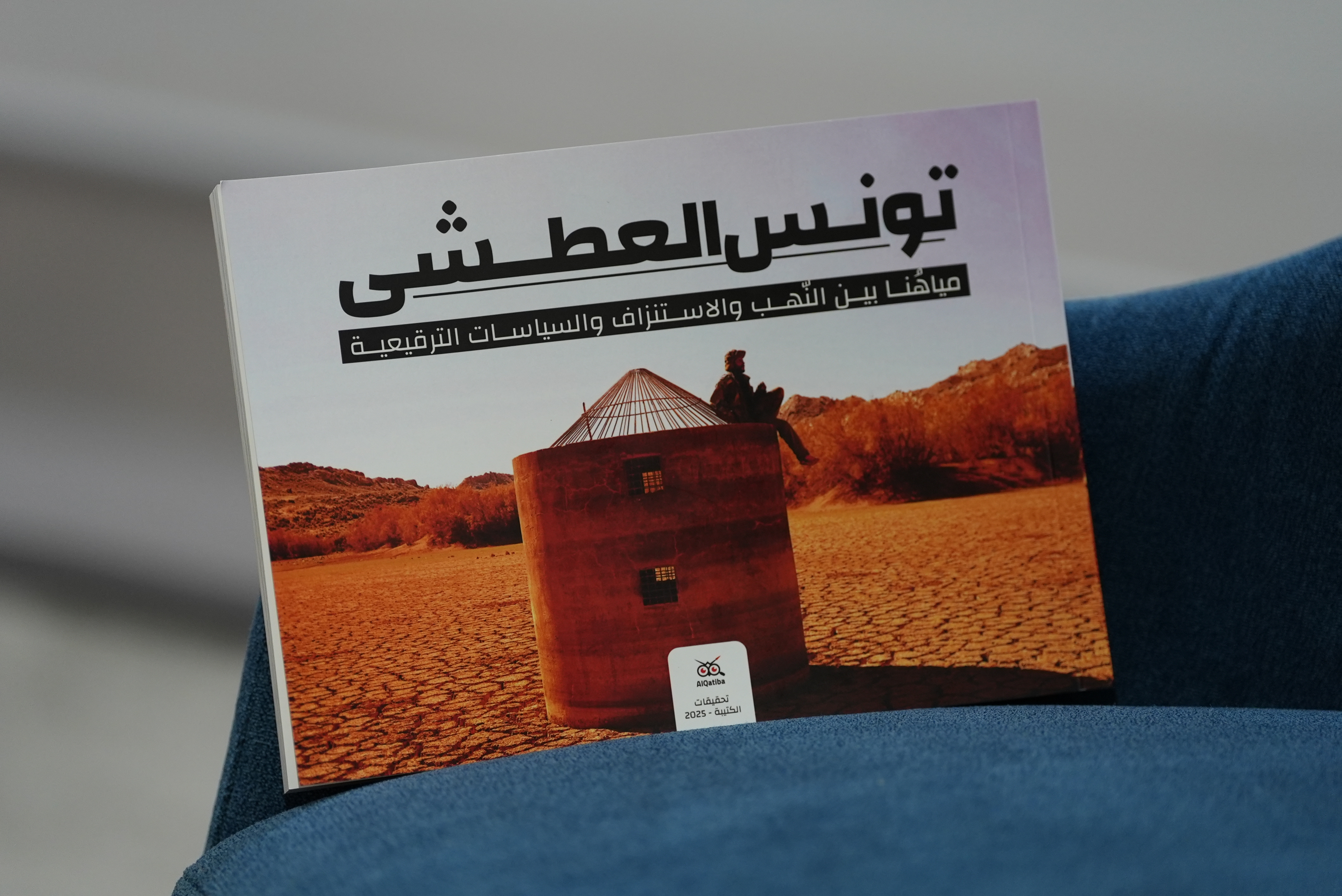
In a context marked by increasing environmental pressures and growing concerns over resource sustainability, FNF Tunis in partnership with AlQatiba, organized a public discussion event to explore one of Tunisia’s most pressing challenges: water scarcity.
At the heart of this event was the presentation and debate of the investigative booklet “Thirsty Tunisia: Our Water Between Plunder, Depletion, and Patchwork Policies”, a powerful publication shedding light on the structural, political, and environmental dimensions of Tunisia’s water crisis
A Booklet That Breaks the Silence
Produced through in-depth investigative journalism, “Thirsty Tunisia” offers a comprehensive and sometimes alarming diagnosis of the country’s water situation. Moving beyond climate explanations alone, the publication highlights systemic governance failures, policy inconsistencies, and unsustainable economic choices.
Among its key findings:
- Tunisia has fallen below the extreme water poverty threshold, with less than 500 m³ per capita annually.
- Over 26,000 illegal wells are depleting already fragile groundwater reserves.
- Agriculture while vital consumes nearly 75–80% of water resources, often through water-intensive crops with limited economic return.
- Public infrastructure suffers from major inefficiencies, with significant water losses and financial constraints.
The booklet also dives into critical and often overlooked issues, including:
- The imbalance between small farmers and large industrial actors, particularly bottled water companies.
- The geopolitical dimension of shared water resources, especially in border regions.
- The ecological threats facing unique ecosystems such as Ichkeul National Park.
Through field investigations, expert interviews, and data-driven analysis, the publication calls for a radical rethinking of how water is governed, valued, and protected in Tunisia.
A Space for Dialogue and Reflection
The event brought together experts, journalists, civil society actors, and engaged citizens in an open and dynamic discussion. Participants reflected on the urgent need to:
- Reform outdated water policies and legal frameworks
- Strengthen transparency and accountability in resource management
- Promote sustainable agricultural and industrial practices
- Recognize water as a fundamental right, not just an economic resource
More than a presentation, the event served as a platform for collective awareness and critical dialogue bridging research, journalism, and public debate.
Why This Conversation Matters
Water is no longer a distant environmental issue it is a defining challenge for Tunisia’s future. As highlighted throughout the discussion, the crisis is not only about scarcity, but also about governance, equity, and long-term vision.
“Thirsty Tunisia” reminds us that the way water is managed today will shape the country’s economic resilience, social stability, and environmental sustainability tomorrow.
Read the Booklet
We invite you to explore the full publication in English and Arabic