Carbon Tax & Carbon Credits
Carbon Tax & Carbon Credits: Strategic Implications for Tunisia

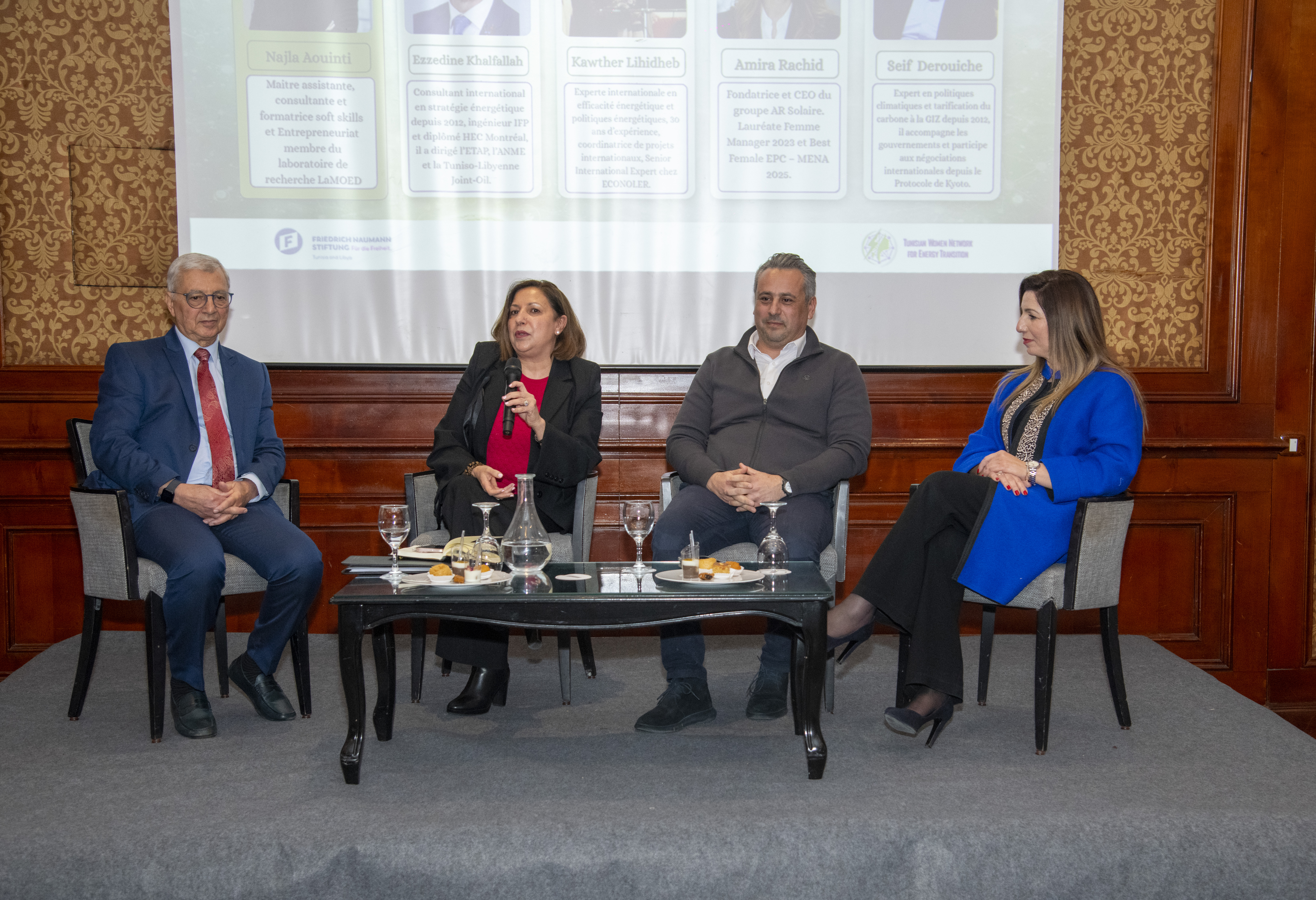
An open discussion was organized in partnership with the Tunisian Women Network for Energy Transition (TWNET), focusing on carbon pricing and its strategic implications for Tunisia’s energy and economic transition.
The event brought together experts, researchers, and economic stakeholders to explore the foundations, mechanisms, and future outlook of carbon pricing through two in-depth panel discussions rich in insights and exchange.
Understanding Carbon Pricing: Mechanisms and Stakeholders
The first panel, moderated by Ms. Hedia Hedhli, laid the conceptual and technical groundwork for understanding carbon pricing.
Speakers highlighted the key principles behind carbon pricing systems, focusing on the two main mechanisms: carbon taxes and carbon markets. These tools, widely implemented at the international level, aim to assign an economic value to carbon emissions and incentivize their reduction.
Discussions also addressed the impact of these mechanisms on industry, emphasizing the importance of engaging companies in carbon accounting practices as a first step toward decarbonization. Panelists further explored how carbon pricing translates CO₂ emissions into economic systems and examined the role of natural capital in carbon storage, as well as its potential to generate carbon credits.
Opportunities and Challenges for Tunisia
The second panel, moderated by Ms. Najla Aouinti, shifted the focus to Tunisia’s specific context, examining both opportunities and challenges.
Experts analyzed Tunisia’s position within global decarbonization dynamics and discussed the conditions required to implement an effective carbon tax one that can create a balanced and mutually beneficial strategy for all stakeholders.
The conversation also addressed institutional frameworks, highlighting the most effective decarbonization levers for businesses, as well as the strategic trade-offs and internal transformations needed to adopt low-carbon strategies.
In addition, insights were shared on how Tunisian companies perceive the low-carbon transition, revealing a mix of perceived risks and emerging opportunities.
Toward a Strategic Dialogue
These discussions opened up an essential dialogue on the role of climate policies in shaping economic competitiveness, driving energy transition, and supporting Tunisian businesses in adapting to evolving global dynamics.