Mozambique
When dissent becomes a crime

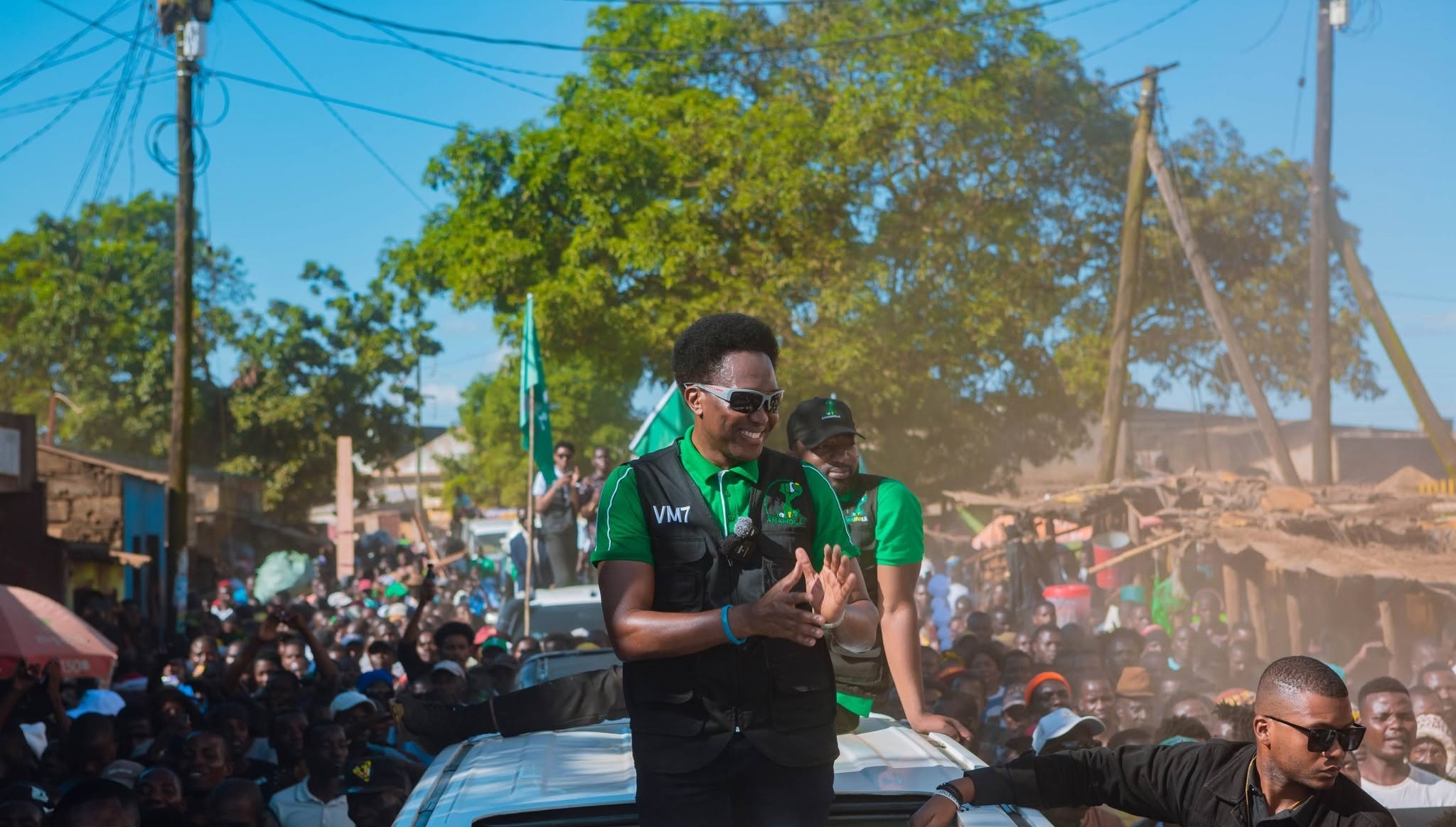
Venâncio Mondlane at an ANAMOLA march in Chimoio on 18 April 2026, held to mark the swearing in of the party’s provincial political coordinators.
© Venâncio Mondlane / FacebookRecent reports of Venâncio Mondlane’s notification by the Supreme Court to stand trial in Mozambique portray a worrying and continuing trend of attempts to squash opposition and the freedom to protest in times of political unrest and resistance. Once recognised as a means of galvanising awareness and support for a cause, public unrest and demonstrations are nowadays increasingly labelled as criminal and disruptive in the name of protecting the status quo and upholding government laws. The question then remains: what avenues are left for citizens to hold governments to account for repressive acts that go against their freedoms?
The charges laid against Mondlane emanate from the 2024 election, which was widely reported to have been riddled with irregularities, reinforcing the conviction that the result was questionable and the process fraudulent. The turning point in this story was when Mondlane coordinated a social media campaign to enlighten and invite the public to take a stand against their right to vote and participate in a free and fair electoral process being taken for granted, and their futures being bandied about and gambled with at the whims of the incumbent state. The incidents during the weekly protests were mostly peaceful; however, they were met and strongly quelled by military and police force, which resulted in retaliatory violence. International observers, including the European Union, raised concerns about the electoral process, with EU observers reporting “unjustified alteration” of results at some polling stations.
Is Mondlane’s case purely about seeking justice, or is it a political pursuit aimed at narrowing the spaces that democratic opposition holds, ultimately leading to total intolerance of strong, credible opposition contenders? If we speak of justice, on whose basis – the government’s?
In an article titled “Democracy and Civil Society – Civil Society and the Duty to Dissent”, published by the International Center for Not-for-Profit Law (ICNL), it states that dissent in all organisations, minor and major, whether the local book club or the highest organs of government, provides a forum for proposing alternative views and bringing additional information to bear on decision-making processes that could have far-reaching consequences for those responsible for the administration of government. Read “Civil Society and the Duty to Dissent” at ICNL
The far-reaching consequence in this case is the Mozambican people’s expression of political will and their right to question and organise freely when it comes to their political fate as a nation. It has rather become the norm to misuse terms and jargon such as terrorism to label and demonise the exercise of rights, the protection of freedoms and responsible protest. The only crime Mondlane seemingly committed was speaking out and rallying the country around him. It should also be stated that people willingly, of their own accord, participated in challenging the Mozambican government’s position.
Mondlane is set to be tried by the very same system that acknowledged certain irregularities and discrepancies during the vote-counting process but ruled that they did not substantially influence the results. According to a report by Al Jazeera, the court did not simply dismiss the opposition’s concerns outright. It made substantial adjustments to the originally announced vote totals, reducing Chapo’s share from roughly 70.7% to 65.17% and increasing Mondlane’s from roughly 20% to 24.29%, while nevertheless finding that the irregularities did not change who won. Read Al Jazeera’s report on the Constitutional Council ruling
Then why do people vote and why are they called upon to protect the ballot? What happens if questioning the validity and outcome of an election and outwardly expressing dissatisfaction in the form of protest is summarised as acting against the state?
Let it not be misunderstood. While governments are obligated to prohibit incitement and hate speech, state authority is frequently abused to criminalise peaceful expression. Regimes often justify these crackdowns under the guise of counterterrorism, national security or religious defence, a trend that has increasingly been used to target activists, organisations and the general public.
We can now expect a long and drawn-out court process that will slow down and limit Mondlane’s active political participation, with an even more worrying projected outcome of him not being able to contest the 2029 election, thereby rendering him politically stagnant. This will go further in sending a message to any person or entity that wishes to go up against authority in Mozambique, with the promise that they will be dealt with. Mondlane has been notified by the Supreme Court to face five charges related to the post-election demonstrations, including incitement to collective disobedience and incitement to terrorism.
For the long run, the right to dissent is a fundamental political freedom and an essential safeguard of democratic society. Preserving it requires citizens and political actors alike to recognise that disagreement, protest and opposition are not threats to democracy, but vital expressions of it, and to remain vigilant in defending and upholding this right for all. We need to hold our governments accountable to the principles and norms to which they are signatories, not just as rhetoric, but as principles that are actionable and lived in practice.
Mondlane’s fight for freedom has just begun, leaving it to a vigilant society to safeguard the legal process and protect its collective voice.