Women’s Month
Mbali’s journey in politics

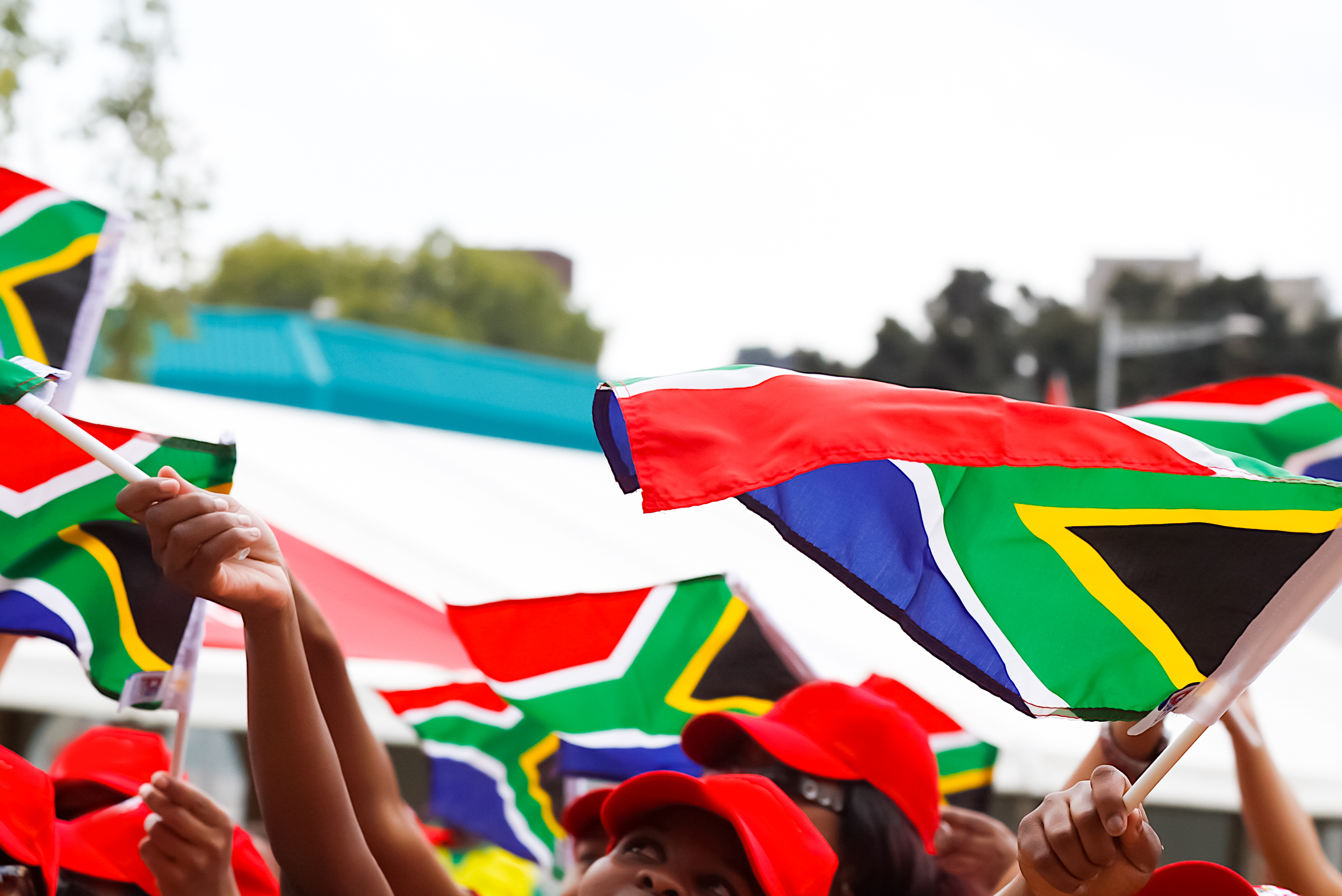
Young women waving the South African flag in the air
© ShutterstockPolitics can be a tough space for young women to navigate. For Mbali Mnaba, her parents’ values have shaped her journey and helped her find her voice in politics. Her mother was a teacher, and her father served in church ministry; both took on leadership roles that influenced her. Today, she is a young politician guided by a strong sense of service and a desire to solve the problems facing her community. We spoke to Mbali about her journey into politics, her experiences as a young Black woman in political spaces, and the women who helped her find her voice.
“I was really fortunate to be raised by parents who took up leadership roles at a very young age. That really influenced my political career quite extensively and encouraged me to venture into politics.”
But beyond the influence of her parents, Mbali wanted to enter the political arena to solve problems. “A big part of me deciding to be part of this arena is because I’m a problem solver. As soon as I see issues, particularly community-based issues, I really want to solve them.”
During her varsity days, Mbali had a taste of what it means to serve. During her time at university, she served on the student representative structure at her residence, where she championed issues affecting students. “I could champion the issues that were plaguing the residents at the time, and they thought I’d be the best person to really just solve them. That bug bit me from then on.”
Just before the 2021 local government elections, she became involved in Democratic Alliance (DA) politics as a party agent, and not long thereafter became a councillor, determined to help rescue her town. “I knew at that time that our town would be in complete decay if I had not stood up and contributed in some way or another.”
In 2022, she was part of the DA Young Leaders Programme, an initiative supported by FNF. “Having been part of the programme was life-changing. It was incredibly tough, but I’m fortunate to have graduated and I can call myself an alumna.”
She was 24 when she entered politics but had other women in the space who helped guide her. “I remember one day, a colleague said to me, ‘You really need to learn how to speak up because we know you have good ideas and we know you have issues that you want to champion in council. So, step up.’” Another female colleague helped her understand the importance of connecting with communities beyond politics and council work.
“She showed me how to really connect with community members on a level far beyond politics, far beyond council work, so that I’m able to really get in touch with their realities and put myself in their shoes.”
Mbali remains grateful to the women in her caucus who helped her navigate the early stages of her political career.
“I’m really grateful for the women in my caucus who have really held my hand and helped me become the young politician that I still call myself today. I think they really played a huge role in helping groom this figure that I am now.

Mbali Mnaba, a young politician and community leader, reflects on finding her voice, serving her community and creating opportunities for others.
© SuppliedBut as a young Black woman in politics, Mbali says she has also had to find her voice in a space where she is often underestimated. “I think being a Black woman in politics and being young was important for me because I wanted other young girls to see that it’s possible for young women to be in politics and actually survive politics, to be able to go up against very seasoned politicians in the political world, and to also hold them accountable and ask for transparency.”
But the experience has not been without its challenges.
“The ugly part of being a Black woman in politics is that I get underestimated a lot. It’s heartbreaking. It really does weigh on you emotionally and mentally. You really do get overlooked. You have to work so much harder to prove your worth, to prove that you’re capable and that you belong. And you have to fight the imposter syndrome.”
Despite these challenges, Mbali’s commitment to her community keeps her going. She works in a ward with many elderly residents and says their struggles motivate her to get out of bed each morning.
“My heart breaks in the morning when I get a phone call and they’re struggling to pay their rates and taxes, or they’re struggling to get the municipality to attend to their sewage issue or their water issue.”
As a self-described problem solver, she feels compelled to help where she can. “I’ve really grown close to the elderly people in my community because they see me as their child, but they also see me as their leader and someone who can champion their issues and actually get them solved.”
If there is one issue she would like to drive in South Africa, it is economic emancipation.
“I know that this issue is driven by many politicians across the country, but the effectiveness is not tangible, especially now that we’ve seen through the statistics that have been published recently that unemployment has risen again.”
For Mbali, government and business need to work more closely to create opportunities. “As politicians, we’re not doing enough work to collaborate with the business sector, to see how we as government can create a conducive environment for the business sector to really thrive and ultimately create jobs, produce skills programmes and so forth.”
Her focus on economic emancipation is rooted in what she believes people need to live with dignity. “People need money to put food on the table. They need money to survive. They need money to have a dignified life.”
Would she choose politics all over again in another life?
For Mbali, the answer appears to be yes. Politics, she says, feels like a calling. “Being a politician and really being at the cornerstone of politics, which is local government, I realised that this is more of a calling than anything else.”