Kenya
Winning without violence

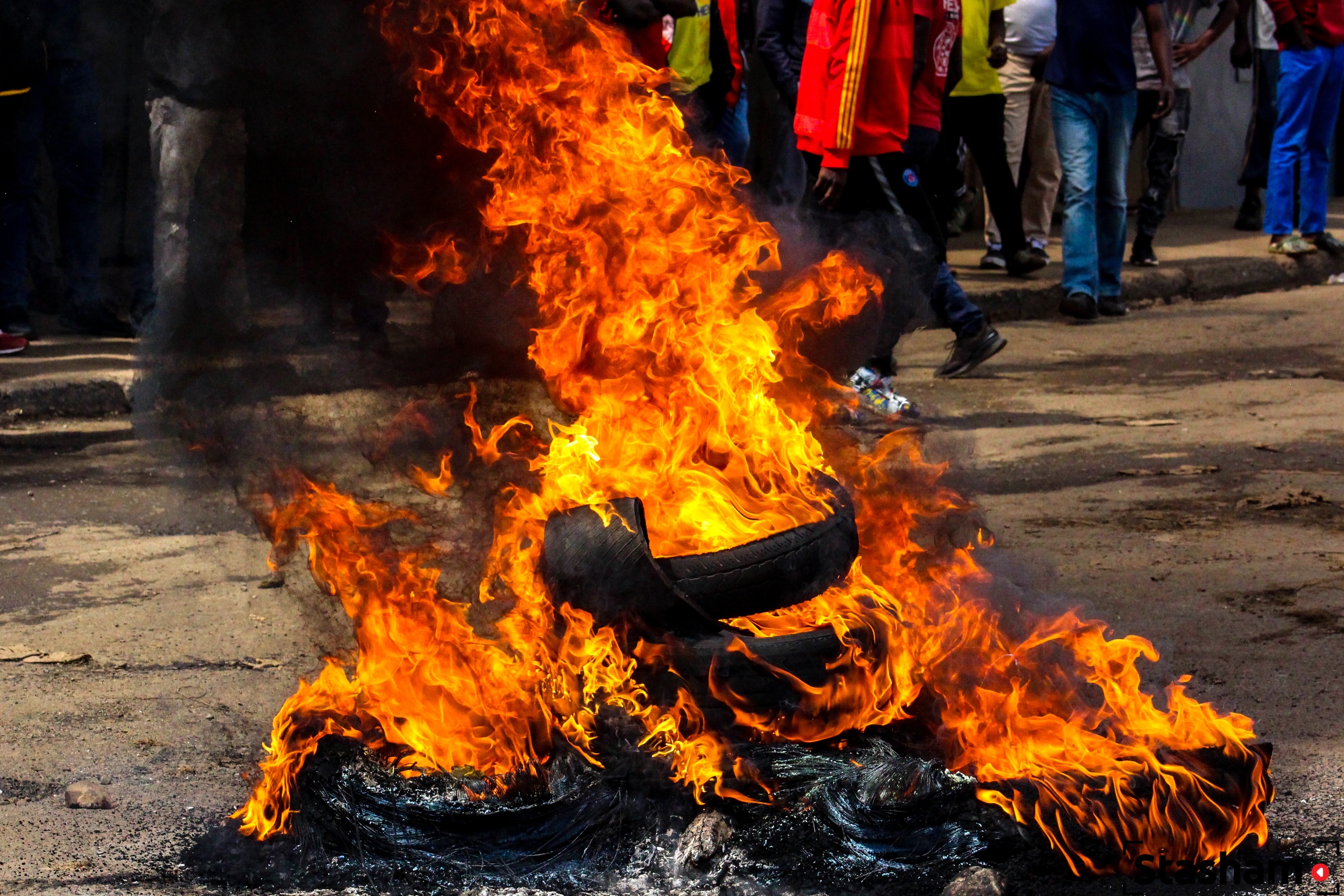
Fire being lit during demonstrations in kibera Kenya
© ShutterstockAs Kenya heads towards the 2027 General Election, political competition is intensifying amid concerns over hate speech, ethnic profiling, political intolerance and increasingly hostile public discourse.
The concerns were discussed at a Freedom Café organised by the Friedrich Naumann Foundation (FNF) and Article 10 at Ufungamano House in Nairobi, where political, religious and youth leaders examined the importance of peaceful electoral competition.
The forum, themed “Winning Without Violence”, focused on what Kenya stands to gain from peaceful elections and the consequences of allowing political competition to fuel division and violence.
In August, a coalition led by the National Cohesion and Integration Commission (NCIC) warned that hate speech, ethnic contempt, political intolerance and incitement could threaten national cohesion and undermine preparations for the 2027 election.
“Left unchecked, this trend sets the nation on a dangerous and unacceptable trajectory,” the agencies said at the time.
The NCIC is also actively investigating at least eight prominent politicians since the beginning of 2026, over allegations involving hate speech, ethnic profiling or incitement.
Citizens' duty in peaceful elections
At the Freedom Café, FNF senior project manager Judie Kaberia warned that political competition should not turn citizens against one another.
“Political competition does not prescribe that we become enemies,” Kaberia said. “We can disagree, sometimes strongly, and still recognise one another as fellow citizens.”
Her remarks came against the backdrop of Kenya’s history of election-related violence, most notably the crisis that followed the disputed 2007 presidential election.
More than 1,100 people were killed and about 650,000 displaced during the 2007-08 post-election violence, according to figures from the International Criminal Court and other international bodies.
The violence exposed how political disputes could deepen existing ethnic and community divisions, with communities that had previously lived alongside one another becoming caught up in attacks and displacement. Other African countries, however, have offered contrasting examples of how political competition can end without violence.
In Botswana's 2024 general election, President Mokgweetsi Masisi conceded defeat before official final tallies were declared, ending his party's 58-year rule and pledging a peaceful, dignified transition to opposition leader Duma Boko. The gesture offered a regional example of peaceful government transition.
Prof Kivutha Kibwana, chancellor of International Leadership University, told the forum that responsibility for peaceful elections extended beyond the State and political parties to opposition leaders and citizens.
However, he reiterated on the importance of leaders’ role in peace keeping. “We cannot think there will be no violence in 2027.” Kibwana added, “Those who lead however have the capacity to be able to negotiate in advance so that they do not do that after the violence when so much has been lost.”

The Field Marshals Band entertains guests at the Freedom Café.
© Friedrich Naumann Foundation for Freedom
FNF Senior Project Manager Judie Kaberia speaks during the Freedom Café.
© Friedrich Naumann Foundation for Freedom
Sheikh Abdullahi Abdi, Chairman of NAMLEF, KRA Board Chairperson Ndiritu Muriithi, and Prof. Kivutha Kibwana, Chancellor of International Leadership University, enjoy the performances at the Freedom Café.
© Friedrich Naumann Foundation for Freedom
Prof. Kivutha Kibwana, the keynote speaker, addresses attendees at the Freedom Café.
© Friedrich Naumann Foundation for Freedom
FNF well represented: Judy Wairimu, Michelle Avuna and Faridah Noor attend the Freedom Café.
© Friedrich Naumann Foundation for FreedomThe role of religious leaders in promoting peaceful elections
Religious leaders were also identified as influential voices as the country approaches the 2027 polls.
Currently, Kenya’s Constitution establishes the country as a secular state, while Christianity and Islam remain the country’s dominant religions. These institutions have historically played a role in public debate and national reconciliation, particularly in politically turbulent times.
However, the growing presence of politicians in churches has also been of concern among religious leaders. In 2020, Catholic bishops said churches “are not political arenas” and barred politicians from addressing liturgical assemblies, while criticising the use of religious celebrations as campaign events.
In this light, National Muslim Leaders Forum Chairman Sheikh Abdullahi challenged religious leaders against remaining silent as political campaigns and tensions continued to threaten communities.
“In the mind of a religious leader, if you see that silence is going to create more chaos, more injustice and probably bloodshed, I think you have to stand up and you have to be counted,” Abdullahi told the café.
The continued importance of youth in shaping elections
But elections in Kenya can hardly be mentioned without accounting for the country’s youth. Kenya has a predominantly youthful population, with about three-quarters of its population aged below 35, according to national demographic data.
While the size of the youth population makes it an important electoral constituency, concerns have persisted over their involvement in political mobilisation and violence. In 2020, for instance, then-President Uhuru Kenyatta warned that the youth, “if not properly handled, can be a time bomb that can blow this country to pieces.”
Jackline Cheruto Kibet, Youth Senate Leader for West Pokot, told the café that young people should be involved in political decision-making rather than treated simply as campaign tools.
“We must demystify the notion that the youth are tools. We are not to be weaponised, but we are decision makers and we should be in those nominations,” she added.
The Wall of Wishes 2027
The Freedom Café also sought to capture views from the public ahead of the much-anticipated 2027 general elections. Through an initiative dubbed the Wall of Wishes, the Freedom Café and Art Lab Global invited participants to share what they hoped to see as Kenya approaches the ballot.
The responses were turned into an art installation bringing together views from different generations, including people who may not yet be eligible to vote in 2027.
Beyond public participation, the initiative brought to the fore the crucial role of journalists in documenting political developments responsibly during high-stakes election cycles.
For Kenya, the challenge ahead of 2027 is managing political competition without allowing disagreements to escalate into violence.