Brazil
Lula's Election Victory - Brazil Needs Transparency and National Reconciliation

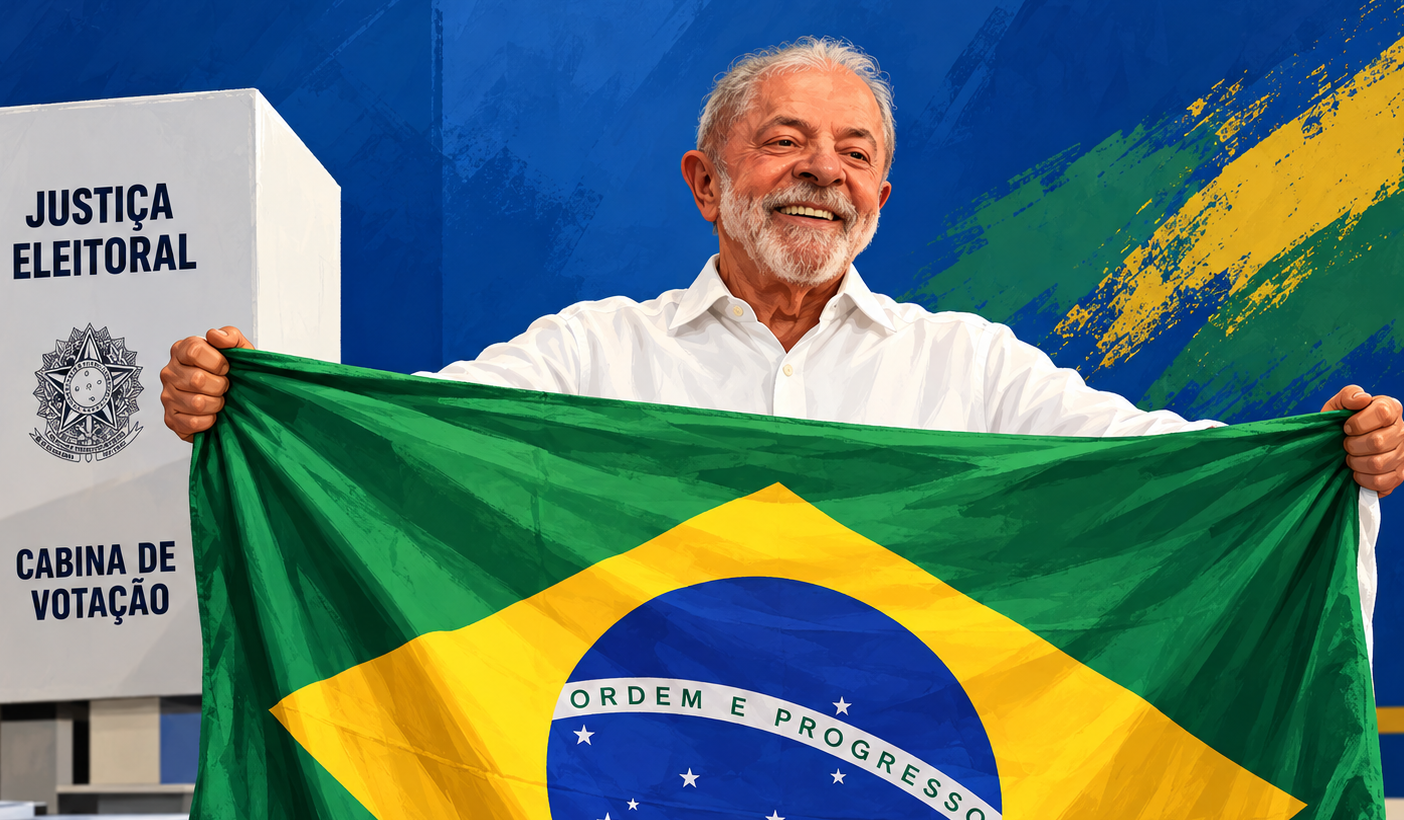
Elections in Brazil are not for the faint-hearted and have all the makings of a political thriller. Four years ago, Lula narrowly defeated Jair Bolsonaro by 51% to 49%. Bolsonaro refused to acknowledge his defeat, and an attempted coup subsequently took place in the capital, Brásilia. The Supreme Court sentenced Bolsonaro to 27 years in prison for his alleged involvement in the attempted coup. He is currently serving his sentence under house arrest on health grounds.
A Clear Victory for Lula
On Sunday, 25 October, Flávio Bolsonaro, the former president’s son, lost the runoff election to Lula by 48% to 52%, despite having led by around two percentage points in the first round. A key factor in Lula’s victory was the successful mobilisation of undecided voters through a social media campaign involving influencers. Election day itself was marked by unusual circumstances. Both camps requested an extension of polling hours: Lula’s due to disruptions to public transport and Bolsonaro’s because of severe weather in several states. The Supreme Court eventually granted a two-hour extension, although some polling stations had reportedly already closed.
Flávio Bolsonaro Flees Brazil
On election night, Flávio Bolsonaro announced that he would not recognise the result and intended to challenge the election in court, seeking its annulment.
The situation escalated further on Monday, just one day after the election. The Supreme Court announced an investigation into Flávio Bolsonaro on suspicion of money laundering and ordered him to surrender his passports within 24 hours. Bolsonaro initially agreed to comply with the order and stated that he had no intention of leaving Brazil.
On Tuesday, however, Flávio Bolsonaro fled Brazil with his family. Reports suggest that he legally crossed the border into Argentina near Iguaçu using his Italian passport before travelling by private jet via Ecuador to the United States. According to reports, his departure was explicitly supported by Argentine President Javier Milei and US President Donald Trump, who granted the Bolsonaro family permission to reside in the United States.
Bolsonaro Claims to Be Brazil’s Legitimate President
On Wednesday, Flávio Bolsonaro issued a written statement from the United States addressed to the Brazilian people. In it, he declared himself the legitimate president of Brazil and announced his intention to lead the opposition from the United States, with the aim of gaining power in Brazil through peaceful means. He said he would present a strategy to this end in the coming days.
Lula’s Victory Receives Widespread Recognition at Home and Abroad
In the meantime, however, both Bolsonaro’s own party, the Liberal Party (Partido Liberal), and leading figures within it have recognised Lula’s election victory. These include São Paulo Governor Tarcísio de Freitas, who himself secured a convincing re-election victory. Internationally, most countries have also congratulated Lula on his victory, including Germany and the European Union. Congratulations have also come from several right-wing governments, including that of José Antonio Kast in Chile. In Argentina, Patricia Bullrich, leader of the La Libertad Avanza parliamentary group in the Senate, criticised President Milei’s silence. She called on him to recognise Lula’s victory as an expression of the will of the majority in a democratic election, despite their political differences. International election observers have also raised no major concerns about the legitimacy of Lula’s election.
Lula Must Promote Transparency and National Reconciliation
Lula’s main challenge in his fourth term will be to improve government transparency and promote national reconciliation in a country deeply divided by the personal rivalry between him and the Bolsonaro family.
Brazil’s economic challenges have not disappeared with Lula’s election victory. High levels of public debt are placing a strain on households and businesses, while inflation and interest rates remain high. The government budget must therefore be reviewed to ensure its financial sustainability and long-term viability. Investment conditions for foreign investors must also be improved, particularly in areas such as taxation, to enable Brazil to realise its enormous potential for investment, economic growth and job creation. The EU–Mercosur Agreement offers significant opportunities in this regard.
Close cooperation between Lula and the conservative majority in Congress will be essential to addressing the country’s economic policy priorities. Other pressing challenges include public security, corruption and declining trust in institutions.
An Opportunity for Renewal on Brazil’s Political Right
For Brazil’s political right, Flávio Bolsonaro’s departure presents an opportunity to finally break free from the dominance of the controversial Bolsonaro family, bring in new political leadership and adopt a more constructive, policy-focused approach in Congress. This would allow the right to make responsible use of its strengthened position in Congress. Moderate and widely respected figures such as São Paulo Governor Tarcísio de Freitas have an important role to play in this process, as does the liberal NOVO party, which made significant gains in both chambers of Congress in the elections.
Transparency Also Matters for German-Brazilian Relations
Lula’s election victory signals continuity in Brazil’s relations with Germany and the European Union. Lula has personally been a strong advocate of the EU–Mercosur Agreement. From a liberal perspective, Germany should also emphasise the importance of greater transparency and national reconciliation. Given Brazil’s recent political polarisation, both are essential for sustainable development, for unlocking the country’s considerable potential and for strengthening political and economic cooperation with Germany and the European Union.