Migration
From Migration Challenge to Talent Mobility

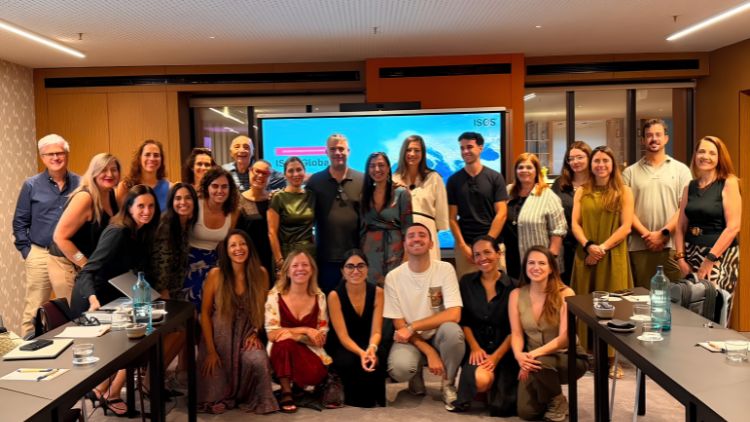
Participantes de México, Turquía, España Italia, y Malta conocieron las iniciativas de movilidad de Barcelona
© FNF MexicoHow can cities remain competitive and inclusive as their populations age, businesses face talent shortages, and global competition for skilled professionals intensifies? This was the central question behind our latest collaboration with our office in Türkiye and the Institute for Futures in Barcelona.
Over four days, representatives from Mexico, Türkiye, Spain, Italy, and Malta gained first-hand insight into some of the initiatives that have made Barcelona one of Europe's most dynamic innovation ecosystems, where collaboration among governments, businesses, universities, and civil society organizations has transformed talent attraction and development into a strategy for competitiveness.
A Demographic Challenge Thats Transforming Economies
Our visit to Barcelona was grounded in a clear reality: Europe is undergoing a profound demographic transformation. Demand for talent continues to grow, while countries with working-age populations are increasingly responding to labor market dynamics. According to the latest Eurostat data, the average age of people in Europe is 43 years, and 22% of the European Union's population is over the age of 65. Projections indicate that this trend will continue over the coming decades. By the end of the century, the share of the working-age population will continue to decline, while pressure on care and pension systems will increase.
In this context, international talent mobility is no longer simply a migration issue but has become a central component of economic policy. Evidence of this can already be seen in the growing demand in several countries for specific professions, particularly healthcare professionals.

Barcelona: A Laboratory for Innovation and Collaboration
The forum's programme was specifically designed to showcase experiences that have successfully addressed these challenges. The 22@ Barcelona innovation district illustrates how entrepreneurship and job creation can be fostered through strategic urban development. Barcelona Activa, the city's agency for entrepreneurship and economic development, also plays a key role, as many of its beneficiaries are foreign nationals who have made Barcelona their home. Factoría F5, an organization specializing in inclusive technology training, has become a key player in promoting access to employment in the technology sector, while Suara highlights the growing demand for care professionals. Together, these organizations demonstrate how the city is building an ecosystem that places people's labour market inclusion at its core, whether through formal employment or by supporting individuals in creating their own businesses, prioritizing people over purely economic strategies.
Beyond Attracting Talent: Building Ecosystems
The most competitive cities are those that build ecosystems bringing together local governments, businesses, universities, accelerators, civil society organizations, and innovation centres. During our visit to Barcelona, it became evident that Mexico would benefit from conducting a comprehensive assessment of the organizations already working on labour market inclusion, skills development, and talent mobility in order to develop a national strategy for attracting and promoting talent.
At a time when many economies seek to integrate into global value chains and attract international investment, the availability of talent has become a decisive factor for competitiveness. At the Friedrich Naumann Foundation for Freedom, we believe that exchanging experiences is essential for designing policies that foster innovation, prosperity, and sustainable growth.