Crime
Seizing Cocaine Is Not Enough: Europe Must Follow the Money
Every year, European authorities celebrate large cocaine seizures at their ports. Yet the trade keeps growing. A new policy paper from the Friedrich Naumann Foundation for Freedom argues that the problem is not only the shipments. It is the money that makes them possible and lets networks replace what is lost.
Published in October 2026 by Tania Molina Rojas and Elisabeth Maigler Kluesserath, the paper describes transnational cocaine trafficking as a criminal economy. It coordinates production, legal logistics, corruption, and the circulation of illicit capital. Its central claim is that cocaine is the visible part of a system in which resilience depends on its financial infrastructure.
The scale of that economy is striking. The authors cite UNODC estimates that global cocaine production reached about 3,700 metric tons in 2023, an increase of 34 percent on the previous year. The paper also notes that the export value of this production is estimated at 90 to 120 billion US dollars. Such profits do more than buy drugs. They buy logistics, protection, technology, and the ability to adapt when authorities act.
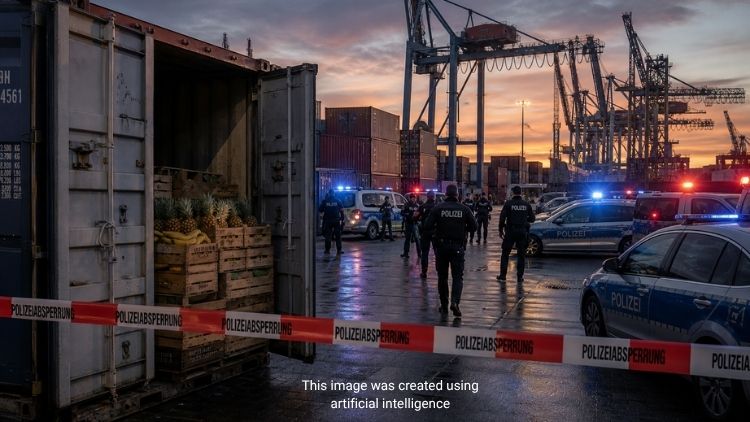
Seizures are part of the picture, but they can mislead. In the Hamburg case, German authorities seized 25 of the 35.5 metric tons of cocaine confiscated in the port between April and September 2023. Investigators found that a German businessman had set up around 100 front companies to give the shipments an appearance of legality. Removing the cargo did not remove the network that had built it.
The paper argues that money is the weak point to target. Drug trafficking persists because it yields large profits, and those profits, once hidden or moved into legal channels, fund the next shipment. The Financial Action Task Force estimates that less than 1 percent of illicit financial flows are actually recovered. Following the money means investigating front companies, real estate, beneficial owners, bank accounts, cryptoassets, and corporate structures used to hide ownership.
The authors recommend that governments measure success differently. The key question, they write, is no longer only how much cocaine was seized, but how much criminal capital was identified, frozen, confiscated, and recovered. They call for systematic asset confiscation, consistent transnational strategies, and closer operational cooperation between judicial and financial authorities.
For policymakers, the message is that a seizure is the end of one chain, not the end of the business. Europe can only weaken these networks by making it costly to launder their profits and to move money through legal channels.