Documentary
Where Do We Meet?

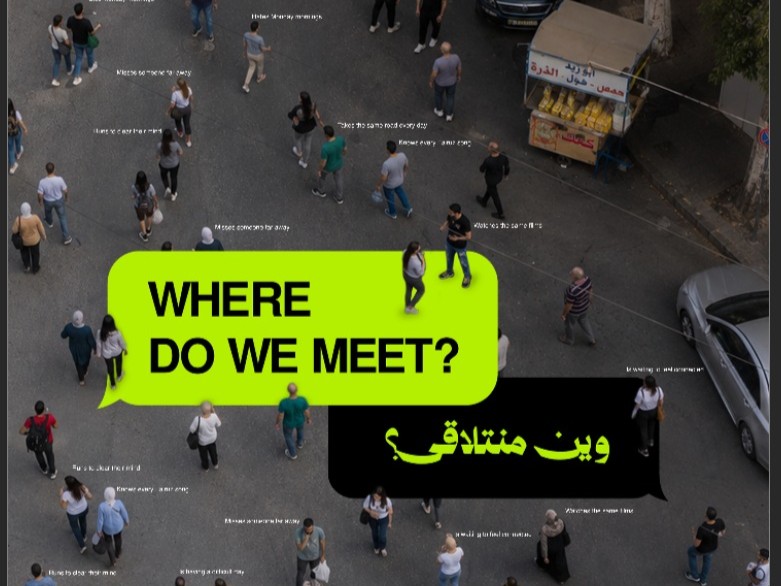
Where do we meet?
At first glance, the question seems simple. Yet in Beirut, it reveals a deeper challenge: where can people still gather freely, safely, and without barriers? More importantly, what happens to a society when those shared spaces gradually disappear?
The Friedrich Naumann Foundation for Freedom Lebanon and Syria in partnership with Naqd Media hosted a special screening of the documentary Where Do We Meet?, on 28 July 2026 at Zico House. The screening was followed by a discussion featuring architect Ramy Abi Antoun and urban planner Krystel Harb, moderated by Taline Nohra.

The documentary challenges the common assumption that public spaces are limited to parks and gardens. Instead, it presents a broader understanding of the city itself as public space, where sidewalks, streets, squares, and open areas determine how people move, interact, and experience everyday life. It argues that the quality of these spaces directly affects citizens’ ability to participate in public life.
Through conversations with residents, runners, families, and urban experts, the film paints a picture of Beirut where navigating the city often means negotiating broken sidewalks, unsafe crossings, poor lighting, and the absence of accessible infrastructure. For many, walking or running becomes less a leisure activity than a daily exercise in avoiding hazards. These testimonies highlight how urban design influences safety, mobility, and inclusion.

The documentary also points to a wider structural issue: the severe shortage of green and public spaces in Beirut. Existing public areas are often neglected, inaccessible, or threatened by competing urban pressures. This gradual erosion affects not only the city’s environmental quality but also its social fabric, limiting opportunities for recreation, interaction, and community life.
Public spaces are essential for bringing people together across social, political, and sectarian divides. Parks and shared spaces are not a potential sources of tension, they are places where trust, dialogue, and coexistence can flourish. Closing or restricting public spaces out of fear only deepens fragmentation, while preserving them creates opportunities for encounter and mutual understanding.

The discussion following the screening expanded on these themes, emphasizing that improving public spaces is not solely a matter of urban planning. It is also a question of governance, public policy, and citizenship. Accessible sidewalks, reliable public transport, safe parks, and inclusive public infrastructure are investments in people’s ability to participate fully in city life.

As Beirut continues to confront urban, economic, and social challenges, the question posed by the documentary remains highly relevant. Reclaiming public spaces is about creating a more connected, inclusive, and resilient society, one where people have the freedom to meet, interact, and share the city they call home.